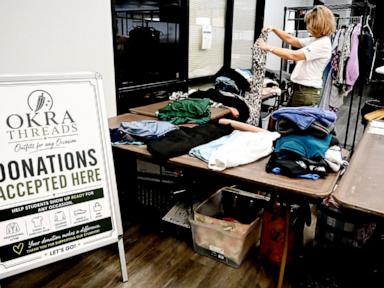
The financial architecture of contemporary public higher education rests on a fundamental miscalculation. Institutions project tuition, fees, housing, and textbook expenses while systematically omitting a variable that dictates student retention: baseline metabolic survival. When the University of Mississippi Medical Center opened its campus food pantry in September 2026, it marked the final public institution within Mississippi’s Institutions of Higher Learning system to establish an institutional food distribution mechanism. This statewide completion reveals less about philanthropic generosity and more about a systemic market failure. Nutritional deficits among undergraduates and graduate students represent an unpriced operational cost that directly suppresses academic performance, lowers graduation rates, and compromises workforce preparation.
Data from the Hope Center for Basic Needs indicate that over half of college students face housing or food insecurity, with roughly 41 percent experiencing food insecurity specifically. In Mississippi, where baseline median household incomes lag behind national averages, these macroeconomic pressures compress student budgets past the point of elasticity. When tuition rates climb—such as Mississippi State University raising in-state tuition and fees alongside an estimated full cost of attendance exceeding $26,000 annually—discretionary funds vanish. Students routinely absorb financial shocks by reallocating capital away from caloric intake toward fixed institutional liabilities like tuition bills and housing contracts.
To understand why campus food pantries have transitioned from peripheral student-led initiatives to mandatory institutional infrastructure, one must analyze the cognitive tax of scarcity. Scarcity imposes an immediate bandwidth penalty on human decision-making. Operating under chronic nutritional uncertainty forces the prefrontal cortex to allocate scarce cognitive resources toward immediate caloric acquisition, crowding out long-term working memory and analytical capacity. Consequently, food insecurity functions as an invisible GPA tax. A student skipping meals to cover lab fees or parking permits suffers a measurable decline in marginal academic output, increasing the probability of course failure, delayed degree completion, or total university withdrawal.
The economic model of campus food distribution networks across Mississippi relies on low-friction, high-trust operational topologies. Institutions such as the University of Mississippi with its Grove Grocery, Mississippi State University with Bully's Pantry, and the University of Mississippi Gulf Coast Community College pantries have engineered distribution models designed around zero administrative friction. Unlike traditional government assistance programs that demand extensive means-testing, income verification, and bureaucratic documentation, campus pantries operate on an honor system. Students access nonperishable groceries, fresh options, and hygiene products without filing financial disclosure forms.
This absence of gatekeeping is an intentional design choice rooted in behavioral economics. Administrative barriers—such as income thresholds, mandatory counseling sessions, or proof of indigence—trigger social stigma that suppresses utilization rates. By removing eligibility hurdles, institutions eliminate the transaction costs associated with seeking aid. A student does not calculate whether the humiliation of proving poverty outweighs the utility of a box of pasta; the barrier to entry is effectively zero. Furthermore, these facilities integrate hygiene supplies—laundry detergent pods, toothpaste, feminine products—recognizing that poverty manifests not merely as caloric deficit, but as a multi-dimensional basic needs collapse that equally threatens social integration and professional readiness.
The capital allocation supporting these pantries reflects a decentralized funding matrix. Institutions do not rely solely on state appropriations. Instead, they leverage internal student affairs departmental budgets, student-led donation drives, partnerships with regional hunger-relief organizations like Extra Table, and corporate contributions. Programs like Mississippi State's Block by Block initiative allow students to transfer surplus meal plan swipes to peers facing temporary deficits, creating an internal micro-economy of redistribution. This decentralized funding structure shields the operations from state budgetary fluctuations, ensuring continuity of supply during economic contractions when student need spikes.
Yet, characterizing these pantries as a permanent solution mistakes a tourniquet for a cure. Campus food pantries are triage units mitigating the symptoms of a structurally broken pricing model in higher education. As operational costs escalate across public universities, institutions face a structural dilemma. They can either absorb the rising costs of operation through efficiency gains or shift the financial burden onto students via tuition and fee inflation. When institutions choose the latter without proportional increases in direct financial aid or sub-sidized cost-of-living stipends, they widen the basic needs gap.
The proliferation of food pantries across every public campus in Mississippi highlights an urgent operational reality. Higher education administrators can no longer treat student living conditions as an external variable beyond the scope of academic governance. Nutritional stability is an explicit input variable in the production of human capital. If universities aim to graduate professionals capable of serving regional health, economic, and civic needs, institutional resource allocation must shift from reactive distribution models to proactive cost-of-living stabilization. The immediate strategic priority for university leadership is to integrate basic needs tracking directly into institutional retention analytics, transforming emergency food distribution from an auxiliary charity into a core metric of institutional accountability.


