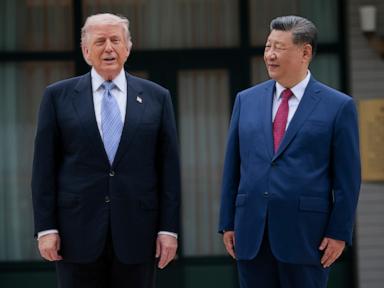
The ritual repeats itself with the predictability of a metronome. A fresh report surfaces detailing quiet material support flowing from Beijing to Tehran, lawmakers on Capitol Hill draft an urgent, deeply worded letter demanding immediate confrontation, and Washington's foreign policy establishment prepares for a high-stakes showdown that rarely materializes in the manner advertised. When lawmakers recently pressured the White House to firmly challenge Chinese President Xi Jinping over Beijing’s reported economic and intelligence lifelines to Iran, they touched on a fundamental friction point in modern superpower relations. Yet the public theater of demanding a presidential confrontation masks a much more complicated reality about how great powers manage proxy friction.
Beneath the Capitol hill rhetoric lies a stark operational constraint. Washington wants Beijing to choke off the commercial and logistical veins keeping the Iranian state afloat, particularly as tensions in the Middle East strain American military and economic bandwidth. Lawmakers point to alarming intelligence—such as reports regarding commercial and technological transfers, potential satellite tracking assistance, and sanctions-evading oil trade—arguing that treating China and Iran as isolated diplomatic tracks is a strategic error. For congressional critics, any summit between American and Chinese heads of state that fails to extract an ironclad, verifiable pledge to abandon Tehran is viewed as a missed historical opportunity. Discover more on a similar issue: this related article.
The White House calculus, however, operates on an entirely different frequency. When pressed on whether he would forcefully back Xi into a corner over the issue, the response from the executive branch has consistently favored transactional pragmatism over moralistic public scolding. Publicly, the administration has framed Beijing’s behavior through a lens of cynical equivalence, brushing off accusations with the observation that intelligence gathering and global maneuvering are universal trades. Privately, diplomats are forced to balance the immediate need to squeeze Tehran against the broader, fragile architecture of global trade and debt management that ties Washington and Beijing together.
This dynamic exposes the limitations of congressional posturing. Demanding that a president "confront" a peer competitor assumes that a stern warning in front of television cameras will instantly rewrite a foreign adversary's strategic ledger. In practice, Beijing views its relationship with Tehran through the prism of its own energy security and long-term geopolitical positioning. Cheap oil and a permanent counterweight to American hegemony in the Persian Gulf provide utility that cannot be easily negotiated away with a diplomatic reprimand. When U.S. envoys emerge from high-level talks claiming to have secured assurances that Beijing is winding down problematic support, foreign policy veterans understand the inherent ambiguity of those promises. Assurances are cheap; compliance is verifiable only through intelligence collection that remains perpetually opaque. Further analysis by Al Jazeera delves into related perspectives on this issue.
Furthermore, the domestic political incentives in Washington distort the debate. Lawmakers can afford to draw hard lines because they do not bear the responsibility of managing a potential escalation that could freeze vital supply chains or trigger broader economic retaliation. For a fractured Congress, taking a hardline stance on China and Iran simultaneously satisfies multiple domestic constituencies without requiring them to weigh the collateral damage. If the administration adopts the posture, lawmakers claim credit for the pressure; if the administration demurs, lawmakers weaponize the inaction as proof of weakness.
The core truth of the matter is that superpower competition is managed through a series of messy compromises, back-channel warnings, and unacknowledged accommodations, rather than cinematic ultimatums. Beijing will continue to hedge its bets in the Middle East, walking right up to the line of what Washington deems tolerable without crossing into open provocation that invites severe secondary sanctions. Until Washington is willing to impose costs so prohibitive that they break the bilateral economic relationship entirely—an outcome neither side truly desires—letters from Capitol Hill will remain what they have always been: institutional theater designed to signal resolve in a system increasingly incapable of shifting the underlying balance of power.
This video provides additional context regarding the diplomatic tensions and public statements surrounding high-level discussions on international policy and trade dynamics.



