The Grand Theater of Economic Detente
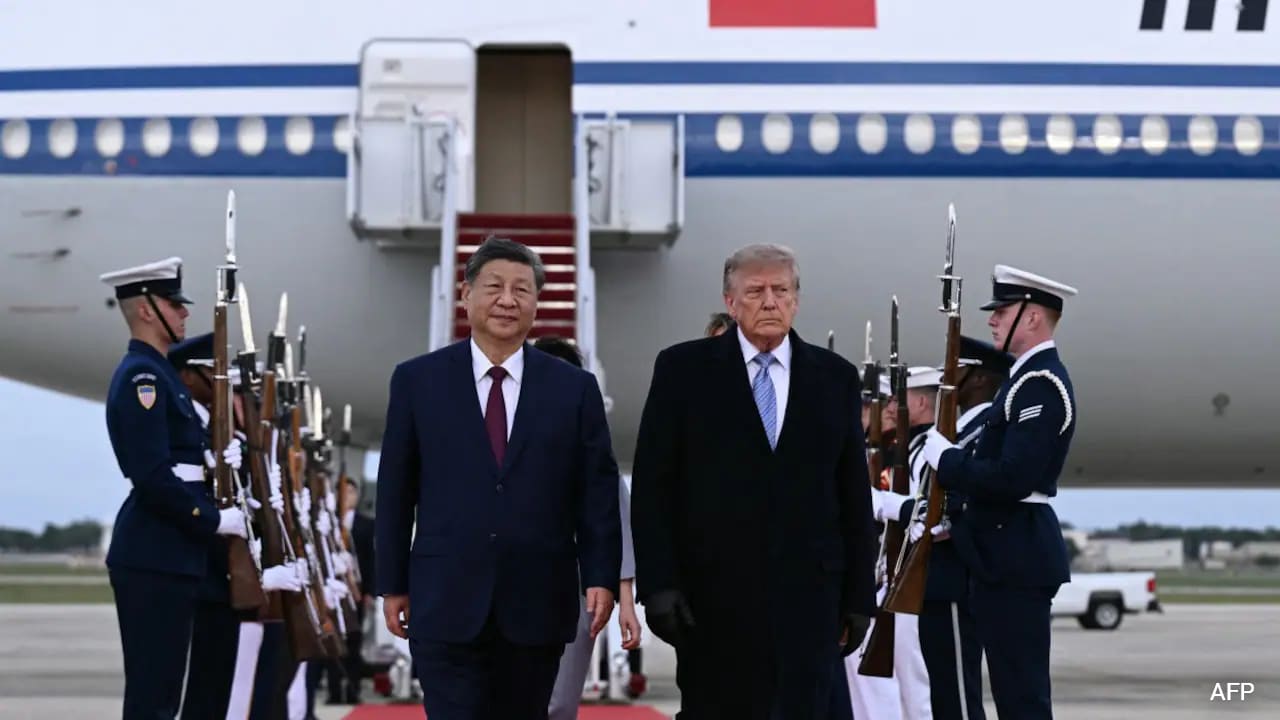
Diplomacy often resembles professional wrestling. Both sides scream for the cameras, slam folding chairs, and tear their shirts off, only to share a quiet beer in the parking lot once the arena lights dim. When the administration announced a sudden trade truce with Beijing coinciding with a rare state visit by Xi Jinping, financial markets reacted with immediate, predictable relief. Stocks ticked upward. Pundits on cable networks celebrated a breakthrough in bilateral relations.
Anyone who has spent more than twenty minutes covering Washington and Beijing knows better. You might also find this related coverage useful: The Second When Asphalt Ends and Everything Changes.
Beneath the polished handshakes and carefully staged photo opportunities lies a fragile arrangement built on mutual exhaustion rather than genuine resolution. Tariffs remain largely intact. Export controls on advanced semiconductors continue to choke Beijing's technological ambitions. The structural grievances that triggered the trade conflict in the first place—intellectual property theft, massive state subsidies, and cyber espionage—did not vanish because two motorcades met on the tarmac.
The truce is real, but it is temporary. It represents a tactical pause in an ongoing structural war for global hegemony. Understanding why this accommodation happened requires looking past the official press releases and examining the cold arithmetic facing both capitals. As highlighted in latest coverage by USA Today, the implications are notable.
The Domestic Pressures Driving the Deal
Washington and Beijing arrived at this diplomatic crossroads pushed by entirely different domestic demons.
In the United States, stubborn inflation and supply chain anxieties continue to weigh heavily on consumer sentiment. Despite political rhetoric regarding domestic manufacturing renaissance, American importers still rely heavily on factories across the Pacific for everyday goods. A protracted trade war right before an election cycle carries severe political costs. Business lobbies, whispering quietly behind closed doors in Georgetown restaurants, made it clear that escalating tensions further would squeeze corporate margins beyond endurance.
Across the ocean, Beijing faced a far more acute economic reckoning. Property sector collapses, anemic domestic consumption, and mounting local government debt have slowed the world's second-largest economy to a crawl. The leadership in Beijing desperately needs stability to restore foreign investor confidence and prevent capital flight. An outright economic rupture with their largest export market was the last thing Beijing required while trying to restructure a wobbling financial foundation.
Neither side folded. Both sides simply needed to catch their breath.
The Semiconductor Battlefield
While agricultural purchases and symbolic diplomatic gestures dominate the headlines, the real war continues to be fought in cleanrooms and silicon fabrication plants. Advanced semiconductors remain the modern world's high-stakes currency.
Washington's strategy relies on choking off Beijing's access to extreme ultraviolet lithography machines and high-end artificial intelligence chips. This policy did not change during the recent summit. In fact, American trade officials tightened enforcement mechanisms during the very weeks leading up to the meeting. Beijing, meanwhile, accelerated efforts toward technological self-reliance, pumping billions of state funds into domestic chip design and legacy node manufacturing.
This technological decoupling cannot be papered over by a trade truce. It is a zero-sum competition over who will control the commanding heights of the twenty-first-century economy. When Beijing agrees to buy more American soybeans or rare earth metals, it costs them very little in the grand scheme. When Washington refuses to lift silicon sanctions, it strikes at the core of Beijing's long-term economic strategy.
Structural Realities of the Bilateral Chasm
Treating this recent diplomatic maneuver as a permanent peace treaty ignores decades of accumulated institutional friction. The fundamental divergence in economic models makes lasting harmony nearly impossible.
State capitalism operating under a tightly controlled political apparatus sits uneasily alongside market capitalism. When state-subsidized overproduction floods global markets with cheap electric vehicles and solar panels, American and European manufacturers scream protectionism. When Western governments erect tariff walls and national security barriers, Beijing decries unfair containment and protectionist bullying.
Neither party is entirely wrong. Both are pursuing national survival and preeminence through whatever instruments remain at their disposal.
Industry analysts tracking supply chains note a quiet, permanent shift regardless of summit optics. Corporate boardrooms are executing a strategy known as China Plus One. Factories are opening in Vietnam, Mexico, India, and Indonesia. Supply chains are hardening. The hyper-globalized integration of the early 2000s is dead, replaced by a managed, suspicious interdependence.
The Illusion of Finality
Journalists love a clean ending. We look for the climax of the story, the final resolution where good triumphs over evil or adversaries become friends. International relations refuse to cooperate with narrative convenience.
This trade truce is a ceasefire in a protracted economic cold war. It provides breathing room for corporate treasurers and jittery politicians. It lowers the immediate risk of a catastrophic trade collapse. But it does not resolve the underlying contradictions of the relationship.
The next flare-up is not a matter of if, but when. It might be sparked by maritime disputes in the South China Sea, fresh restrictions on artificial intelligence investments, or retaliatory export bans on critical minerals.
When the next crisis arrives, the memory of this summit will fade quickly. The grand theater will return. The folding chairs will come out again. Until then, enjoy the quiet while it lasts.