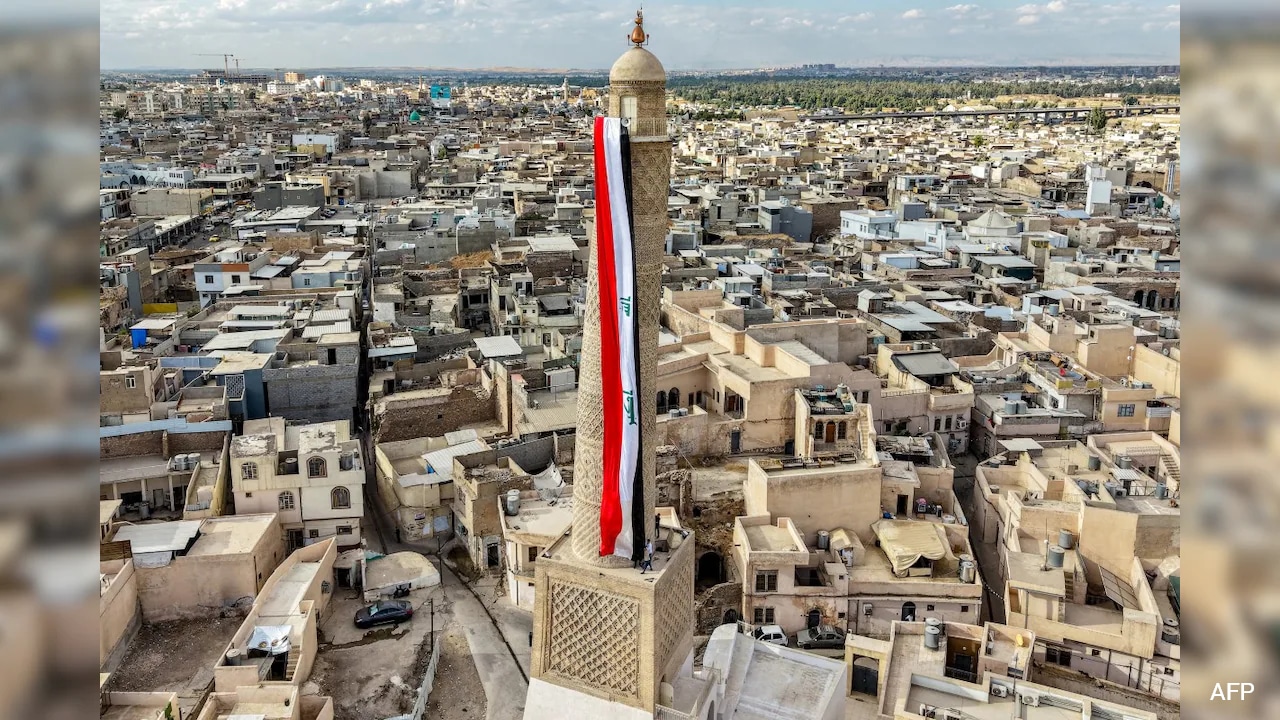
Twenty-three years after American armor rolled across the berms from Kuwait, the flags over Erbil Air Base and remaining installations were hauled down. Operation Inherent Resolve officially closed its books on September 30, 2026. Washington packed its bags, leaving behind an embassy detachment and a skeletal air defense crew. Across the Shiite neighborhoods of Baghdad and the southern governorates, fireworks lit the night sky. Militia commanders in designer fatigues stepped in front of television cameras to declare a historic triumph over imperial ambition. They celebrated a hard-won expulsion, portraying the departure as a definitive vindication of years of rocket fire and drone attacks against coalition outposts.
Yet the cheering masks a far more complex structural reality for pro-Iran groups across Iraq. When foreign adversaries leave the theater, the unifying friction that justified armed resistance evaporates instantly. Organizations like Kataib Hezbollah and Asaib Ahl al-Haq built their entire public legitimacy on fighting a visible foreign occupier. Without that external target, they stand exposed as parallel governing entities competing directly with the Iraqi state for resources, authority, and public patience. The departure of American forces does not hand them total regional dominion. Instead, it strips away their favorite excuse for militarized lawlessness, placing the burden of institutional failure squarely on their own shoulders. Learn more on a similar topic: this related article.
To understand where these factions go from here, one must examine how deeply embedded they became during the two decades following the 2003 invasion. The Popular Mobilization Forces, known locally as Hashd al-Shaabi, are no longer clandestine insurgent cells hiding in rural orchards or basement safehouses. They are legalized state-funded security apparatuses with billions of dollars in annual budget allocations, formal ministerial representation, and substantial legislative weight in parliament through the Shiite Coordination Framework. They function as an entrenched state within a state. When Prime Minister Ali al-Zaidi pushed forward with a transitional roadmap, he did not just negotiate the exit of foreign troops. He inherited an internal security apparatus where men holding government paychecks also command independent rocket brigades answerable to foreign commanders in Tehran.
The financial architecture sustaining these groups relies heavily on state capture rather than external charity alone. Over the past decade, pro-Iran political blocks mastered the art of looting public coffers through border customs manipulation, ghost employees on state payrolls, and parallel economic cartels. They control major transit hubs, construction contracts, and smuggling routes stretching from the western desert to the Iranian border. With the American military footprint gone, these economic vectors remain entirely intact. In fact, without the friction of coalition intelligence surveillance, the business of state capture becomes smoother. Yet this financial dominance creates a severe political vulnerability. When hospitals lack basic medicine, when electricity grids collapse under summer heatwaves, and when youth unemployment spikes past thirty percent, ordinary Iraqis no longer have Washington to blame. They look directly at the political parties that control the ministries and the militias guarding them. Further reporting by USA Today highlights related views on the subject.
The geopolitical backdrop complicates the domestic ledger further. The exit of Western forces did not happen in a vacuum of peace; it coincided with active regional warfare involving Iran, Israel, and the broader Middle East. While Western air defense batteries were pulled from Kurdish strongholds, Tehran-aligned factions found themselves entangled in a wider theater of retaliation. The very missile and drone networks that targeted Al-Asad and Erbil air bases are now tethered to Iranian strategic calculations that transcend Iraqi national interests. When regional escalation flares, these Iraqi factions face immediate pressure from Tehran to open new fronts, dragging the Iraqi state into conflicts its citizens never voted for. Prime Minister Zaidi's administration promised disarmament deadlines, pushing compliance dates forward, but the presence of external patrons makes central government control an elusive fantasy.
Consider the northern frontier with the Kurdistan Region. Kurdish officials watched the American departure with deep apprehension, remembering past betrayals and recognizing their own military vulnerability against advanced drone and missile technologies controlled by neighboring powers. Erbil and Baghdad are forced into an uneasy pragmatism. They must cooperate because the alternative is complete fragmentation. Kurdish leadership understands that the removal of Western air defense assets leaves their airspace exposed to external pressure. Consequently, negotiations between the central government and regional authorities have intensified, focusing on how to construct a unified defense posture before outside actors exploit the vacuum.
Intelligence Deficits And The New Shadow War
When the last coalition intelligence officers packed their servers in September 2026, they took with them a critical layer of early warning capabilities that Iraqi security forces had leaned on for over a decade. The counter-ISIS campaign was never merely about kinetic air strikes; it was an intricate web of signals intelligence, drone surveillance grids, and data fusion centers shared across coalition lines. Without direct access to this architecture, Iraqi intelligence agencies operate in a cloudier environment. Pro-Iran groups frequently claim they can secure the borders independently, yet their operational focus has historically prioritized internal political surveillance and regional projection rather than border counter-terrorism.
Furthermore, the intelligence vacuum affects how Baghdad monitors militia movements. For years, coalition radar and reconnaissance assets provided the central government with objective tracking of unauthorized rocket launches and illicit weapons shipments. With those foreign eyes gone, the state must rely on domestic reporting networks that are frequently compromised or intimidated by the very factions they are meant to monitor. This creates a dangerous gray zone where unauthorized armed groups can rearm, reposition, and establish new underground facilities without immediate detection by federal authorities. The resulting opacity benefits actors who thrive in the shadows, leaving civilian leaders flying blind against well-funded paramilitary networks.
The Ideological Rift Between Najaf And Tehran
Beneath the surface of political posturing, ideological fractures within the Shiite political spectrum are widening. Not all factions within the Coordination Framework subscribe to the absolute clerical authority promoted by Tehran. Traditionalist Najaf-centric clerics, aligned with senior religious authorities, have long advocated for civil state institutions and the integration of all armed groups under strict governmental command. For years, the presence of foreign troops allowed hardline pro-Iran factions to drown out these nationalist voices by waving the banner of anti-imperial resistance. Now that the foreign soldier is gone, the ideological battle between Iranian-aligned militancy and Iraqi civic nationalism moves directly to center stage.
The security vacuum left by the coalition's exit also invites opportunistic predation from residual extremist cells. While Islamic State is structurally decimated compared to its peak years, small underground cells persist in the rugged terrain of the Hamrin mountains and the western desert expanses. Iraqi security forces have demonstrated improved tactical competence, but they still rely heavily on specialized intelligence, logistics, and aerial surveillance support. The bilateral agreements signed between Washington and Baghdad ensure that some advisory channels and maintenance support for Iraq's F-16 fleet continue, but the psychological safety net of a multinational coalition has vanished. If domestic security deteriorates, the political fallout will fracture the ruling coalition.
Public sentiment on the streets of Baghdad and Basra reflects this dizzying ambivalence. While nationalist fervor and anti-Western slogans dominated the celebrations following the final departure, public tolerance for militia checkpoints and economic corruption is wearing thin. The younger demographic, which formed the backbone of historic street protests, views the ruling political elite and their militia enforcers with undisguised contempt. They recognize that the departure of foreign troops has changed nothing about daily economic misery, failing infrastructure, or political cronyism. When a militia convoy speeds through a crowded neighborhood, it no longer symbolizes defiance against an external foe; it represents domestic oppression.
Looking at the broader regional chessboard, Tehran views the American exit as a monumental strategic vindication, the fulfillment of a decades-long project to push Western power out of the Mesopotamian basin. Yet managing victory often proves harder than waging insurgency. Iranian commanders must now navigate an Iraq where public anger is increasingly directed at foreign interference, regardless of its origin. As economic pressures inside Iran mount, the ability of Tehran to endlessly subsidize auxiliary militias in Iraq faces hard financial limits. This forces Iraqi proxy groups to rely even more heavily on domestic resource extraction, further alienating the local populace whose goodwill they desperately need for long-term political survival.
The coming months will test whether Iraqi state institutions possess the institutional fiber to absorb or dismantle parallel armed structures. Prime Minister Zaidi's administration walks a tightrope, balancing between accommodating powerful militia leaders and asserting constitutional authority. Every delay in the disarmament deadlines signals weakness, yet moving too aggressively risks sparking internal armed conflict within major urban centers. The international community watches from the sidelines, offering diplomatic encouragement while keeping its distance from a theater defined by shifting loyalties and unhealed sectarian scars.
There are no clean exits in modern statecraft, only transitions from one set of dangers to another. The final convoy crossing into Kuwait did not end the history of foreign intervention in Iraq; it merely closed one chapter and opened another defined by domestic reckoning. The armed groups celebrating in the streets today have won their battle against the Western occupier, but they have inherited a broken country that refuses to be quietly ruled. As the smoke clears from the departure ceremonies, the true test of power begins, and the margin for error has vanished entirely.