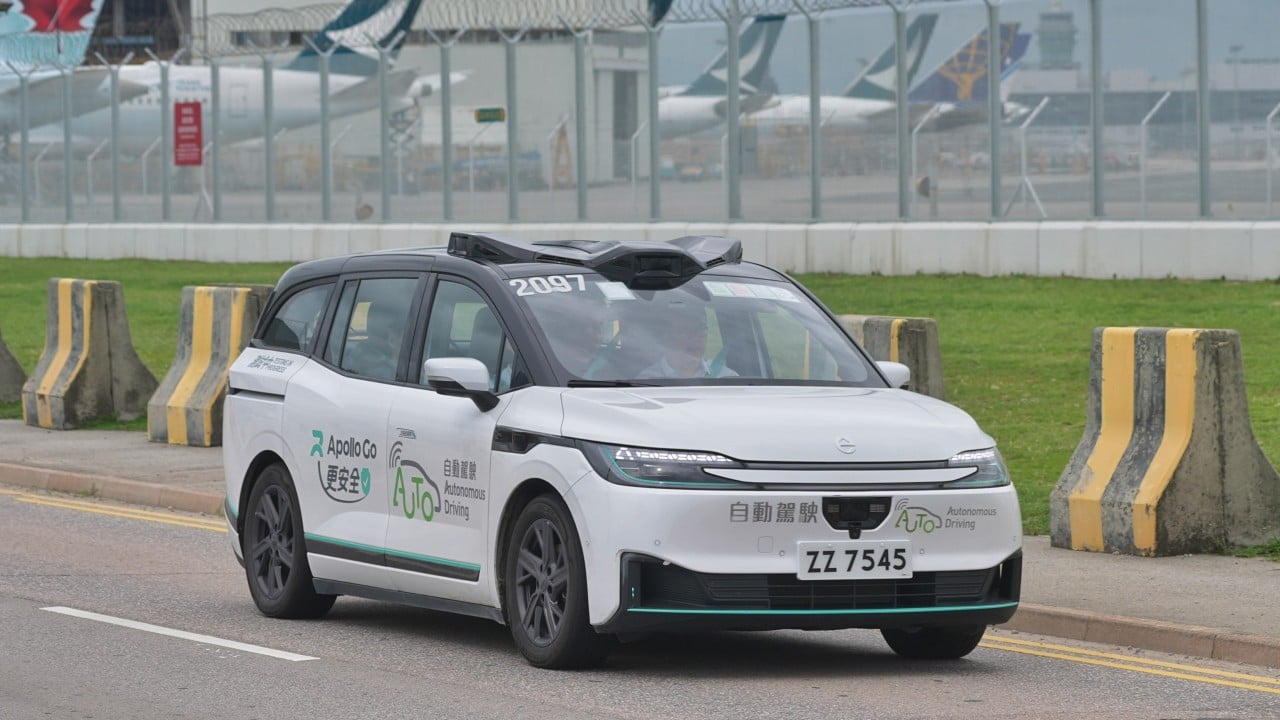
Hong Kong is rolling out fully driverless vehicle tests, and the cheerleaders are out in full force. City officials and tech PR machines want you to believe this is a monumental leap toward an automated, hyper-efficient metropolis.
They are selling a myth.
I have spent years analyzing urban transport infrastructure andwatching tech startups pitch municipal governments on salvation through software. I have seen cities burn through millions of dollars chasing autonomous dreams while their core transit systems rust away. What Hong Kong is doing right now is not leading a revolution. It is running a high-stakes, low-reward PR exercise that misses the entire point of urban mobility.
The Density Fallacy
Hong Kong is one of the most densely populated places on Earth. Space is at an absolute premium. The primary efficiency metric for urban transport in a mega-city is spatial throughput: how many people you can move through a given corridor per hour.
An autonomous sedan, no matter how many lidar sensors you bolt onto its roof, takes up roughly the same footprint as a human-driven sedan. It carries one to four people.
Here is the cold, unyielding math of urban geometry:
- Private/Robotaxi Passenger Car: ~1,000 to 2,000 passengers per hour per lane.
- Dedicated Bus Rapid Transit: ~10,000 to 15,000 passengers per hour per lane.
- Mass Transit Railway (MTR): Up to 80,000 passengers per hour per line.
Swapping a human driver for a computer algorithm does not alter the physical laws of geometry. If you replace 100,000 human-driven cars with 100,000 robotaxis, you still have 100,000 steel boxes clogging the road network. In fact, real-world data from deployments in San Francisco and Phoenix shows that autonomous fleets frequently increase total vehicle miles traveled because of "deadheading"—cars cruising empty while waiting for their next passenger.
Promoting autonomous passenger cars in a city built on vertical density and high-capacity rail is an expensive solution to a problem Hong Kong does not have.
Edge Cases Will Eat the Budget Alive
Proponents claim that software will eventually outmaneuver human reflexes and eradicate traffic incidents. In controlled suburban environments with wide lanes, predictable grid layouts, and pristine weather, self-driving algorithms look impressive.
Hong Kong is none of those things.
It is a labyrinth of narrow streets, sudden torrential downpours, intense neon visual noise, erratic pedestrian patterns, and steep, winding topography. These are not minor details; they are "edge cases," the precise scenarios where machine perception falls apart.
Autonomous navigation relies on a complex sensor stack:
- Lidar: Exceptional for 3D spatial mapping, but heavily degraded by heavy rain, fog, and spray.
- Radar: Penetrates bad weather easily, but lacks the resolution to distinguish between a stationary traffic cone and a small child standing near a curb.
- Computer Vision Cameras: Rich in color and detail, but prone to optical illusion, glare, and low-light degradation.
When these sensors feeds conflict, the system defaults to safety stops. In dense urban traffic, a vehicle that hesitates every time a rain droplet distorts a camera lens or a double-parked delivery truck blocks a line of sight becomes an active hazard. It does not solve congestion; it creates localized gridlock.
Solving the final 1% of edge cases in a chaotic metropolis requires exponentially more capital and computing power than solving the first 99%. City budgets and venture capital funds will be drained attempting to teach neural networks how to read the body language of a Hong Kong jaywalker on a stormy Tuesday night.
The Real Winner Is Already On the Track
The tragedy of this hype cycle is that Hong Kong already operates one of the most efficient, profitable public transportation networks on the planet. The MTR system, combined with an extensive double-deck bus network and the Octopus card integration, moves over 80% of all daily commuter trips.
The MTR achieves high margins because it couples transport with real estate development around its stations. It moves millions of people reliably, cleanly, and at a fraction of the spatial cost of individual vehicles.
If policymakers actually wanted to use automation to improve life for residents, they would double down on automated rail signal upgrades, high-capacity autonomous bus lanes on isolated corridors, and automated freight logistics at the port.
Instead, resources, regulatory attention, and public airtime are channeled into small-scale trials for light passenger vehicles. It satisfies a political desire to appear "forward-thinking" while doing almost nothing to improve daily transit capacity for the vast majority of citizens.
The Uncomfortable Truth About Autonomous Mobility
There is a place for autonomous technology, but it is not in passenger cars navigating dense inner cities. The genuine utility of this tech lies where routes are fixed, predictable, and segregated from chaotic human environments:
- Long-haul freight trucking on interstates.
- Closed-loop industrial sites, ports, and mining facilities.
- Dedicated, grade-separated bus rapid transit corridors.
Trying to force fully autonomous cars into the chaotic, high-density arteries of places like Hong Kong is a misuse of engineering talent and public policy focus. It treats transport as an individual status symbol rather than a collective system problem.
Stop looking at robotaxis as the messiah of urban planning. They are merely a high-tech distraction from the boring, proven, highly effective work of moving massive numbers of people on dedicated, high-capacity tracks.
Stop funding the hype. Double down on what scales.