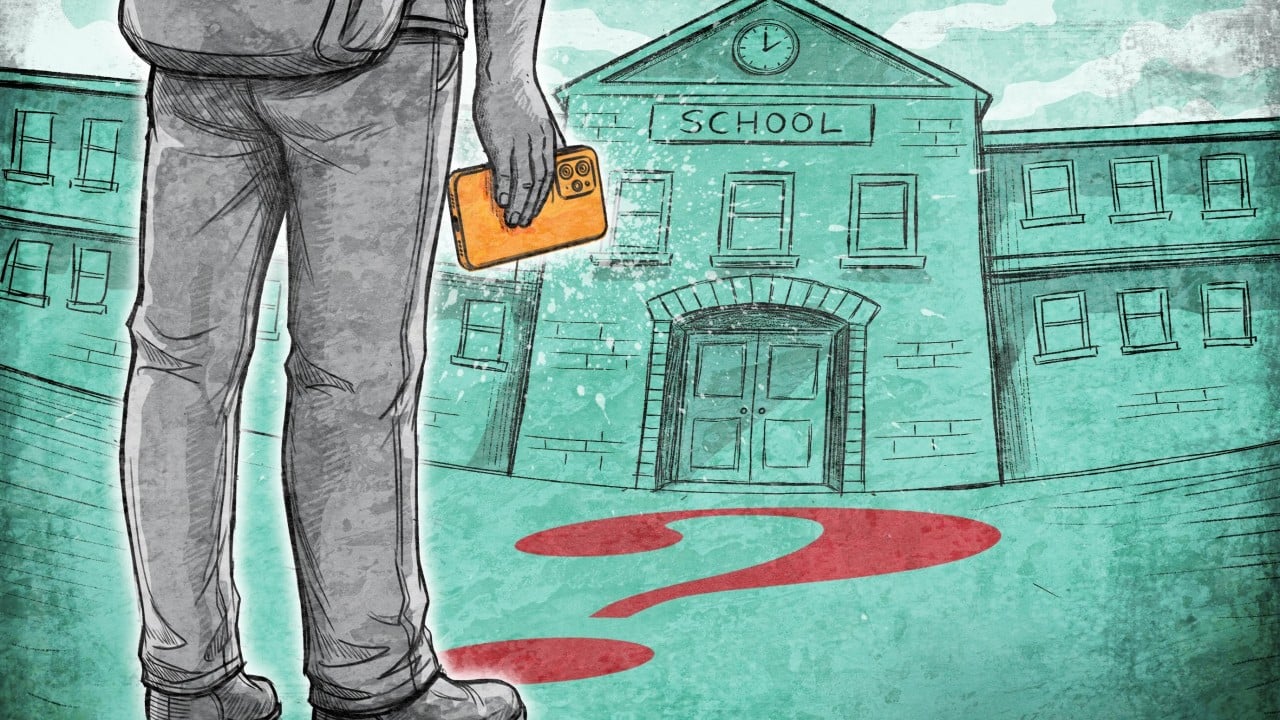
Walk into any secondary school in Kowloon or Hong Kong Island right before the morning bell. You will see a sea of heads bent over glowing glass rectangles. Kids are scrolling through Instagram Reels, tapping through TikTok, or sending last-minute memes on WhatsApp. The noise is constant. It is an addiction, and it is happening right under our noses. The debate over whether a Hong Kong ban smartphones in schools policy should become law has reached a boiling point. Everyone has an opinion. Parents are stressed. Teachers are tired of competing with algorithms. Meanwhile, kids are just trying to keep up with their feeds.
The real issue is not whether screens are bad. We already know they mess with attention spans and sleep. The actual battle centers on control. Who gets to make the final call? Right now, the Education Bureau passes the buck to individual principals. It is a school-based management system. This means your neighborhood school decides its own fate. Some require phones to be locked in lockers. Others just ask kids to keep them in their bags. It is a messy, inconsistent system that leaves everyone frustrated.
The current mess of the Hong Kong ban smartphones in schools debate
Hong Kong does not have a city-wide ban. Let's look at the facts. Secretary for Education Dr. Choi Yuk-lin clarified in Legislative Council meetings that the government relies on a school-based framework. The School Administration Guide gives general principles. But the granular rules are left entirely to individual school heads.
This creates a wildly unequal playing field. At some local schools, like HKMA David Li Kwok Po College or local secondary institutions, discipline teams enforce strict rules. Phones must be turned off at the gate. If a device rings, it gets confiscated, and parents must physically come to pick it up. In contrast, international schools often adopt a more relaxed approach, integrating devices into daily lessons.
Is this patchwork system working? Not really. A 2025 survey by the parent-led group Look Up Hong Kong found that local kids get their first smartphone around age nine. Even worse, 45% of children spend over two hours a day on their screens for non-academic reasons. This blows past the Department of Health guidelines. The current hands-off approach leaves teachers to act as phone police instead of educators.
Why a top down mandate is closer than you think
Other parts of the world are moving fast. Mainland China banned primary and secondary students from bringing phones to school without written parental consent back in 2021. France, the Netherlands, and parts of Australia have instituted blanket bans.
In his late 2025 Policy Address, Chief Executive John Lee announced plans to review guidelines on youth screen time and social media use. This is part of a broader mental health strategy. While the government claims there are no immediate legislative plans due to enforcement issues, the political pressure is mounting. Lawmakers like Lawrence Tang Fei have publicly questioned the effectiveness of voluntary guidelines. The momentum is shifting toward a centralized mandate.
What teachers know that policymakers ignore
Talk to any teacher in the staffroom. They will tell you that smartphones destroy classroom dynamics. It is not just about a kid texting under the desk. It is the mental absence.
When a student receives a notification, their mind leaves the room. Research from global institutions shows it takes up to 20 minutes to refocus after checking a notification. Multiply that by thirty kids in a classroom. Learning becomes impossible.
Bans work when they are absolute. In schools where devices are locked away at 8:00 AM and returned at 3:30 PM, the atmosphere changes. Kids talk to each other during recess. They play basketball. They look up. The anxiety level drops because nobody is missing out on a real-time chat group update during math class.
The counter argument that actually makes sense
Not everyone wants a ban. Some educators believe an outright prohibition is simplistic and lazy. They argue that schools should teach digital literacy, not build walls around technology.
A June 2026 study by University College London highlighted a major generational divide. While nearly 90% of parents and teachers support phone bans, 75% of students oppose them. Kids do not view phones as toys. They view them as essential utility tools. They use them to check MTR schedules, pay with Octopus cards, and track homework assignments via school portals.
If we completely remove phones, we risk driving the behavior underground. Kids still sneak devices into bathrooms. Cyberbullying does not stop; it just moves out of sight. Some principals argue that using technology under supervision prepares students for the modern workforce.
Who gets the final say
Under Chapter 279 of the Education Ordinance, the school management committee holds the legal authority to set school rules. The Education Bureau can suggest, recommend, and guide, but they rarely force rules down the throats of individual schools unless it is a matter of national security or public safety.
So, who makes the final call today? The principal. They must balance the demands of angry parents who want to call their kids after school with teachers who want silent classrooms.
If you want change at your child's school, waiting for a government decree is a mistake. The bureaucracy moves too slow. True change happens when parent-teacher associations demand a specific, locked-pouch policy at the institutional level.
How to implement a policy that actually works
If a school decides to restrict devices, half-measures fail. Telling kids to keep phones in their pockets relies on teenage self-control, which is a losing bet.
The only effective method is physical separation. Schools that use specialized locking pouches or dedicated phone lockers see immediate results. The rule must apply to everyone, with zero exceptions for casual browsing during lunch breaks.
At the same time, schools must provide infrastructure. If students need to check bus schedules or contact parents, landlines or communal tablets must be accessible. You cannot strip away a child's communication tool without offering a safe alternative.
Parents need to back off too. Stop texting your children during school hours to ask what they want for dinner. You are part of the problem. If it is an emergency, call the general office. Otherwise, it can wait until the final bell rings.
Schools must update their internal codes of conduct before the next term starts. Gather the parent-teacher association. Draft a clear, enforceable policy that requires devices to be powered down and stored out of sight from the first bell to the last. Do not wait for a government official in Admiralty to write a law that might take years to pass. Take control of the classrooms now.