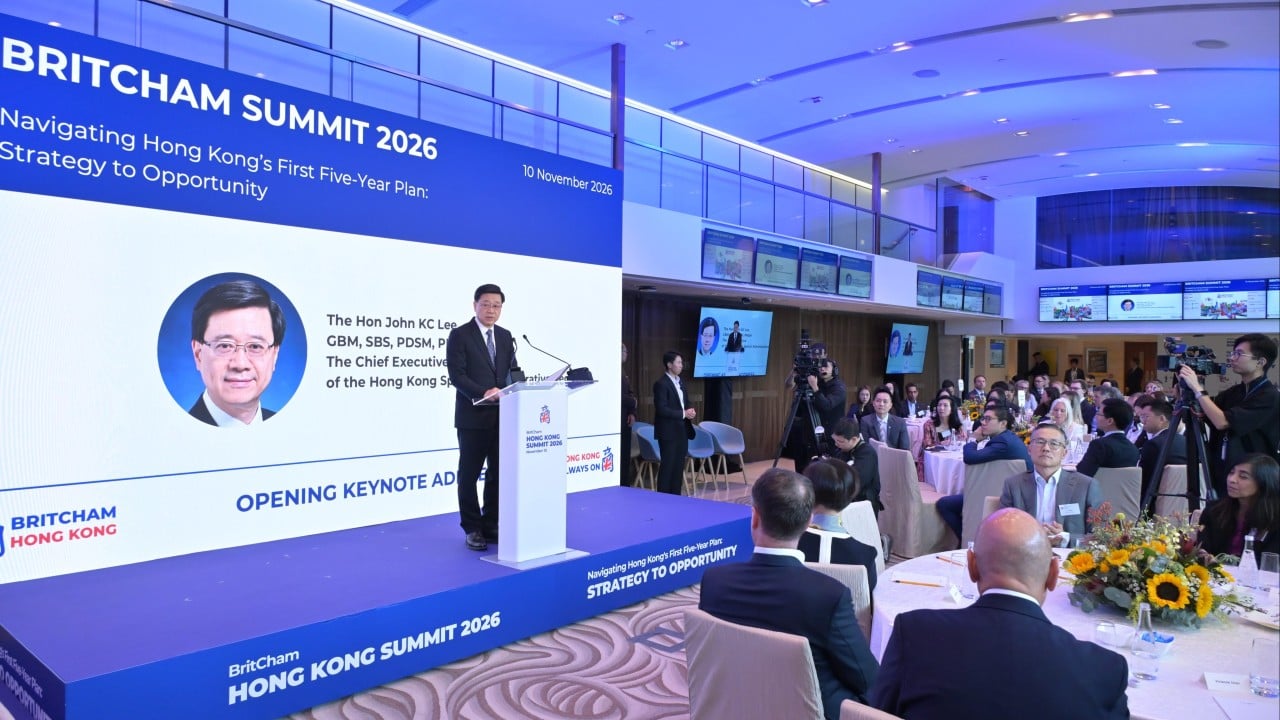
Diplomatic press releases are where truth goes to die.
When Hong Kong Chief Executive John Lee calls the United Kingdom a "much valued business partner," the financial press dutifully prints the quote. They treat it like a market signal. They frame it as a reassuring sign that old-world capital ties remain intact despite years of geopolitical friction, national security crackdowns, and shifting trade blocs.
That framing is completely backwards.
Calling the UK a valued partner today is not an economic strategy. It is nostalgia packaged for public relations. If you are making capital allocation decisions, setting up a regional headquarters, or structuring cross-border supply chains based on polite diplomatic soundbites from Victoria Harbour, you are operating on a map from 1997.
The actual data tells a much colder story. Bilateral trade is stagnant relative to Asian peers. British institutional capital is quietly hedging its bets. And Hong Kong's survival mechanism no longer depends on London's approval, London's liquidity, or London's legal pedigree.
The Myth of the Indispensable Bridge
For decades, the lazy consensus in international finance relied on a simple equation: Western capital needs a safe, English-speaking, common-law airlock to access mainland China. London provided the institutional weight; Hong Kong provided the gateway.
Every chamber of commerce speech from Central to Canary Wharf still repeats this mantra. They talk about "historic ties" and "shared legal traditions" as if centuries-old colonial infrastructure automatically generates modern alpha.
I have watched mid-market European firms burn millions of dollars trying to execute an Asia expansion strategy built on this exact premise. They hire expensive British legal counsel in Hong Kong, rent prestige office space in Admiralty, and wait for the mainland deal flow to magically materialize because they trusted the "super-connector" pitch. Six quarters later, their burn rate is catastrophic, their local competitors in Shenzhen have bypassed them entirely, and their London board is wondering why the "gateway" feels more like a tollbooth.
The airlock model is broken because the two sides of the door no longer trust each other.
When London suspends extradition treaties, criticizes domestic security legislation, and offers visa pathways to hundreds of thousands of Hong Kong residents, the foundational trust required for frictionless capital movement evaporates. You cannot separate political alignment from regulatory risk. Pretending that business operates in a vacuum separate from geopolitics is the most dangerous delusion in modern corporate strategy.
What "Valued Partner" Actually Means in 2026
When a head of government uses warm, conciliatory language toward a vocal critic, look at the balance sheet, not the podium.
Hong Kong faces a severe perception problem in Western boardrooms. Global asset managers are under intense scrutiny from domestic lawmakers in both Washington and London regarding their exposure to Chinese equities and Hong Kong-listed entities. Even when capital isn't explicitly banned from flowing into the city, compliance departments treat it as high-friction.
John Lee’s rhetoric is defensive containment. By publicly embracing the UK as a valued partner, Hong Kong is trying to accomplish three specific objectives:
- Decouple London from Washington: Beijing and Hong Kong policymakers know the United States is a lost cause for near-term diplomatic warmth. The UK, post-Brexit, is desperate for global trade deals and economic growth. Hong Kong is betting that British pragmatism will eventually override British ideological alignment with the US.
- Reassure Legacy Anchors: Heavyweights like HSBC and Standard Chartered are caught in an impossible vise—headquartered in London, regulated by the Bank of England, yet generating the vast majority of their profits in Asia. Hong Kong needs these institutions to stay anchored and compliant, so it feeds them diplomatic cover to show their shareholders that the local government remains welcoming.
- Project Normalcy to Middle Eastern and ASEAN Capital: Hong Kong is aggressively courting sovereign wealth funds from Riyadh, Abu Dhabi, and Southeast Asia. Those investors watch how Western institutions are treated. If Hong Kong appears hostile to British firms, Gulf capital will hesitate.
This is basic statecraft. It is entirely rational from Hong Kong's perspective. But mistaking a defensive PR play for a booming bilateral renaissance is a rookie mistake.
The Structural Divergence Nobody Wants to Admit
To understand why the UK-Hong Kong corridor is losing its edge, you have to look at the mechanics of modern capital markets and regulatory divergence.
First, examine capital formation. Twenty years ago, a major Chinese state-owned enterprise or tech giant wanting international validation had to list on the Hong Kong Stock Exchange (HKEX), relying heavily on London-based institutional bookrunners to price the deal and distribute the shares. Today, Western institutional participation in Hong Kong IPOs has plummeted. The liquidity pool in Hong Kong has fundamentally changed—it is now dominated by mainland southbound capital via Stock Connect and regional Asian funds. London's role as a primary price-setter for Asian equities is shrinking.
Second, look at legal and regulatory friction. Proponents of the "everything is fine" narrative always point to Hong Kong's retention of English common law and the presence of overseas non-permanent judges on the Court of Final Appeal.
Let's be brutally honest about this. Commercial contract law in Hong Kong remains efficient for routine disputes between private parties. If two shipping companies argue over a bill of lading, the system works. However, the moment a commercial dispute intersects with national security, state secrets, data localization, or cross-border sanctions, the common law firewall bends. Several prominent British judges—including Lord Reed and Lord Hodge—resigned from Hong Kong's top court precisely because they concluded they could no longer serve without appearing to endorse an administration that had departed from core political freedoms. When the architects of British jurisprudence walk away from the bench, claiming that "shared legal traditions" remain unblemished is pure fiction.
Third, consider talent migration. Human capital is the lifeblood of any financial center. Over the past few years, the UK's British National (Overseas) visa scheme has facilitated the relocation of well over a hundred thousand skilled professionals, middle managers, and families from Hong Kong to Britain. This was not a tourist wave; it was a permanent transfer of bilingual, Western-educated financial and operational talent. Hong Kong has attempted to backfill this brain drain through aggressive talent schemes aimed at mainland China. The strategy is working in terms of raw headcount, but it fundamentally alters the DNA of the city. The workforce is becoming more mainland-integrated and less tied to the Anglo-sphere.
Dismantling the Wrong Questions
If you search for news on UK-Hong Kong relations, you see the same tired questions repeated by analysts and business owners. Every single one of them misses the point.
"Is Hong Kong still a good base for UK companies expanding into Asia?"
This is the wrong question. You should be asking: Does my business model actually require a physical presence in a high-cost jurisdiction just to be near mainland China?
For 80% of modern service, tech, and consumer businesses, the answer is no. Hong Kong’s commercial real estate and executive compensation costs remain among the highest in the world, while its domestic market is small and increasingly integrated into the Greater Bay Area.
If your target market is Southeast Asia, setting up in Hong Kong to manage operations in Vietnam, Indonesia, or Thailand is geographic malpractice. Singapore has decisively captured the ASEAN headquarters mandate. If your target market is mainland China, putting a regional team in Hong Kong creates an artificial barrier between your decision-makers and your actual customers in Shanghai, Beijing, or Chengdu. You end up paying Hong Kong prices for a team that still has to clear customs and navigate different digital ecosystems just to do a client meeting.
"Will UK-Hong Kong trade recover once political tensions cool down?"
Political tensions are not a temporary weather pattern; they are the new climate.
The UK's Integrated Review Refresh and its broader foreign policy framework explicitly classify China as an "epoch-defining challenge." Regardless of whether Conservatives or Labour hold Downing Street, the structural guardrails around technology transfer, critical infrastructure, and dual-use goods are tightening, not loosening.
Trade in basic goods—Scotch whisky, luxury retail, financial back-office services—will continue. Nobody is embargoing cashmere sweaters. But the high-margin, strategic sectors of the future—artificial intelligence, semiconductors, biotech, green energy infrastructure—are locked behind national security screening mechanisms on both sides. Waiting for a return to the "Golden Era" of 2015 is like waiting for dial-up internet to make a comeback.
"Should UK firms pull out of Hong Kong entirely?"
No. Abandoning a profitable market out of ideological panic is just as foolish as investing blindly out of nostalgia.
The smart money isn't leaving; it is ring-fencing.
The Ring-Fenced Playbook
If you are a corporate strategist, an investor, or a founder operating across this corridor, stop listening to government speeches and start restructuring your operational architecture. Here is what actually works right now.
1. Bifurcate Your Tech Stack and Data Governance
The single biggest operational risk for a British firm in Hong Kong is data compliance. Mainland China's Personal Information Protection Law (PIPL) and Hong Kong's increasingly aligned data security frameworks clash directly with UK GDPR and Western cybersecurity standards.
Do not run a unified global cloud architecture that seamlessly pipes data between London and Hong Kong. Treat your Hong Kong and mainland operations as a segregated digital enclave. Use localized servers, separate CRM instances, and strict access controls. If a regulatory audit hits either side, you want a clean air gap so a compliance issue in Asia doesn't freeze your European operations.
2. Localize Leadership and Ditch the Expat Model
The classic British expat package—housing allowance, international school tuition, hardship pay—is dead weight. Today, an expat executive who doesn't speak Mandarin and lacks deep networks in the Greater Bay Area is a liability.
Promote or hire local Hong Kong or mainland-born executives who understand the new political and commercial reality intuitively. Let them run the local P&L. Your London headquarters should act as a capital allocator and risk auditor, not a micromanager trying to impose British corporate culture on a market that no longer plays by British rules.
3. Shift from "Gateway" to "Treasury and Wealth"
If you are going to pay the premium to operate in Hong Kong, use the city for what it still does better than almost anywhere else in Asia: deep liquidity pools, private wealth management, and cross-border renminbi settlement.
Hong Kong remains the world's largest offshore RMB hub. If your business involves heavy commodity trading, industrial supply chains, or cross-border settlement with Chinese suppliers, Hong Kong's banking infrastructure is unmatched. Use it as a financial clearinghouse and treasury center, not as a bloated sales and marketing hub.
The Downside of the Contrarian View
Every sharp strategy carries risk, and treating the UK-Hong Kong relationship purely as dead weight has blind spots.
If you over-index on geopolitical pessimism and completely dismantle your Hong Kong footprint, you risk locking yourself out of the Greater Bay Area's massive consumer and capital markets. The integration of Hong Kong with Shenzhen, Guangzhou, and Macau creates an economic zone of over 86 million people with a combined GDP rivaling major G7 nations. Through programs like Wealth Management Connect, mainland retail and high-net-worth capital is increasingly flowing into Hong Kong financial products.
Furthermore, if the UK economy continues to stagnate, future British governments will face immense domestic pressure to quietly soften their rhetoric and chase Asian capital regardless of parliamentary pushback. Desperation breeds pragmatism. Companies that burned their bridges on the way out will pay an exorbitant re-entry tax if London decides to pivot back toward Beijing for trade relief.
The goal is not total exit. The goal is clarity.
Read the Balance Sheet, Not the Teleprompter
Geopolitics is unsentimental. Capital flows to where it is safe, where it is treated well, and where it compounds with the least amount of friction.
Right now, the friction between London and Hong Kong is structural, legal, and ideological. No amount of polite diplomatic phrasing from Government House can smooth over the reality of diverging regulatory regimes, departed judges, and shifting liquidity pools.
John Lee is doing his job by keeping the welcome mat out for British business. Your job is to recognize that a welcome mat is not a business plan. Stop mistaking diplomatic courtesy for market momentum, ring-fence your operational risks, and put your capital where the actual growth lives.