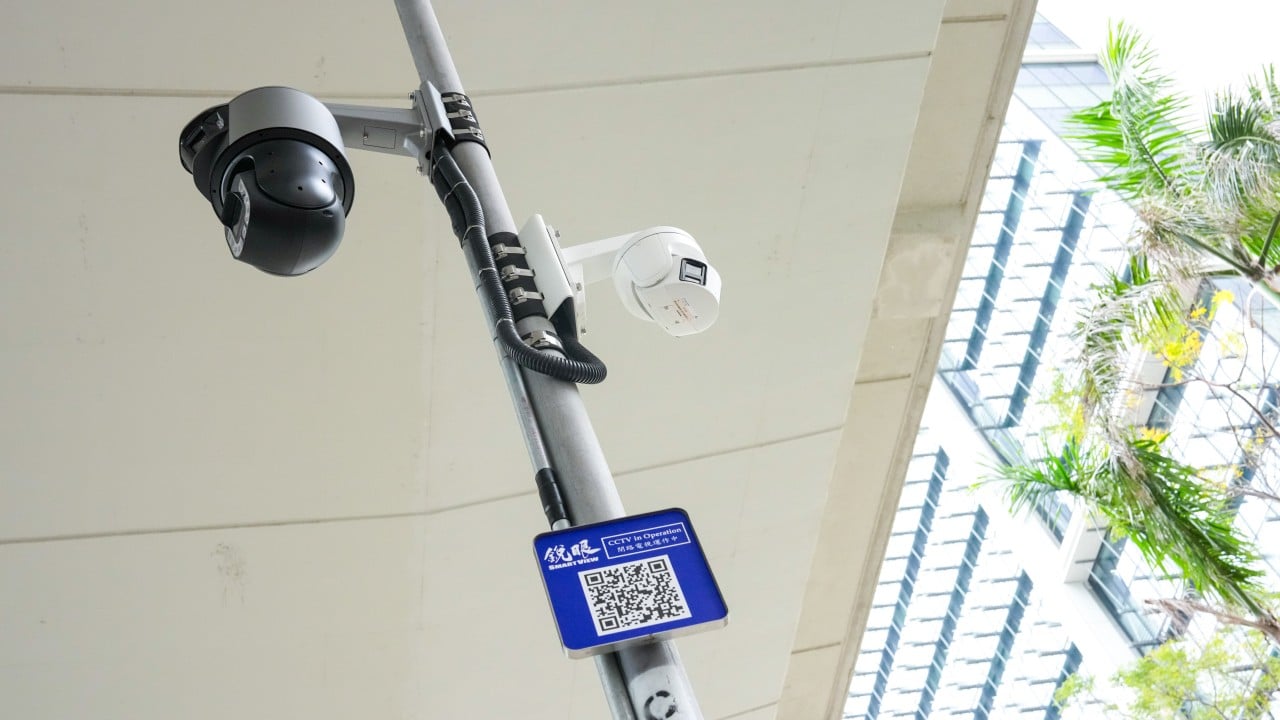
Two men get cuffed in Hong Kong for allegedly orchestrating 123 staged traffic accidents. The media immediately treats it like a standard true-crime thriller. The police hold press conferences detailing how dashcam footage was doctored, how old damage was reused, and how insurance payouts were siphoned. The public nods along, satisfied that the "bad guys" are off the streets and the system worked.
They are completely missing the point.
This is not a story about criminal mastermind drivers. It is a story about the absolute, systemic failure of legacy insurance algorithms.
When a syndicate can successfully execute over a hundred fake accidents before a red flag drops, you are not looking at a policing victory. You are looking at a broken risk-modeling infrastructure that actively rewards predictability. The standard industry response is always the same: increase premiums for everyone, call for harsher sentences, and buy more dashcams.
That lazy consensus is wrong. Stopping fraud by relying on a police report after the hundredth crash is like trying to fix a leaky dam by counting the puddles downriver.
The Illusion of Dashcam Security
Everyone thinks video evidence is the ultimate truth. It is not. It is actually the easiest thing to manipulate when you understand how legacy claims adjusters think.
In my years analyzing risk patterns across logistics and corporate fleets, I have seen operations lose millions because they trusted what looked right on a screen over what the telemetry data actually said. Fraud syndicates do not succeed because they are invisible. They succeed because they know exactly what checkboxes an underwriter needs to tick to clear a claim quickly.
Consider how a typical "crash-for-cash" scheme works in a dense urban environment like Hong Kong:
- The Setup: A target vehicle (often a commercial truck or a luxury car with deep-pocket insurance) is tailgated.
- The Trigger: The lead vehicle brakes aggressively for no apparent reason—a sudden pedestrian, a phantom dog, a simulated mechanical failure.
- The Impact: The target rear-ends the lead vehicle.
- The Claim: In Hong Kong, the rear vehicle is almost universally presumed at fault. The syndicate files for vehicle damage, medical expenses, and loss of earnings.
The competitor articles focus entirely on the human drama—the audacity of doing this 123 times. What they fail to ask is how 123 separate claims passed through the automated clearinghouses of major insurers without triggering a single cross-reference alarm.
The industry treats each accident as an isolated island of data. If the dashcam shows a car braking and another hitting it, the claim is processed. The system looks at the event, not the network.
Why More Regulations Will Not Stop the Scams
The immediate, knee-jerk reaction from regulators is always to demand more documentation. More police reports. More medical certificates. More bureaucratic friction.
This does nothing but penalize honest drivers.
[Traditional System] -> High Friction -> Slow Processing -> High Administrative Cost -> Fraud Undetected
[Network Analysis]   -> Low Friction  -> Real-Time Audit -> Low Administrative Cost  -> Fraud Flagged Instantly
Increased friction does not stop syndicates; they specialize in paperwork. They have dirty doctors to write medical certs and corrupt mechanics to inflate repair bills. When you make the claims process more tedious, you simply create a barrier to entry that only professional fraudsters have the organizational capacity to overcome. The average driver gets frustrated and gives up on small legitimate claims, while the syndicates scale up their operations to cover the rising cost of doing business.
Dismantling the Premium Fallacy
Insurance companies love to argue that fraud is a victimless crime against corporate balance sheets that they unfortunately must pass down to the consumer via higher premiums. This is a convenient lie.
High fraud rates are actually a symptom of an industry that has outsourced its risk management to the public. Instead of investing in real-time network analysis, insurers find it mathematically simpler to absorb the fraud losses, calculate the macro-deficit, and raise the baseline premium for every driver in the territory.
Imagine a scenario where a credit card company allowed a single identity thief to open 123 cards using slightly varied names at the same address, and then just raised interest rates for every cardholder to cover the bill. There would be a congressional inquiry. Yet, in auto insurance, this pass-through cost model is accepted as the natural order of things.
The Network Architecture of Fraud
To actually stop coordinated traffic fraud, you have to stop looking at the vehicles and start looking at the graph.
A single fraudster might change their name, their license plate, or their vehicle model. What they cannot change is the underlying social network required to cash out. Every fraudulent claim requires a web of recurring nodes:
- The Legal Node: The same law firms or claims agents handling an unusually high volume of minor rear-end collisions.
- The Medical Node: The same clinics issuing soft-tissue injury diagnoses that cannot be verified by an X-ray.
- The Mechanical Node: The same garages providing inflated repair estimates for low-speed impacts.
If an insurer's database cannot instantly flag that Driver A (who crashed in Mong Kok) used the same garage as Driver B (who crashed in Kwun Tong six months ago), while both claims were filed by the same legal representative, then that insurer is effectively blind.
The 123 accidents in Hong Kong were not a failure of law enforcement. They were a glaring indictment of siloed corporate data. The syndicates are running decentralized, highly coordinated networks while the insurance sector is still relying on flat spreadsheets and individual claims adjusters working in bubbles.
Stop Looking at the Dashcam, Look at the Telemetry
The real solution is entirely counter-intuitive to the current market trend. Stop buying better cameras. Start reading the IMU (Inertial Measurement Unit) data that is already sitting dormant in every modern vehicle and smartphone.
A dashcam can be angled to make a minor bump look like a violent whiplash event. A 3-axis accelerometer cannot lie. It records the precise $\Delta v$ (change in velocity) and the exact G-forces involved in the impact.
If a claimant alleges severe spinal trauma from a collision, but the vehicle’s telemetry shows an impact of less than $0.5\text{ G}$—equivalent to bumping into a curb while parking—the claim should be auto-rejected and flagged for fraud investigation instantly.
The downside to this approach? It requires insurers to become technology companies. It requires them to integrate real-time data pipelines and build trust with consumers regarding data privacy. It is much easier for them to just print a new brochure, blame "sophisticated criminals," and send you a renewed policy with a 15% rate hike.
The arrest of two men in Hong Kong changes nothing. The blueprint is still out there, the algorithms are still blind, and the next syndicate is already staging crash number one. Treat the data, or keep paying the premium. There is no third option.

