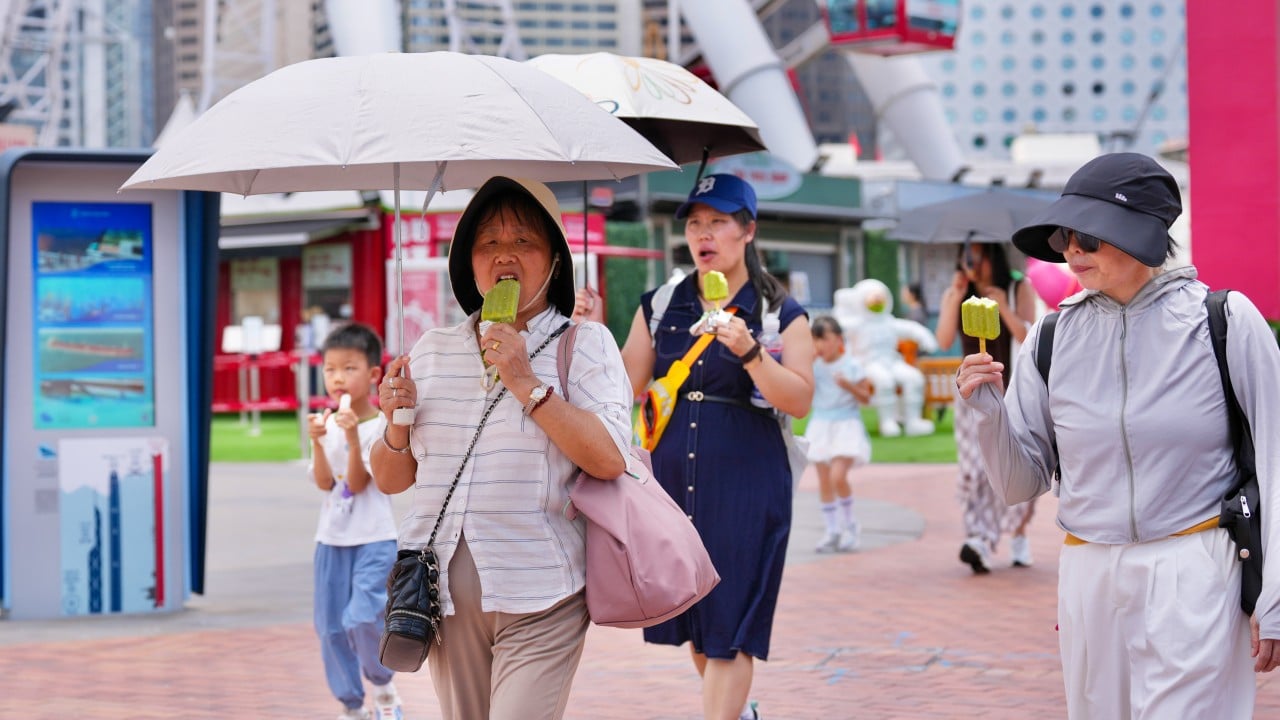
Hong Kong just hit 33.7 degrees Celsius on a Friday that left everyone scrambling for air conditioning. It is not even July yet. The Hong Kong Observatory triggered the Very Hot Weather Warning early in the morning, and the city felt like a literal furnace before lunchtime.
If you think the summers are getting more brutal, you are completely right. This is not just a random hot day. It is part of a dangerous, long-term shift in South China's climate patterns.
The immediate culprit behind the 33.7-degree spike is a heavy subtropical ridge. This high-pressure system sits over the region like a massive, invisible wool blanket. It traps the heat, prevents cloud formation, and completely kills any breeze coming off the South China Sea. When that happens, the concrete jungle of Kowloon and Hong Kong Island turns into a giant radiator.
Why the Concrete Jungle Makes It Worse
Hong Kong has a unique structural problem called the Urban Heat Island effect.
Look at areas like Mong Kok, Sham Shui Po, or Causeway Bay. They are packed with high-rise skyscrapers, narrow streets, and almost zero green space. The glass, steel, and concrete soak up solar radiation all day long. They don't just hold onto that heat; they release it slowly back into the air at night.
That is why nighttime brings no relief. When the daytime temperature hits 33.7 degrees, the evening temperature stays stuck at 28 or 29 degrees. True cooling never happens. Your body needs lower nighttime temperatures to recover from heat stress. Without that drop, the physical toll builds up fast.
Air conditioning makes this problem worse for anyone walking on the street. Every single mall, office tower, and apartment building pumps massive amounts of hot exhaust air straight into the narrow alleys. You are basically walking past thousands of hair dryers blowing in your face.
The Hidden Danger of High Humidity
A temperature of 33.7 degrees in a dry climate like Madrid or Las Vegas is uncomfortable. In Hong Kong, it is a health hazard.
Humidity levels during these early heatwaves routinely hover around 70% to 80%. When the air is already saturated with moisture, your sweat cannot evaporate. Evaporation is your body's built-in cooling mechanism. If sweat stays wet on your skin, your internal temperature keeps climbing.
That is how heat exhaustion turns into heatstroke. Heatstroke is a medical emergency that can cause brain damage or organ failure.
The Labour Department has a three-tier warning system for outdoor workers: Amber, Red, and Black. When the mercury climbs past 33 degrees, these warnings kick in. Employers must give construction workers, cleaners, and baggage handlers mandatory rest breaks every hour. Sadly, compliance is spotty. Many workers feel pressured to push through the heat to meet deadlines, which is a recipe for disaster.
How to Survive the Next Scorcher
Do not wait until you feel dizzy to take action. You need to adapt your daily routine the moment the Observatory issues a warning.
Drink water before you get thirsty. Once you feel thirsty, you are already mildly dehydrated. Skip the iced milk tea or extra iced coffee during lunchtime heatwaves. Caffeine is a diuretic that forces your body to lose fluids faster. Stick to water or sports drinks that replenish electrolytes.
Dress for the humidity. Tight, dark clothing traps heat against your skin. Wear loose, light-colored fabrics like linen or specialized athletic weave that breathes.
Check on vulnerable people. Elderly residents living in subdivided flats or older building blocks without proper ventilation face the highest risk. Many stay in suffocating rooms because they worry about high electricity bills from running old, inefficient air conditioners. Encourage them to use community cooling centers opened by the Home Affairs Department during extreme heat events.
The heat is staying. Plan your outdoor activities for early morning or late evening, use the air-conditioned indoor walkways whenever possible, and take the weather warnings seriously.