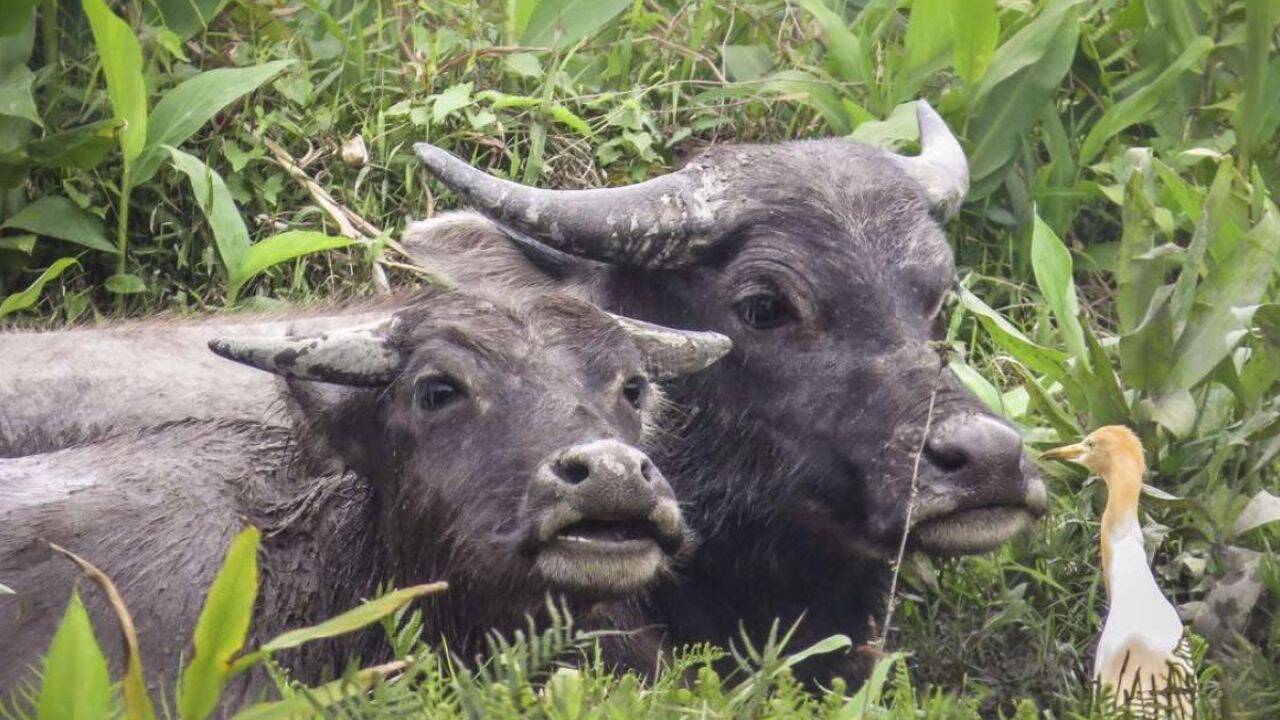
About one thousand feral cattle roam the fringes of Hong Kong's hyper-dense urban environments. Most people assume they are just runaway farm animals. They aren't.
When rapid urbanization and economic shifts hollowed out local agriculture back in the 1970s, many cattle were left behind to fend for themselves. Decades later, a comprehensive whole-genome sequencing study mapped the DNA of these animals to see what happens when livestock are suddenly stripped of human protection.
The results rewrite our understanding of how quickly large mammals can adapt to the pressures of island and wild living.
The Surprising Ancient Roots of Hong Kong Cattle
You might think these cows are simply descendants of modern domestic breeds brought over during the last century. Genetic tracking proves otherwise.
When researchers sequenced the genomes of thirty Hong Kong feral cattle and compared them against more than one hundred global populations, they found a distinct genetic profile. These animals are closely tied to East Asian indicine cattle, but their lineage goes back much further than the 1970s agricultural shift.
Deep inside their DNA, scientists discovered clear signatures of ancient introgression from wild bovines. Approximately 10% to 12% of their genome traces back to banteng, while another 9% to 11% comes from gaur.
These aren't recent mix-ups. Genetic modeling indicates these wild-cattle contributions happened roughly nine thousand years ago. Long before modern farming took shape in Asia, wild ancestors infused these cattle lines with traits tied to oxygen transport and bitter taste receptors. That ancient wild infusion gave domestic stock a hidden biological toolkit long before they ever faced isolation.
Natural Selection Without Human Breeders
Domestic livestock usually rely entirely on humans for disease management, shelter, and breeding selection. Strip that away, and the rules change instantly.
Without farmers choosing traits for milk or meat production, natural selection took the wheel. The genome analysis pinpointed strong signals of positive selection in regions governing crucial survival traits.
Take heat tolerance, for instance. Hong Kong's subtropical climate is punishing, and these animals lack barns, shade structures, or artificial cooling. The DNA data revealed distinct patterns near the ADRA1A gene, which researchers link directly to how mammals recover from severe heat stress.
Bone strength also underwent rapid evolutionary tuning. Variations in the B4GALNT3 gene showed unique patterns compared to managed cattle populations. Navigating rocky terrain, escaping predators, and foraging across rough landscapes demand robust skeletal systems. Natural selection weeded out weak variants fast.
Coat color variation in the herd isn't just random aesthetic noise either. Copy-number variations across genes like NINL, DEXI, and CIITA separate the black-coated cattle from the yellow-coated ones. Black cattle showed higher copy numbers in specific regions, pointing to localized genetic divergence driven by environmental or behavioral dynamics within the isolated population.
High Diversity Despite Small Numbers
Normally, when a small group of animals gets cut off from outside breeding pools, inbreeding depression destroys the population. You see cramped genetic diversity and rising health defects.
Hong Kong's feral cattle bent that rule. Despite a relatively small effective population size and long stretches of geographic isolation, genome sequencing revealed surprisingly high levels of overall genetic diversity.
That resilience stems from their mixed history. The combination of ancient wild bovine ancestry, localized adaptation, and a distinct lack of heavy modern crossbreeding created a reservoir of unique genetic traits. They show wild phenotypic swings in horn shape, body conformation, tail length, and hump size that you'd never find in uniform commercial herds.
What This Means for Conservation and Agriculture
We tend to view domestic animals as fragile creatures completely dependent on human infrastructure. These island and feral populations prove livestock retain deep, flexible evolutionary reserves.
Studying genomes from isolated herds like the ones in Hong Kong gives scientists a blueprint for resilience. As climate change alters global agricultural zones, the heat-tolerant genes and robust physiological traits hidden in unmanaged herds could offer solutions for sustainable farming in warming regions.
Monitor wild populations closely. Protect unique genetic landscapes before urbanization erases the remaining natural habitats. Look past standard agricultural breeds to find the true resilience encoded in ancestral DNA.