The Hong Kong government is fundamentally rewriting the social contract between property owners and the Fire Services Department. For decades, the blue-uniformed officers of the FSD were viewed primarily as first responders—the people who arrive when the smoke is already thick. That era is ending. Under new legislative mandates championed by Security Chief Chris Tang Ping-keung, the department is being repositioned as a powerful regulatory gatekeeper with the authority to bypass traditional legal delays and enforce safety standards at the owner's expense.
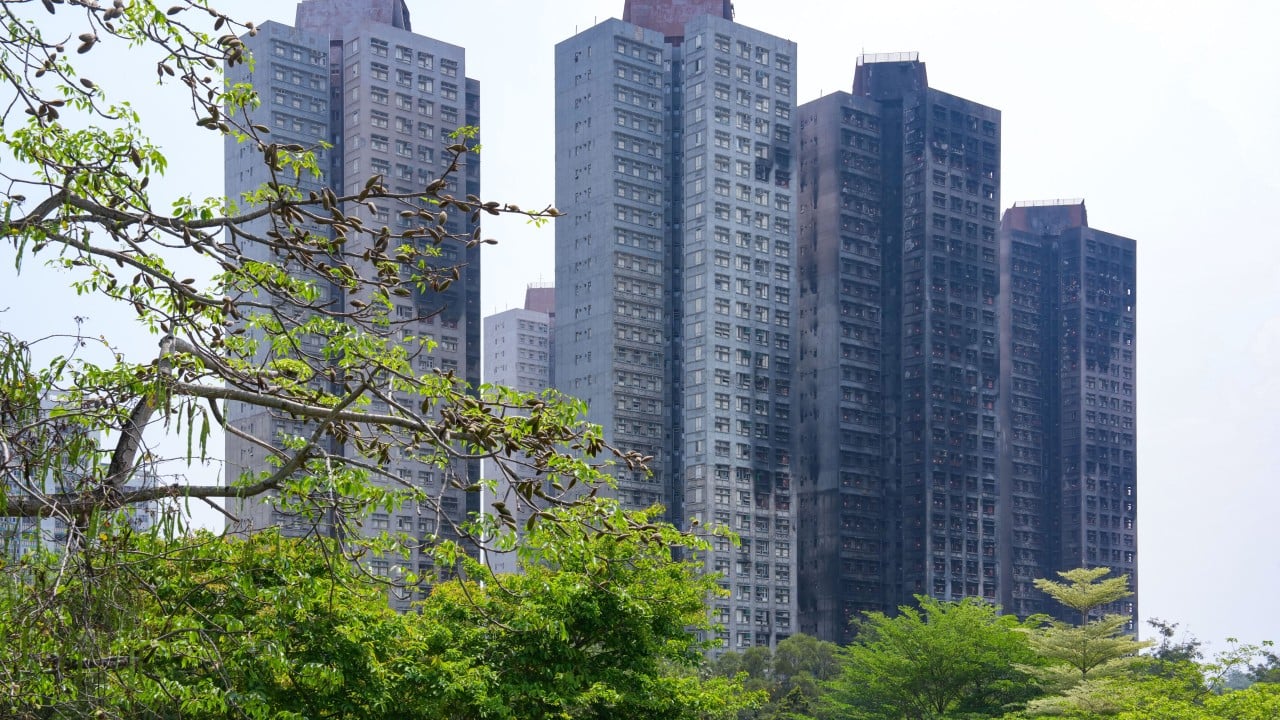
This shift comes in the wake of the devastating New Lucky House fire in Jordan, a tragedy that laid bare the lethal consequences of ignored safety orders. The core problem has never been a lack of rules. It has been a lack of teeth. Thousands of older buildings across Kowloon and Hong Kong Island carry outstanding fire safety directions that have sat gathering dust for years. Now, the state is stepping in to do the work itself and send the bill to the residents.
The End of Voluntary Compliance
Safety in high-density urban environments usually relies on a mix of civic duty and the fear of fines. In Hong Kong, that balance broke down long ago. The Buildings Department and the Fire Services Department have issued tens of thousands of notices to "three-fines" buildings—structures that lack owners' corporations, residents' organizations, or property management companies. Without a central body to coordinate repairs, these notices are often ignored.
The proposed amendments to the Fire Safety (Buildings) Ordinance change the math. The government will no longer wait for a consensus that may never come. Instead, the FSD will act as a "gatekeeper" that identifies high-risk buildings and initiates "default works." This means the government hires the contractors, installs the sprinklers, and clears the protected exit routes.
This is not a charity program.
Once the work is done, the government will demand repayment from the owners, often with a significant surcharge. It is a heavy-handed approach born of necessity. When a single building contains hundreds of subdivided flats, a fire in one unit is a death sentence for the neighbors. The government has decided that the right to property does not include the right to maintain a fire trap.
The Economic Friction of Safety
While the logic of saving lives is unassailable, the logistics of the "gatekeeper" model face massive economic hurdles. Many of the buildings targeted for these mandatory upgrades are populated by the elderly or the working poor. These are people living on fixed incomes in properties they may have owned for forty years.
Suddenly, they are being hit with bills that can reach hundreds of thousands of Hong Kong dollars for communal upgrades.
The government has pointed to existing subsidy schemes, such as those managed by the Urban Renewal Authority, as the solution. However, anyone who has navigated the bureaucracy of the URA knows that the gap between a "subsidy" and "cash in hand" is a wide, frustrating canyon. The Fire Services Department now finds itself in the uncomfortable position of being both a life-saving agency and a debt collector.
If the government performs the work and the owners cannot pay, what happens next? The law allows for a legal charge to be placed on the property. This effectively prevents the owner from selling or refinancing the unit until the debt is cleared. It is a slow-motion seizure of equity in the name of public safety.
Administrative Overload and the Contractor Shortage
There is a practical bottleneck that the Security Bureau rarely discusses in press conferences. Even if the government has the legal authority to fix every dangerous building in Yau Ma Tei, it does not have the manpower.
The pool of qualified fire safety contractors in Hong Kong is limited. These are specialized firms capable of installing high-pressure pumps and industrial-grade water tanks in buildings that were never designed to hold them. When the government enters the market as a massive, singular client for "default works," it will inevitably drive up labor and material costs.
- Scarcity of Labor: Registered Fire Service Installation Contractors are already backlogged with private sector work.
- Structural Integrity: Many older buildings cannot support the weight of modern water tanks without significant structural reinforcement, turning a "fire safety" job into a "major construction" project.
- Maintenance Chains: Once a system is installed by the government, the ongoing maintenance remains the responsibility of the owners. A sprinkler system that isn't maintained is just a collection of expensive pipes.
Without a massive influx of new technicians into the trade, the "gatekeeper" initiative risks becoming a lottery where only a handful of buildings are fixed each year while thousands of others remain at risk.
The Suburban Shadow
Much of the public focus remains on the "tong lau" tenement buildings in the city center, but the Security Bureau is also eyeing the New Territories. The sprawling "village houses" and converted industrial spaces present a different kind of nightmare. These areas often have narrow access roads that prevent fire engines from reaching the scene.
In these contexts, the "gatekeeper" role becomes even more complex. It isn't just about fixing a building; it is about fixing an entire neighborhood's infrastructure. The FSD is looking at localized water supply systems and communal fire hydrants. This expands the department’s remit from building inspector to urban planner.
Shifting the Burden of Proof
Historically, the burden was on the government to prove that a building was unsafe and to pursue the owners through the courts. The new legislative direction shifts that burden. By declaring certain classes of buildings as inherently high-risk, the government creates a fast-track for intervention.
This move toward "proactive enforcement" is a hallmark of the current administration’s broader strategy. It reflects a preference for executive action over judicial or consultative delays. For the Fire Services Department, this means a massive expansion of the Licensing and Certification Command. They are no longer just checking extinguishers; they are managing multi-million dollar renovation tenders.
Critics argue that this bypasses the democratic rights of property owners. They suggest that the government is effectively nationalizing the maintenance of private property without the consent of those who live there. However, the counter-argument is written in the charred hallways of buildings like New Lucky House. The "right" to neglect a building ends when that neglect threatens the lives of the firefighters who have to enter it.
The Firefighter's Perspective
Inside the department, the reaction is mixed. Frontline crews generally welcome any move that makes buildings safer. Navigating a smoke-filled hallway becomes exponentially more dangerous when it is blocked by illegally installed doors or junked furniture. Every "default work" project that clears a stairwell is a direct investment in a firefighter's life expectancy.
But for the inspectors, the workload is becoming astronomical. They are being asked to act as project managers for hundreds of simultaneous construction sites. This requires a level of legal and engineering expertise that goes beyond traditional fire science.
The department is attempting to bridge this gap with technology. Using drones to inspect external fire escapes and AI-driven data analysis to predict which buildings are most likely to suffer a catastrophic fire allows them to prioritize their limited resources. But technology cannot install a fire-rated door.
The Reality of Subdivided Units
No discussion of fire safety in Hong Kong is complete without addressing subdivided flats. These "coffin homes" are the primary reason fire safety orders are ignored. When a single apartment is carved into six units, the original fire engineering of the floor plan is destroyed.
The FSD’s role as gatekeeper will inevitably lead to a collision with the housing crisis. If an inspector finds that a building is so dangerous that "default works" cannot be performed without clearing out the tenants, where do those people go? The Security Bureau insists this is a safety issue, but in the dense reality of Hong Kong, safety is inextricably linked to poverty.
If the government fixes a building and the resulting costs lead to a hike in rent, the very people the law is meant to protect may find themselves priced out of their homes. This is the "hidden" cost of safety. It is a cycle of displacement that the Fire Services Department is not equipped to manage, yet it is a direct consequence of their new enforcement powers.
The Accountability Gap
One major concern involves the quality and cost-effectiveness of government-mandated repairs. When a private owner's corporation hires a contractor, they have a vested interest in negotiating the best price and ensuring the work is durable. When the government hires a contractor for "default works," the incentive structure changes.
There is a risk of "gold-plating," where contractors over-engineer solutions because the government is paying the initial bill and the final payer—the homeowner—has no say in the procurement process. To be a truly effective gatekeeper, the FSD will need to implement a transparent auditing system that proves the costs being passed on to residents are fair and necessary.
The Path of Resistance
We should expect a surge in legal challenges. As the first wave of "default works" bills hits the mailboxes of elderly residents in Sham Shui Po, the courts will likely see a flurry of appeals. Owners will argue that the repairs were unnecessary, overpriced, or technically flawed.
The Security Bureau has anticipated this by streamlining the appeals process within the ordinance, but the sheer volume of cases could clog the system. The government's success depends on its ability to win the "hearts and minds" of the public, or at least convince them that the financial pain is preferable to the alternative.
The true test of this new policy will not be found in a legislative council briefing. It will be found in the next fire. If a building that underwent "default works" survives a blaze with zero casualties, the policy will be hailed as a masterstroke of urban governance. If a fire happens and the newly installed systems fail, the government will face a crisis of confidence that no amount of rhetoric can fix.
The Fire Services Department is stepping out of the firehouse and into the corridors of power. It is a necessary evolution for a city that has outgrown its own safety infrastructure. But as they take on this new role, they are no longer just the heroes who put out the flames. They are the regulators who must navigate the messy, expensive, and often tragic reality of the city's housing crisis. The transition from responder to gatekeeper is fraught with political and social risk, but for a city that lives on top of itself, there is no other way forward.
The days of waiting for owners to "do the right thing" are over. The state has decided that if you will not protect your neighbors, they will do it for you—and you will pay for the privilege. This is the new reality of urban living in one of the world's most crowded cities. The gate is closing.