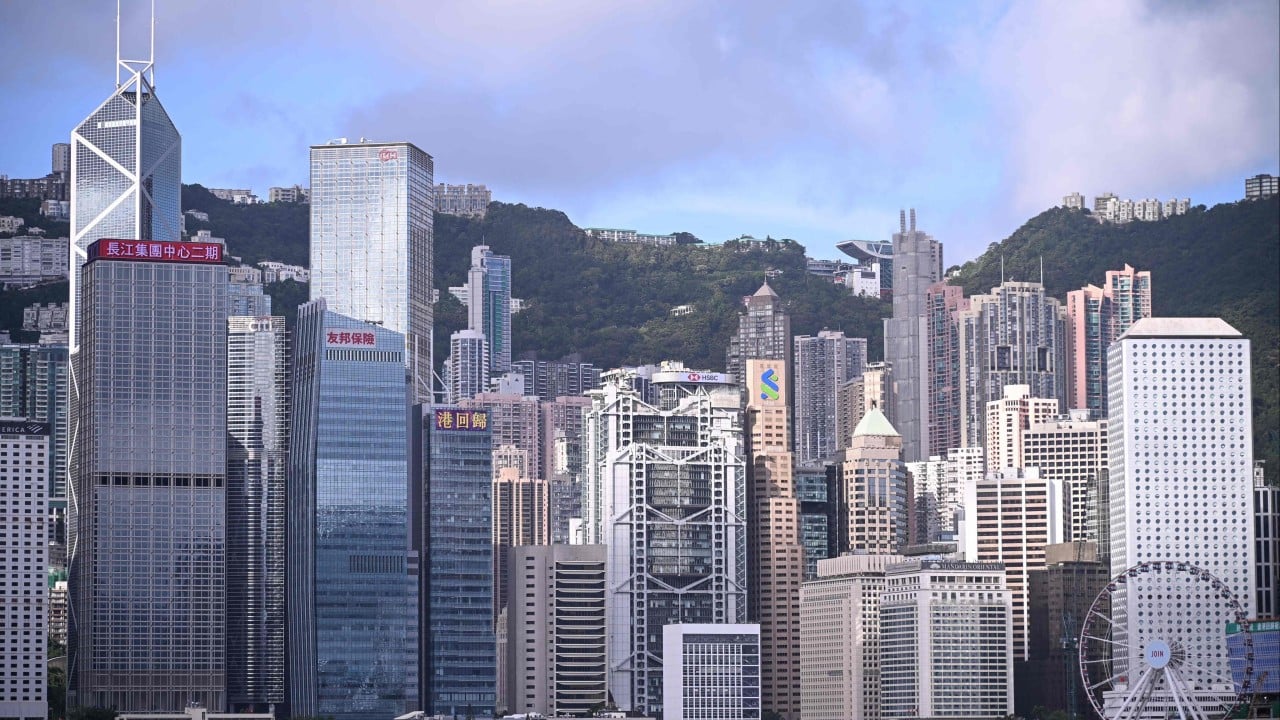
Hong Kong officials are quietly popping champagne corks because Washington let a decade-old national emergency declaration expire. The prevailing narrative in the financial hub is that this signals a thawing of relations, a tactical retreat by the US, or at the very least, a easing of the regulatory chokehold that has plagued the city since 2020.
They are fundamentally misreading the room.
The expiration of a bureaucratic declaration is not a white flag. It is a house-cleaning exercise. Believing that the sunsetting of this specific executive order restores Hong Kong’s special economic status is like thinking a landlord letting a expired noise complaint drop means they are canceling the eviction notice.
The reality is far more cold-blooded. The US did not let the emergency expire out of goodwill. They let it expire because the targeted sanctions, export controls, and decoupling mechanisms have already been permanently baked into federal law. The scaffolding is coming down because the fortress is already built.
The Illusion of De-escalation
Mainstream financial commentators are rushing to label this a win for cross-border trade. They point to the formal wording of Executive Order 13959 and its successors, arguing that the formal cessation of the emergency status lowers the geopolitical risk premium for foreign investors looking at Hong Kong.
This is a dangerous misunderstanding of how Washington’s regulatory machinery works.
During my years advising institutional funds on regulatory risk, I watched compliance departments make this exact mistake. They track the headlines, not the statutory framework. The emergency declaration was an administrative vehicle used to bypass congressional gridlock in real-time. Today, that gridlock does not exist when it comes to trade policy in Asia. The temporary measures enacted under the International Emergency Economic Powers Act (IEEPA) have been superseded by permanent legislative fixtures like the Hong Kong Autonomy Act and a bipartisan consensus that treats economic restriction as a default state, not an emergency.
To put it plainly: the emergency is over because the restrictions are now standard operating procedure.
The Institutionalization of Decoupling
When an executive order expires, the underlying infrastructure does not vanish. The compliance architecture built by global banks over the last six years is not going to be dismantled.
- The Compliance Sticky Factor: No global bank—be it HSBC, Citi, or Standard Chartered—is going to rewrite its risk assessment algorithms because of an expired declaration. Once a jurisdiction is flagged for enhanced due diligence regarding capital flows and dual-use technology, that flag stays red.
- The Legislative Trap: The Hong Kong Autonomy Act mandates sanctions on foreign financial institutions that knowingly engage in significant transactions with individuals contributing to the erosion of the city's autonomy. This is a statute passed by Congress, entirely independent of presidential emergency declarations.
- The Capital Churn: Institutional capital does not move on legal technicalities; it moves on predictability. The expiration changes nothing about the fundamental unpredictability of operating in a geopolitical fault zone.
Imagine a scenario where a multinational tech firm decides to scale up its Hong Kong data center operations tomorrow, assuming the regulatory skies have cleared. Within a quarter, they would hit the brick wall of the Bureau of Industry and Security’s (BIS) Entity List restrictions, which remain completely unaffected by this expiration. The structural barriers are independent of the executive branch's daily mood swings.
Why the Optimists are Asking the Wrong Question
The financial press is obsessing over the wrong metric. They keep asking, "Will this move bring American capital back to the Hang Seng Index?"
The brutal, honest answer is no. And asking that question proves you do not understand how modern asset allocation works.
Western pension funds and university endowments did not flee Hong Kong because of a single emergency decree. They left because the compliance overhead of maintaining assets in the region grew exponentially higher than the potential returns. A fund manager faces severe career risk for misjudging geopolitical exposure. No asset manager is going to risk a congressional subpoena or a Treasury investigation just to catch a minor bounce in local equities based on a bureaucratic technicality.
The real question should be: how long until the current administrative silence is replaced by a more targeted, harder-to-evade statutory regime?
The Downside of Internalizing the False Victory
There is a distinct danger in Hong Kong celebrating this non-event. By treating the expiration as a diplomatic victory, local policymakers risk doubling down on outdated economic strategies. They are acting as if the pre-2019 status quo is retrievable.
It is not.
The strategy of functioning as a frictionless bridge between Western capital and mainland enterprises is structurally broken. The US letting the emergency expire is merely an acknowledgment that the separation of the two financial ecosystems has achieved self-sustaining momentum. Washington no longer needs to declare an active emergency to restrict the flow of sensitive technologies or capital; the existing export control regimes, CFIUS scrutiny, and outbound investment screening mechanisms do the work automatically.
Stop looking at the expiration as a olive branch. It is a sign that the architecture of containment has been successfully operationalized. The tools are sharp, the laws are on the books, and the bureaucracy no longer needs an emergency designation to keep the screws turned tight.