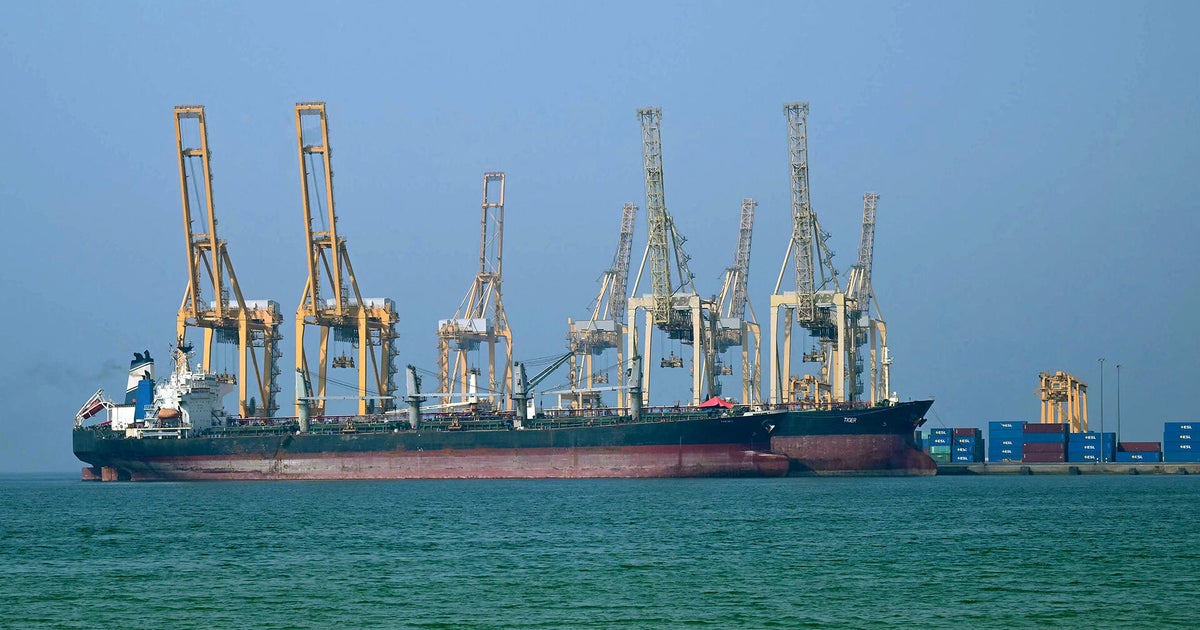
The Strait of Hormuz is the world’s most expensive bogeyman.
Every time a drone buzzes a tanker or a rhetorical firebrand in Tehran mentions "closing the gates," the global media complex hits the panic button. They trot out the same tired maps. They cite the same "20% of global oil" statistic. They warn of a global economic collapse that would make the Great Depression look like a minor market correction.
It is a lazy, surface-level narrative. It treats the world’s most sensitive maritime chokepoint like a simple kitchen faucet that can be turned off with a single wrench.
I have spent decades watching analysts mistake a tactical threat for a strategic reality. They ignore the physics of naval warfare, the desperation of petrostates, and the simple reality that Iran needs that water open more than the United States does. The "Total Closure" scenario isn't a strategy; it’s a suicide pact that nobody is actually willing to sign.
The Myth of the "Plug"
The most common misconception is that you can "block" the Strait of Hormuz like a car crash blocking a one-lane road.
The Strait is roughly 21 miles wide at its narrowest point. The shipping lanes—the actual deep-water channels where VLCCs (Very Large Crude Carriers) travel—are two miles wide in each direction, separated by a two-mile buffer.
To actually "close" this, you would need more than a few sunken ships. You would need to maintain a persistent, multi-layered "denial of access" across a massive stretch of water while being hammered by the combined air power of the U.S. Fifth Fleet and its regional allies.
Sinking a tanker doesn’t block the Strait. It just creates a temporary navigation hazard. Modern salvage and rerouting capabilities mean that unless you are actively patrolling the water with a dominant surface fleet—which Iran does not possess—you aren't closing anything. You are merely raising the insurance premiums.
Why Iran Cannot Afford the "Win"
The "consensus" view says Iran holds the world hostage with the Strait. The reality? Iran is the hostage.
The Iranian economy is a fragile creature held together by oil exports and grey-market trade. Unlike Saudi Arabia or the UAE, which have pipelines that can bypass the Strait to reach the Red Sea or the Gulf of Oman, Iran’s primary export terminals, like Kharg Island, are deep inside the Persian Gulf.
If the Strait closes, Iran’s economy doesn't just catch a cold; it suffers a total organ failure.
Tehran uses the threat of closure as a diplomatic lever because the threat is free. The execution is terminal. They know that the moment the first mine is laid, they lose their only source of hard currency. They also lose the support of China—their biggest customer—who has zero interest in seeing their energy costs triple to satisfy a regional grudge.
The "Oil Shock" That Isn't
We are told that a Hormuz closure would send oil to $200 or $300 a barrel. This assumes a static world where supply and demand are frozen in 1973.
We aren't in 1973.
- The Strategic Reserves: The U.S. and IEA members hold massive emergency stockpiles. These are designed specifically for this 30-day or 60-day disruption window.
- Global Spare Capacity: Production in the Permian Basin, Guyana, and Brazil can scale in ways that didn't exist twenty years ago.
- The Bypass Infrastructure: The East-West Pipeline in Saudi Arabia and the ADCOP pipeline in the UAE can move millions of barrels per day to terminals outside the Gulf.
Is it a massive headache? Yes. Is it the end of Western civilization? Not even close. The market would spike on fear, then settle as the reality of "workarounds" set in. The real losers wouldn't be the Americans; they would be the developing nations in Asia that can't outbid the West for the remaining seaborne barrels.
The Asymmetric Warfare Fantasy
Journalists love talking about Iranian "swarming" tactics—hundreds of fast boats armed with missiles. They portray it as an unstoppable wave that would overwhelm a billion-dollar destroyer.
I’ve seen how these simulations play out when the safety is off.
Swarm tactics work against undefended civilian targets. Against a Carrier Strike Group with integrated Aegis combat systems, 20mm Phalanx CIWS, and hellfire-equipped helicopters, a "swarm" is just target practice.
The physics of the Strait favor the defender of the lane, not the disruptor. To stop traffic, Iran has to stay in the fight. To stay in the fight, they have to survive the most concentrated electronic warfare and precision strike environment on the planet. Their "denial" capability lasts exactly as long as their radar sites remain un-smoldered—which, in a hot war, is measured in hours, not weeks.
The Insurance Trap
The real "closure" isn't military; it’s financial.
Lloyd's of London and the global maritime insurance market have more power to shut the Strait than the Iranian Revolutionary Guard. If underwriters refuse to cover hulls entering the Gulf, the ships stop moving.
This is the nuance the "war-porn" analysts miss. You don't need to sink 50 ships. You just need to make the risk of sinking one ship too expensive for a commercial operator to bear.
However, this is a double-edged sword. If insurance rates skyrocket, the Gulf monarchies—who have trillions in sovereign wealth—simply move to self-insure their fleets. They will provide the sovereign guarantees necessary to keep the spice flowing. They have the cash. Iran doesn't.
The Wrong Question
People ask: "What happens if the Strait closes?"
The better question is: "What happens to the global power balance when we realize it can't be closed?"
A failed attempt by Iran to block the Strait would be the ultimate "emperor has no clothes" moment. It would justify a permanent, even more aggressive Western naval presence. It would likely lead to the destruction of Iran's naval and air assets, removing their regional leverage for a generation.
Tehran is smart. They are chess players, not gamblers. They know that the Strait of Hormuz is a "one-use" weapon. Once you fire it, you no longer have it, and your enemy is now justified in erasing you from the map.
The Bottom Line for Investors and Policy Makers
Stop pricing in a "Global Collapse" scenario based on 21 miles of water.
The disruption would be tactical, messy, and inflationary in the short term. But the structural integrity of the global energy market is far more resilient than the headlines suggest. The danger isn't a "closed" Strait; the danger is the prolonged, low-level friction that keeps risk premiums high without ever triggering the decisive conflict that would actually resolve the tension.
We are living in an era of "Permanent Friction."
Expect more seized tankers. Expect more "accidental" mine strikes. Expect more aggressive posturing. But do not expect the gates to slam shut. The cost of the key is higher than anyone—especially the one holding it—is willing to pay.
Go back to the fundamentals. Look at the pipelines. Look at the satellite imagery of the Kharg Island terminals. Watch the insurance premiums, not the warships. The noise is meant to distract you from the fact that in the Persian Gulf, everyone is bluffing because nobody can afford to see the cards.
Keep your eyes on the tankers, but keep your money on the math.