The Predictable Outcry of the Geopolitical Amateur
The ink wasn’t even dry on the deployment orders before the "flip-flop" narrative hit the wire.
Mainstream analysts love a linear story. To them, Donald Trump launching a naval escort mission in the Strait of Hormuz on Tuesday and pausing it on Wednesday is evidence of chaos, indecision, or a lack of a cohesive Middle East doctrine. They see a 24-hour cycle and scream "volatility."
They are looking at the chessboard through a keyhole.
The reality? This wasn't a tactical retreat. It was a high-frequency trade in the market of global power. By initiating and then immediately freezing the escort mission, the administration didn't "fail" to protect shipping; it successfully weaponized uncertainty. If you’ve spent any time in the energy markets or handled high-stakes negotiations, you know that the threat of a strike is often more valuable than the strike itself. Once you fire the shot, your leverage is gone. While you're holding the gun to the table, you own the room.
The Myth of the "Permanent Presence"
The lazy consensus suggests that for a naval mission to be effective, it must be "robust," "long-term," and "predictable." That is the exact recipe for a multi-billion dollar quagmire.
Traditional military strategy dictates that we send the Fifth Fleet, establish a perimeter, and sit there for six months while Tehran maps our patterns, studies our response times, and waits for a moment of fatigue. That is static defense. It’s expensive, it’s boring, and it’s remarkably easy to circumvent with asymmetric warfare—the kind of mines and fast-attack craft Iran excels at using.
Instead, what we just witnessed was Liquid Deterrence.
- Deployment: Prove the logistical capability to scale up in under 12 hours.
- Pause: Signal that a diplomatic off-ramp exists, but only if the "great progress" mentioned is tangible.
- Uncertainty: Leave the adversary wondering if the ships are coming back in two hours or two weeks.
By pausing the mission, the U.S. didn't lose face. It regained the initiative. It forced Iran to weigh the cost of their next move against a backdrop of a U.S. military that is clearly "on the trigger" but not yet "pulling" it.
Following the Money: The Hormuz Premium
Let’s talk about the data that the "Foreign Policy" types usually ignore: the insurance premiums.
When a permanent naval mission is announced, Lloyd’s of London and other maritime insurers price in a conflict zone. The "War Risk" premiums skyrocket and stay there. This acts as a secondary tax on global oil, driving up costs for everyone from Indian refiners to American commuters.
By moving in "pauses" and "bursts," the U.S. keeps the market off-balance. A 24-hour mission doesn't allow the insurance markets to stabilize a high-rate environment. It creates a spike, followed by a cooling period. For a president who views the world through the lens of a balance sheet, this is a feature, not a bug. He isn't just managing a naval route; he's managing the global Brent Crude price.
If you think this is accidental, you haven’t been paying attention to the last four years of trade negotiations. This is the "Tariff Strategy" applied to the Persian Gulf. Threaten the maximum penalty, show the willingness to execute, then offer a reprieve in exchange for concessions.
The Iran Deal "Progress" is a Distraction
The competitor article cites "great progress" in an Iran deal as the reason for the pause. Don't buy it.
"Progress" is the polite word for "The other side blinked."
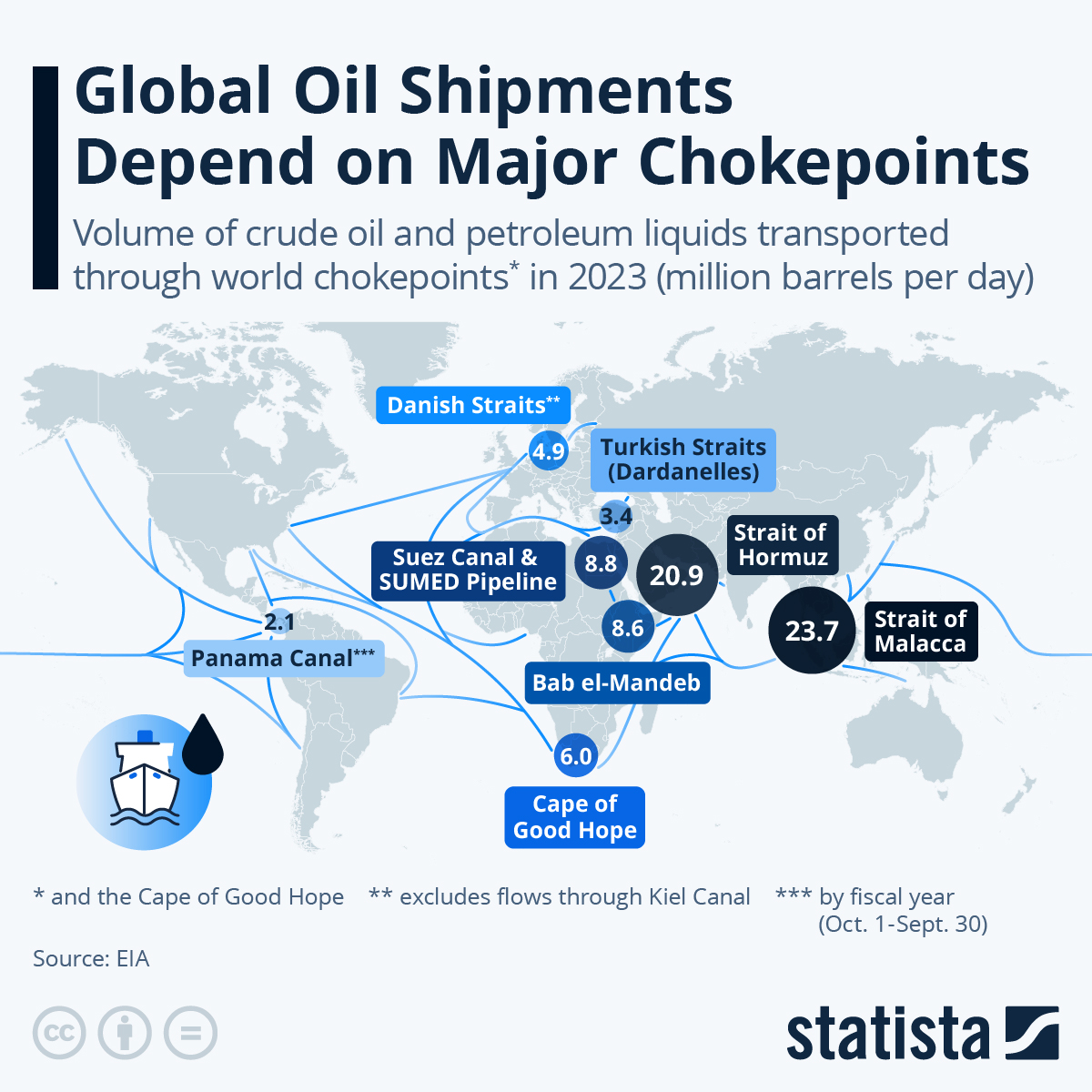
The Strait of Hormuz is a choke point that handles roughly 20% of the world’s liquid petroleum. You don't pause a mission protecting that much wealth because of a nice phone call. You pause it because you received a specific, verifiable guarantee or because the threat of the mission already achieved its immediate psychological objective.
Iran's economy is currently a tinderbox. They cannot afford a total blockade, but they also cannot afford to look weak. By pausing the escort, the U.S. gives the Iranian leadership a way to save face internally while making the concessions required to keep the tankers moving.
Imagine a scenario where the U.S. stayed the course on Tuesday. Iran would have been forced to respond—likely with a "deniable" mine attack or a drone harassment. We would be in a kinetic escalation by Thursday. By pulling back, the U.S. keeps the "escort" option in its back pocket as a recurring threat. It’s the difference between spending your capital and living off the interest of your military reputation.
Why the "Experts" Hate This
The reason you see such visceral pushback from former State Department officials and career generals is that this behavior breaks the "rules" of the international order.
Those rules state that a superpower must be:
- Predictable: So allies can plan.
- Consistent: So enemies know the "Red Lines."
- Bureaucratic: So every move takes six months of committee meetings.
The current administration has realized that being predictable is just another way of being vulnerable. In a world of asymmetric threats, consistency is a liability. If I know exactly how you will react, I can play you. If I have no idea if you’re going to send a carrier strike group or a tweet, I have to be careful every single second of every single day.
The Cost of Staying
Let’s look at the "Expert" alternative. A permanent, multi-national escort mission in the Strait.
$Cost = \frac{Fuel + Maintenance + Hazard Pay}{Geopolitical Stability}$
Historically, these missions don't end. They become permanent fixtures of the U.S. budget. We are still paying for "security" in regions where the original threat vanished decades ago. By refusing to commit to a long-term mission, the U.S. is signaling to regional partners—specifically the GCC countries—that the American taxpayer is not a permanent security guard.
If Saudi Arabia and the UAE want the Strait of Hormuz to be safe, they need to be the ones on the front line. The "pause" is a subtle nudge to our allies: "We can do this, but we won't do it forever. What are you bringing to the table?"
Stop Asking if it’s a "U-Turn"
The question isn't whether this is a U-turn. The question is: Did the tankers get through?
While the pundits were busy typing up their "Chaos in the West Wing" columns, the shipping lanes remained open. The "great progress" might be a temporary truce or a fundamental shift in the nuclear talks, but the mechanism of the pause was the catalyst.
In the world of high-stakes leverage, the most powerful move is the one you don't have to finish. You start the engine, you put the car in gear, you floor it toward the edge—and then you brake. The person in the passenger seat (in this case, Iran) is now much more willing to talk about where we’re driving.
The 24-hour mission was a proof of concept. The pause is the negotiation. To call it a failure is to misunderstand the very nature of modern power.
Stop looking for a "strategy" that looks like a 1990s white paper. The strategy is the volatility. The mission didn't end; it just went into a higher frequency than your "analysis" can track.
Get used to it. The escort mission will be back the moment the "progress" stalls, and it will be gone again before the first op-ed can be published. That isn't a bug in the system. It is the new operating system.
Go check the oil futures. They aren't panicking. Why are you?


