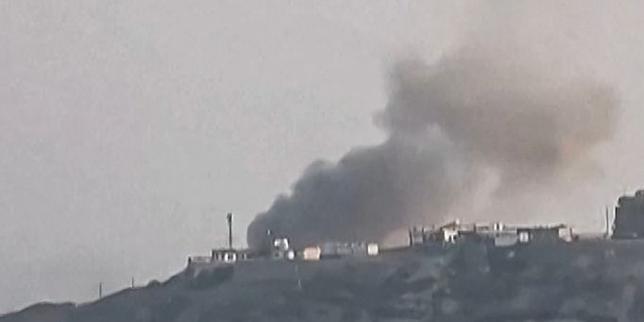
Strikes by Houthi forces near Aden airport alongside Iran's flat denial of involvement in attacks targeting Saudi Arabia point to a calculated escalation in southern Yemen and heightened friction across the Gulf. When missiles or drones land close to a vital transit hub like Aden while Tehran disavows cross-border strikes against Riyadh, analysts and diplomats face a familiar yet volatile pattern of deniability, proxy maneuvering, and strategic signaling.
Understanding what is happening requires looking past the surface headlines of tactical strikes and diplomatic denials. For decades, conflict watchers have seen how regional actors calibrate pressure without triggering an all-out war they cannot afford to sustain. Aden is not just another dot on a map. It sits at the crossroads of maritime trade, fractured Yemeni alliances, and competing external interests.
When violence edges closer to Aden airport, the immediate shockwaves hit civilian travel, humanitarian logistics, and political stability in southern Yemen. Meanwhile, Tehran's insistence that it had no hand in attacks aimed at Saudi Arabia highlights the widening gap between public rhetoric and operational reality in Middle Eastern security affairs. Neither statement settles the matter on its own. Together, they reveal how fragile any pause or diplomatic opening remains.
Why Aden Airport Matters Far Beyond Local Headlines
Aden's airport is a lifeline. It connects southern Yemen to regional capitals, serves as an entry point for diplomats and aid workers, and symbolizes whatever remnant of institutional order exists outside Houthi-controlled territory in the north.
Even strikes that fall near the perimeter rather than directly on the runway carry heavy consequences. Airlines reassess risk within hours. Insurance premiums climb. Aid agencies slow rotations when security margins shrink. A near-miss or perimeter strike still disrupts movement, rattles local officials, and tests the resolve of rival factions vying for influence across southern governorates.
Southern Yemen has long been a crowded arena of competing ambitions. Forces aligned with Yemen's internationally recognized government, the Southern Transitional Council, local militias, and regional backers have often operated with overlapping and sometimes contradictory agendas. Houthi strikes near Aden exploit those fault lines. They remind every actor on the ground that distance from Sanaa does not guarantee immunity.
The Logistics of Pressure Without Full Occupation
Capturing and holding territory far from traditional supply lines is hard. Harassing critical infrastructure is much easier.
Long-range drones and missiles allow Houthi planners to project force across vast distances at a fraction of the cost of conventional armor or large ground formations. Strikes near a major airport or port create psychological pressure and economic friction without requiring permanent boots on the ground in hostile terrain.
That distinction matters for military analysts. Harassment and interdiction are tools of leverage. They complicate negotiations, strain rival coalitions, and force defenders to spend expensive air defense interceptors against relatively cheap unmanned systems. Over time, that cost asymmetry wears down budgets, morale, and political patience.
Fractured Alliances Inside Southern Yemen
No external strike lands in a political vacuum. In southern Yemen, local rivalries frequently shape how threats are interpreted and answered.
One faction may blame another for security lapses. Another may use an external attack to demand more weapons, funding, or political concessions from regional partners. When cohesion inside the anti-Houthi camp frays, every strike near Aden becomes a wedge issue as much as a military event.
Observers who treat the anti-Houthi side as a single, unified bloc miss half the story. Divisions over governance, revenue sharing, and future statehood in the south regularly complicate joint responses. Houthi forces understand those divisions well and time their pressure accordingly.
Tehran's Denial and the Mechanics of Plausible Deniability
Whenever attacks hit or threaten Saudi territory, Tehran's playbook is predictable. Official statements deny responsibility, push back against accusations of command-and-control, and frame regional groups as independent actors responding to their own grievances.
Denials are rarely simple lies or simple truths. They are instruments of statecraft.
By rejecting accusations of directing attacks on Saudi Arabia, Iranian officials aim to avoid direct retaliation against Iranian soil or core assets while keeping diplomatic channels open when convenient. If Riyadh and Tehran have engaged in talks or confidence-building efforts, outright admission of cross-border strikes would blow up that track immediately.
Yet seasoned intelligence analysts treat blanket denials with deep skepticism. Over the past decade, technical inspections of recovered drone and missile components, supply-chain tracking, and training patterns have repeatedly pointed to external technical assistance and munitions transfers flowing toward Houthi forces. Even when a group makes its own targeting decisions or fires on its own initiative, capabilities do not materialize out of thin air.
Autonomy and Alignment Are Not Mutually Exclusive
A common mistake in coverage of regional conflicts is treating Houthi forces either as mindless puppets or as completely isolated actors. Reality sits messily in between.
The Houthis have their own ideological worldview, domestic grievances, and strategic goals inside Yemen. They do not need a phone call from Tehran to dislike Saudi Arabia or want leverage over rivals at home. At the same time, shared hostility toward Washington, Israel, and Gulf states creates strong alignment on broader objectives.
That overlap allows Iran to claim non-involvement in specific strikes while benefiting from the pressure those strikes create on adversaries. It is a convenient arrangement for Tehran. It leaves Saudi Arabia, the United States, and regional partners with the hard problem of proving attribution in a way that persuades skeptics and deters future launches.
What Riyadh Weighs Between Escalation and Restraint
Saudi Arabia sits in a difficult position whenever cross-border threats flare up again. Retaliating hard risks drawing renewed fire onto Saudi cities, energy infrastructure, or shipping lanes. Doing too little invites further probing and signals weakness at home and abroad.
Over recent years, Riyadh has balanced deterrence with cautious diplomacy. Saudi leaders have sought ways to wind down open-ended military entanglement in Yemen while protecting border security and economic transformation plans. That balancing act is delicate. Every reported attack near the kingdom tests whether diplomatic off-ramps can survive renewed military friction.
Credible air and missile defense remains essential, of course. Still, interception alone is a defensive grind. If a single low-cost drone forces a multi-million-dollar interceptor launch, the math favors the attacker unless broader diplomatic, economic, or maritime measures shift the incentives.
Maritime Chokepoints and the Wider Regional Equation
Events in southern Yemen cannot be separated from the Red Sea and the Bab el-Mandeb strait. Aden sits right next to one of the world's most important maritime arteries.
Shipping companies watch developments around Aden closely because instability there feeds into broader fears about commercial transit risk. Even when a strike occurs near an airport rather than a vessel, mariners and insurers read the wider security environment. Rerouting ships around southern Africa adds days and millions of dollars in fuel and charter costs to global trade.
Regional tensions also interact with broader geopolitical rivalries. Major powers have competing priorities in the Middle East, from maritime security and energy markets to diplomatic influence and arms sales. No single external capital controls every lever on the ground, which makes crisis management slower and more prone to miscalculation.
When local conflicts, proxy capabilities, and great-power distractions intersect near a vital shipping lane, a single misread signal can turn calibrated pressure into a wider crisis.
The Limits of Purely Military Solutions
History in Yemen offers a sobering lesson for anyone looking for a quick military fix. Airpower and ground operations have repeatedly degraded specific targets without permanently resolving the underlying political conflict.
A hypothetical example illustrates the trap clearly. Suppose a coalition conducts precision strikes against missile launch sites after an attack near Aden. Launchers are destroyed, stockpiles are hit, and officials declare a tactical success. Yet if smuggling routes remain open, local grievances go unaddressed, and rival factions inside Yemen still refuse to cooperate on governance, new launch teams and mobile platforms can emerge weeks later.
Military pressure can buy time and impose costs. It cannot substitute for a durable political settlement inside Yemen or a credible regional framework that reduces incentives for cross-border escalation.
Reading the Signals Without Falling for Spin
Covering or analyzing events like strikes near Aden and Iranian denials requires disciplined skepticism. Official briefings from every side are shaped by narrative management.
Strikes may be minimized by one party to project calm or exaggerated by another to rally support or justify action. Denials may be issued to cap escalation even while covert support continues behind closed doors. Neither side has a monopoly on candor.
A practical way to judge what is actually happening is to follow tangible indicators rather than rhetoric alone. Look at flight suspensions and insurance adjustments around Aden. Watch diplomatic traffic between Gulf capitals and Tehran. Track whether attacks remain sporadic and deniable or grow more frequent, coordinated, and complex.
Key Indicators Worth Watching Closely
Several concrete markers help separate routine noise from a genuine turning point in the conflict:
- Infrastructure impact: Whether strikes remain on the periphery or begin damaging runways, control towers, fuel depots, or port facilities that choke off supply lines.
- Cohesion among anti-Houthi forces: Whether southern and government-aligned groups coordinate responses or turn accusations against one another.
- Diplomatic posture in Riyadh and Tehran: Whether backchannel talks continue quietly or public rhetoric hardens into threats of direct retaliation.
- Maritime risk assessments: Whether commercial shipping advisories, war-risk premiums, or naval deployments shift in response to southern Yemeni instability.
Each of these indicators reflects real-world constraints and choices rather than talking points. Together, they offer a clearer window into whether the region is sliding toward a broader confrontation or testing the boundaries of a tense standoff.
Watch how the next set of diplomatic moves responds to the physical reality on the ground around Aden, because actions taken in the wake of these strikes will say far more than any denial issued from afar.