The Strait of Hormuz represents the single most significant failure point in the global energy supply chain. At its narrowest, the shipping lane is only two miles wide in either direction, yet it facilitates the passage of approximately 21 million barrels of oil per day—nearly 20% of global liquid petroleum consumption. The current geopolitical friction involving Iran, the United States, and the emerging BRICS+ bloc has transitioned the "Hormuz Dilemma" from a theoretical risk to an active operational cost. To mitigate this, a multi-national coalition including Saudi Arabia, the UAE, China, and India is currently re-engineering the physical geography of energy transport. This shift is not merely about avoiding a choke point; it is a fundamental restructuring of global trade routes to favor overland pipelines and rail corridors that bypass maritime vulnerabilities.
The Calculus of Choke Point Vulnerability
The vulnerability of the Strait of Hormuz is defined by the Contested Access Variable. Unlike the Suez Canal or the Panama Canal, which are artificial and subject to administrative control, Hormuz is a natural passage where the "Thalweg Principle" and international maritime law clash with the proximity of Iranian littoral batteries.
Strategic planners evaluate the risk of the Strait through three distinct lenses:
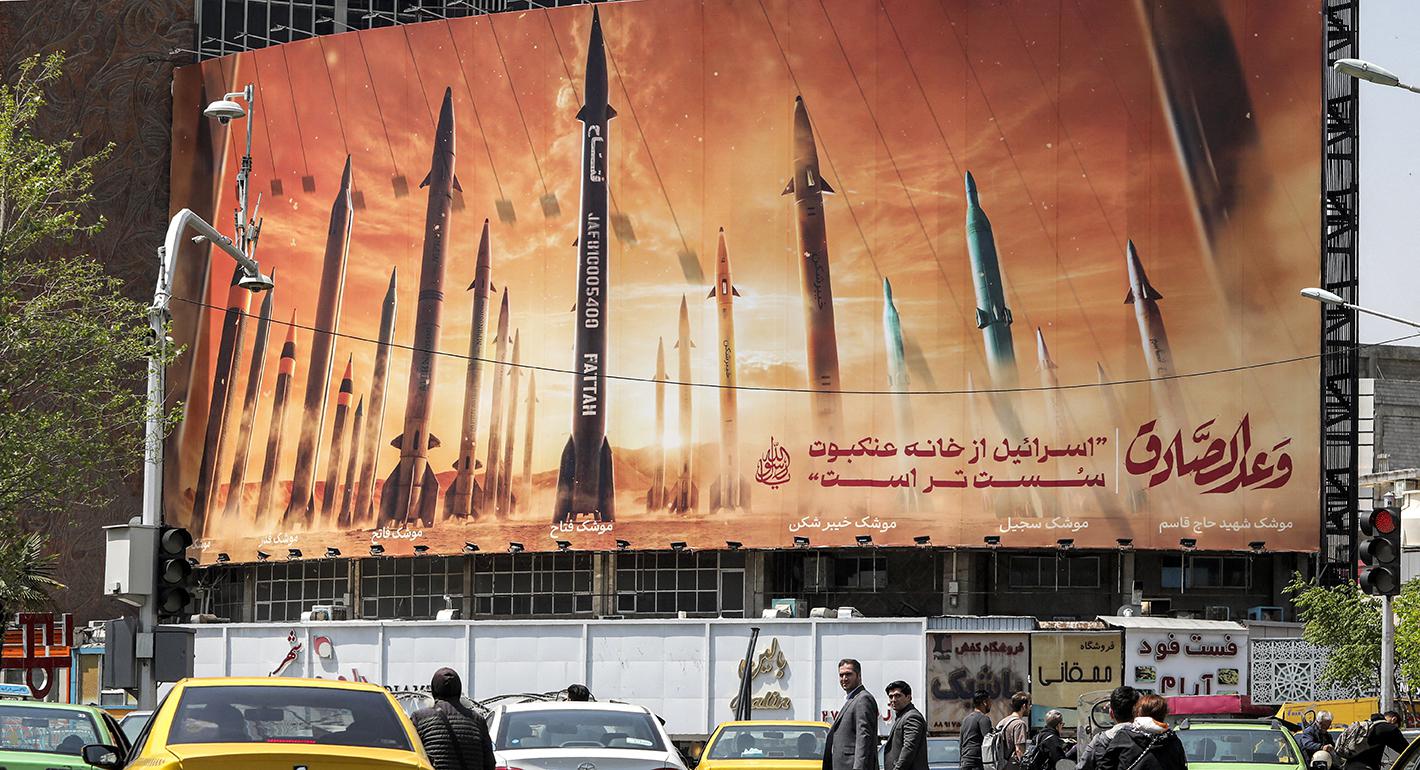
- The Kinetic Risk: The ability of a regional actor to deploy sea mines, fast-attack craft, or land-based anti-ship cruise missiles (ASCMs) to physically obstruct transit.
- The Insurance Premium Spike: Even without a physical blockage, heightened tensions trigger "war risk" surcharges from maritime insurers. This increases the landed cost of crude at the refinery, creating inflationary pressure in consuming nations like India and China.
- The Logistic Latency: Rerouting a VLCC (Very Large Crude Carrier) around the Arabian Peninsula to bypass a closed Strait adds roughly 10 to 15 days of transit time, effectively removing millions of barrels from the "active" floating inventory and straining global storage capacity.
Structural Alternatives The Pipeline Pivot
The primary mechanism for reducing reliance on the Strait is the expansion of the Cross-Peninsula Pipeline Network. This strategy aims to decouple extraction sites in the Persian Gulf from the maritime exit at Hormuz.
The East-West Pipeline (Petroline) Expansion
Saudi Arabia’s state-owned Aramco operates the East-West Pipeline, which spans the kingdom from the Abqaiq processing facilities to the port of Yanbu on the Red Sea. Historically, this pipeline had a capacity of roughly 5 million barrels per day (mb/d). Current strategic objectives involve upgrading pump stations and loop lines to increase this capacity toward 7 mb/d.
The logic here is a Linear Redundancy Model. By moving the point of export from the Persian Gulf to the Red Sea, Saudi Arabia avoids the Iranian coastline entirely. However, this creates a secondary dependency on the Bab el-Mandeb strait, illustrating that risk in energy logistics is rarely eliminated, only transferred.
The ADCOP Infrastructure in the UAE
The Abu Dhabi Crude Oil Pipeline (ADCOP) connects the Habshan fields to the port of Fujairah. Fujairah sits outside the Strait of Hormuz on the Gulf of Oman. The pipeline’s 1.5 mb/d capacity allows the UAE to export a significant portion of its Murban crude without entering the contested waters of the Gulf. The operational significance of Fujairah has shifted from a mere refueling hub to a global strategic terminal, now hosting massive underground storage caverns to buffer against supply shocks.
The Emergence of the IMEC and Trans-Eurasian Corridors
The United States, India, and the European Union recently proposed the India-Middle East-Europe Economic Corridor (IMEC). While often framed as a diplomatic counterweight to China’s Belt and Road Initiative (BRI), its technical function is to provide a multi-modal (ship-to-rail) alternative to traditional maritime routes.
The IMEC framework utilizes a Modular Logistics Logic:
- Sea Leg 1: Connecting Indian ports (Mundra, Kandla) to UAE ports (Jebel Ali, Fujairah).
- Rail Leg: A standard-gauge railway traversing the UAE, Saudi Arabia, Jordan, and Israel.
- Sea Leg 2: Connecting the Port of Haifa to European hubs like Piraeus.
This corridor bypasses the Strait of Hormuz by landing goods in the UAE or Oman and moving them via rail to the Mediterranean. For energy, this means liquefied natural gas (LNG) and green hydrogen can be transported via pipeline or rail, reducing the volume of flammable cargo that must pass through maritime choke points.
China and India's Divergent Risk Mitigation
As the world's largest importers of crude, China and India view the Strait of Hormuz through the lens of Energy Security Sovereignty. Their participation in bypass projects is driven by different internal pressures.
China’s Strategic Depth
China’s "Malacca Dilemma" is compounded by the "Hormuz Dilemma." To solve both, Beijing is investing in the Gwadar Port in Pakistan as part of the China-Pakistan Economic Corridor (CPEC). Theoretically, crude oil can be offloaded at Gwadar (outside Hormuz) and piped directly into Western China. The engineering challenge involves traversing the Karakoram Range, which introduces a high Elevation Energy Cost—the power required to pump oil over mountains often exceeds the cost of maritime transit. Consequently, CPEC serves more as a "break-glass" emergency route than a primary commercial channel.
India’s Strategic Petroleum Reserve (SPR) Integration
India lacks the overland pipeline options available to Saudi Arabia. Its strategy focuses on Proximity Buffering. By partnering with the UAE to fill Indian strategic reserves (such as the Padur facility), India creates a physical inventory that compensates for a potential 30-to-60-day closure of the Strait. Furthermore, India’s investment in the Port of Chabahar in Iran is a calculated attempt to maintain a footprint on the "other side" of the Strait, ensuring that even if the waterway is contested, New Delhi retains a diplomatic and logistical foothold.
The Cost Function of Rerouting
Bypassing the Strait of Hormuz is not a "free" strategic choice. It involves a fundamental trade-off between Security and Efficiency.
$$C_{total} = C_{transit} + C_{infrastructure} + C_{security_premium}$$
In a standard market, $C_{transit}$ via the Strait is the lowest possible cost due to the economies of scale provided by VLCCs. When a nation opts for a pipeline or rail bypass, it incurs a significant $C_{infrastructure}$ (Capex) and a higher per-barrel $C_{transit}$ (Opex).
The economic justification for these projects only holds if the $C_{security_premium}$ (the cost of potential disruption) exceeds the cost of building the bypass. Currently, the global consensus among the US, EU, and Asian powers is that the "Insecurity Tax" of the Strait of Hormuz has reached a permanent baseline that justifies these multi-billion dollar capital expenditures.
Technological Interventions in Maritime Surveillance
The physical bypass of the Strait is being supplemented by a Digital Shield. The US-led Task Force 59 in Bahrain utilizes Unmanned Surface Vessels (USVs) and AI-integrated sensor arrays to provide a "Persistent Intelligence" layer.
This creates a Transparency Buffer. By using autonomous systems to monitor Iranian movements in real-time, the coalition reduces the "Fog of War" that typically leads to insurance spikes. If every vessel’s position and every potential threat are tracked with 99.9% uptime, the market does not react as violently to localized incidents. This digital infrastructure is as critical to "reducing reliance" as the physical pipelines, as it stabilizes the existing route while the new ones are under construction.
The Geopolitical Realignment of Energy Flow
The collective effort to bypass Hormuz is accelerating a shift toward a Multi-Polar Energy Architecture.
- The Saudi-China Synergy: By expanding the East-West pipeline, Saudi Arabia secures its role as a reliable supplier to China, regardless of US-Iran tensions.
- The European Pivot: Europe’s move away from Russian gas requires a stable Mediterranean entry point for Gulf LNG. The IMEC rail link and Red Sea ports provide this stability.
- The US Role: The United States has transitioned from a net importer to a protector of the "Global Commons." Its interest in Hormuz is no longer about its own supply, but about the stability of the global dollar-denominated oil market.
This realignment means that the Persian Gulf is no longer a "cul-de-sac." Through the development of the Neom region, the expansion of Duqm in Oman, and the connectivity of the Etihad Rail in the UAE, the Arabian Peninsula is transforming into a transit landmass rather than just an extraction zone.
Strategic Recommendation for Global Energy Stakeholders
The decommissioning of Hormuz as a "vital" choke point is an impossible short-term goal, but the marginal reduction of its importance is already underway. Stakeholders must operate under the assumption that the "Hormuz Risk" is now a permanent feature of the energy balance sheet.
- Prioritize Port Diversification: Shift refining and storage assets to the "outside" of the Strait—specifically Fujairah (UAE), Duqm (Oman), and Yanbu (Saudi Arabia).
- Invest in Multi-Modal Connectivity: Support the integration of rail and pipeline projects that link the Persian Gulf directly to the Red Sea and the Gulf of Oman.
- Hedge via Strategic Reserves: Nations and private entities should treat "Days of Cover" not as a regulatory burden, but as a critical infrastructure asset.
The transition from a maritime-centric export model to a land-sea hybrid model is the only viable path to neutralizing the geopolitical leverage currently held over the Strait of Hormuz. The infrastructure being laid today will determine the price of energy for the next four decades.