You cannot simply go from zero to one hundred during a violent street confrontation. That is the core argument White House border czar Tom Homan used to defend a massive federal investment in electric shock gear.
Immigration and Customs Enforcement has moved forward with a plan to spend up to $20 million on specialized handwear that delivers painful electric currents. These tools are meant to force compliance without resorting to firearms. Predictably, civil rights advocates and lawmakers lost their minds over the announcement. They point to recent fatal shootings involving immigration agents in places like Maine and Texas as proof that the entire agency is already trigger-happy.
Yet focusing purely on the controversy ignores the operational reality of modern law enforcement. Officers need middle-ground options. When an arrest turns physical, empty hands or lethal weapons are often the only choices on the table. This gear attempts to fill that dangerous void.
Understanding the Technology Behind the Gear
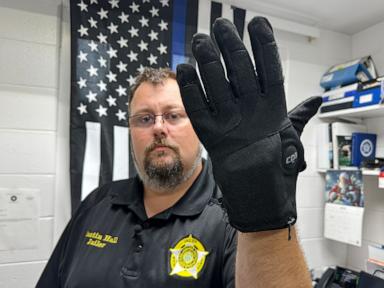
The equipment in question is known as the G.L.O.V.E., which stands for Generated Low Output Voltage Emitter. Manufactured by Compliant Technologies, these conductive textiles integrate directly into standard law enforcement apparel. They send localized electrical pulses through a suspect's muscles, causing intense localized pain to compel compliance.
Unlike a traditional Taser, these devices do not deploy probes or trigger total neuromuscular incapacitation. Targets do not drop to the ground uncontrollably. There are no permanent burn marks left behind. The moment the officer pulls their hand away, the current stops instantly.
Jail administrators who have field-tested the system report positive results. Justin Hall, a jailer in Nelson County, Kentucky, noted that his facility has utilized the gear for four years. He experienced the shock multiple times during training. He describes the sensation as excruciatingly painful, but emphasizes that it creates compliance immediately without causing structural bodily harm.
The Controversy and Valid Concerns
Critics aren't buying the marketing. Civil rights groups argue that giving pain-compliance tools to immigration agents during a high-stakes deportation push creates a recipe for abuse. The political climate surrounding border enforcement is explosive. Critics see any expansion of use-of-force tools as an escalation of aggressive tactics.
Criminology experts also raise valid administrative yellow flags. Geoffrey Alpert, a professor at the University of South Carolina, points out a structural flaw in the federal rollout. Local police officers spend years training in community de-escalation. Federal immigration agents undergo a vastly different operational pipeline. Wholesaling thousands of shock-delivery tools to agents without extensive, customized tactical training invites user error.
Buying twenty million dollars worth of equipment right out of the gate is a massive leap. A phased rollout makes much more sense. Starting with a pilot program would allow agency leadership to iron out operational protocols before putting the gear on the streets.
Looking at the Alternatives
What happens when an agent lacks a mid-tier compliance tool? They rely on physical strikes, batons, chemical sprays, or firearms. Batons carry a high risk of bone fractures and lacerations. Chemical sprays affect everyone in the immediate vicinity, including bystanders and the officers themselves. Tasers have strict deployment parameters and sometimes fail to make proper contact through heavy clothing.
When those options fail or feel too risky, escalation happens fast. Six deaths involving immigration enforcement agents over the past year highlight how quickly routine stops can turn lethal. If a conductive glove stops even a fraction of those fatal encounters, the operational utility becomes difficult to dismiss.
Homan stated that widespread deployment is still months away. Training protocols are currently under development. How the agency writes those rules will determine whether this program succeeds or becomes a public relations disaster. Law enforcement agencies must pair every new tactical purchase with rigorous oversight, transparent accountability, and mandatory de-escalation training. Without those safeguards, the gear will inevitably generate more controversy than solutions.


