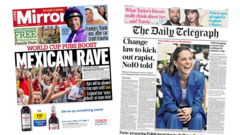
The headlines painted a picture of absolute economic triumph. Across the nation, front pages heralded a dual crown of cultural and economic windfall, celebrating extended pub opening hours for the late-night World Cup clash alongside the traditional elite glamour of the Princess of Wales taking her place at Wimbledon. It is a familiar narrative that surfaces every time a major sporting tournament aligns with a high-profile cultural event. The public is told that cash registers are ringing, consumer confidence is soaring, and the hospitality sector is receiving a desperate, vital lifeline.
The underlying financial reality tells a completely different story. While a 5 AM licensing extension for a crucial England match against Mexico brings an undeniable surge in raw footfall, it simultaneously introduces a crushing wave of operational overheads, punitive overtime wages, and severe logistical strains that swallow profit margins whole. At the same time, the pristine luxury of the royal box at SW19 masks a deeply fragmented consumer economy where elite tourism flourishes while the broader high street continues to contract. The celebrated summer boom is largely an illusion, a temporary spike in volume that obscures the systemic fragility of the British domestic economy.
The Punishing Math of the Night Economy
Staying open until dawn sounds like a financial goldmine for an industry that has spent years reeling from energy crises and inflation. The government’s decision to allow establishments to serve alcohol until the early hours of the morning for the North American tournament was greeted with immediate optimism by trade bodies. On paper, more hours equal more pints sold.
The balance sheet is rarely that simple. Operating a venue until 5 AM requires a total overhaul of standard labor costing. Staffing a bar at 3 AM on a Monday morning is vastly more expensive than a standard Friday evening shift. Security requirements double. Local authorities demand stricter policing of premises, meaning venues must hire additional registered door staff at premium night rates.
Supply chains are equally brittle. Delivering thousands of barrels of lager to urban centers while keeping pace with an unpredictable, tournament-driven demand spike forces distributors to run erratic schedules. If an venue over-orders expecting a long tournament run and the national team exits early, they are left holding depreciating stock that ties up critical working capital.
Then there is the physical limit of consumer spending. A fan who spends forty pounds in a pub at 1 AM is not necessarily going to spend another forty pounds by 4 AM. They pace themselves, or they switch to tap water as the hours grind on. The revenue curve flattens drastically after midnight, but the operational cost curve remains completely vertical. For the independent publican, the extended hour policy is less of a gift and more of a high-stakes gamble.
The Wimbledon Disconnect and the Two Track Economy
While local drinking establishments gamble on football fans staying awake until dawn, the world of tennis offers a starkly different economic view. The annual pilgrimage of royalty and global elites to the manicured lawns of south-west London provides the ultimate imagery of British stability and affluence. When the Princess of Wales takes her seat in the royal box, it triggers a predictable wave of international media coverage that positions the country as a premier destination for luxury spending.
This creates a deeply distorted view of national economic health. The money flowing through the gates of the All England Club represents a hyper-insulated economy. High-net-worth individuals and international tourists insulate these premium events from the domestic pressures affecting the average citizen. The hospitality packages, luxury sponsorships, and high-end retail brands capitalizing on the tournament operate in a parallel financial universe.
+-----------------------------------------------------------------------+
|                       THE TWO-TRACK SUMMER ECONOMY                     |
+-----------------------------------------------------------------------+
|  THE HIGH-END INSULATED TRACK       |  THE HIGH-STREET GAMBLE TRACK   |
+-----------------------------------------------------------------------+
|  * Luxury corporate hospitality     |  * Mass-market wet-led pubs     |
|  * International tourism spend      |  * Domestic disposable income   |
|  * Fixed, predictable ticket prices |  * Erratic, performance-led crowds|
|  * High margin, low volume luxury   |  * Low margin, high volume risk |
+-----------------------------------------------------------------------+
Step outside that prestigious zip code and the picture darkens immediately. The domestic consumer is facing sustained pressure on disposable income. Spending hundreds of pounds on strawberries, champagne, and branded apparel is a reality reserved for a fraction of the population. The broader retail sector receives almost no residual benefit from the tournament. A tourist flying in for a quarter-final match does not spend money at a regional shopping center or support a suburban high street. They stay within a tight, curated geography of luxury hotels and West End restaurants. The royal halo effect looks magnificent on television, but it fails to distribute meaningful capital to the wider domestic marketplace.
The Disappearing Independent Sector
The most critical factor overlooked by the euphoric media coverage is who actually wins during these national celebrations. A rising tide does not lift all boats equally. In fact, it often capsizes the smallest ones.
National pub chains and massive corporate hospitality groups possess the scale required to absorb the logistical shocks of late-night operations. They negotiate bulk pricing on alcohol, maintain flexible cross-venue staffing pools, and possess the financial cushions needed to survive an unexpected dip in consumer turnout. They can afford to lose money on a Tuesday morning match if it means capturing market share.
The independent, wet-led neighborhood pub enjoys none of these luxuries. Run by families or sole traders, these establishments are already operating on the absolute brink of survival. For them, a single quiet night during a heavily staffed extended licensing period can wipe out an entire month of profitability. They cannot command discounts from global breweries. They cannot easily find staff willing to work a grueling graveyard shift without offering wages that completely erase the evening's profits.
When the media celebrates a multi-million-pound injection into the national economy, it ignores the structural consolidation happening beneath the surface. Capital is concentrated into fewer, larger corporate hands. The quirky, historic venues that form the actual backbone of British communities are being systematically squeezed out, unable to compete with the corporate machines that turn national sporting passion into algorithmic profit.
Shifting Patterns of Public Consumption
Societal habits have fundamentally changed, rendering old economic models obsolete. The assumption that a major football match automatically translates to packed barrooms ignores a massive cultural shift toward home entertainment and private viewing parties.
Supermarkets have mastered the art of tournament marketing. They offer bulk alcohol discounts, gourmet snack packages, and home-delivery options that make watching a 1 AM kickoff from the comfort of a living room incredibly attractive. A consumer can purchase an entire twelve-pack of beer for the price of two pints in a city-center venue. In a climate where every household budget is scrutinized, the economic argument for staying home is overwhelming.
Estimated Cost Comparison for a 1 AM Kickoff Match:
* Home Viewing: £15.00 (Supermarket stock, zero transport costs, total comfort)
* Pub Attendance: £65.00 (Entry fees, premium night-rate drinks, 5 AM Uber surge pricing)
Those who do venture out face an increasingly expensive journey home. With public transport networks severely restricted during the early hours of Monday morning, fans are forced to rely on ride-hailing applications. Surge pricing at 5 AM can easily exceed the cost of the entire night's entertainment. This hidden tax on the night economy acts as a massive deterrent for consumers, further shrinking the pool of potential patrons for venues that have invested heavily in staying open.
The Failure of Event Driven Growth Strategies
Relying on major sporting milestones to rescue a struggling retail and hospitality sector is a fundamentally flawed strategy. It treats a structural crisis as a temporary marketing challenge. The deep-seated issues plaguing the British high street—extravagant business rates, skyrocketing commercial rents, and a fundamental decline in footfall—cannot be solved by a few nights of late closing hours or a celebrity appearance in a tennis stadium.
Politicians frequently use these sporting moments to claim credit for economic vitality. They stand outside venues with pints in hand, praising the resilience of British business. This political theater obscures the total lack of long-term structural support for the industry. A two-hour licensing extension is a cost-free gesture for a government; it requires no state funding, no tax reform, and no strategic infrastructure investment. It shifts the entire burden of economic execution onto the business owners themselves.
The industry does not need temporary patches. It requires an absolute overhaul of commercial taxation, a permanent reduction in value-added tax for hospitality services, and real protection against predatory commercial landlords. Without these fundamental changes, the narrative of the summer boost remains an annual exercise in fiction, a brief distraction before the autumn closures begin again. The real metric of economic health is not how many pints are poured during a single chaotic weekend, but how many local businesses can afford to keep their doors open when the banners are taken down and the stadiums fall silent.