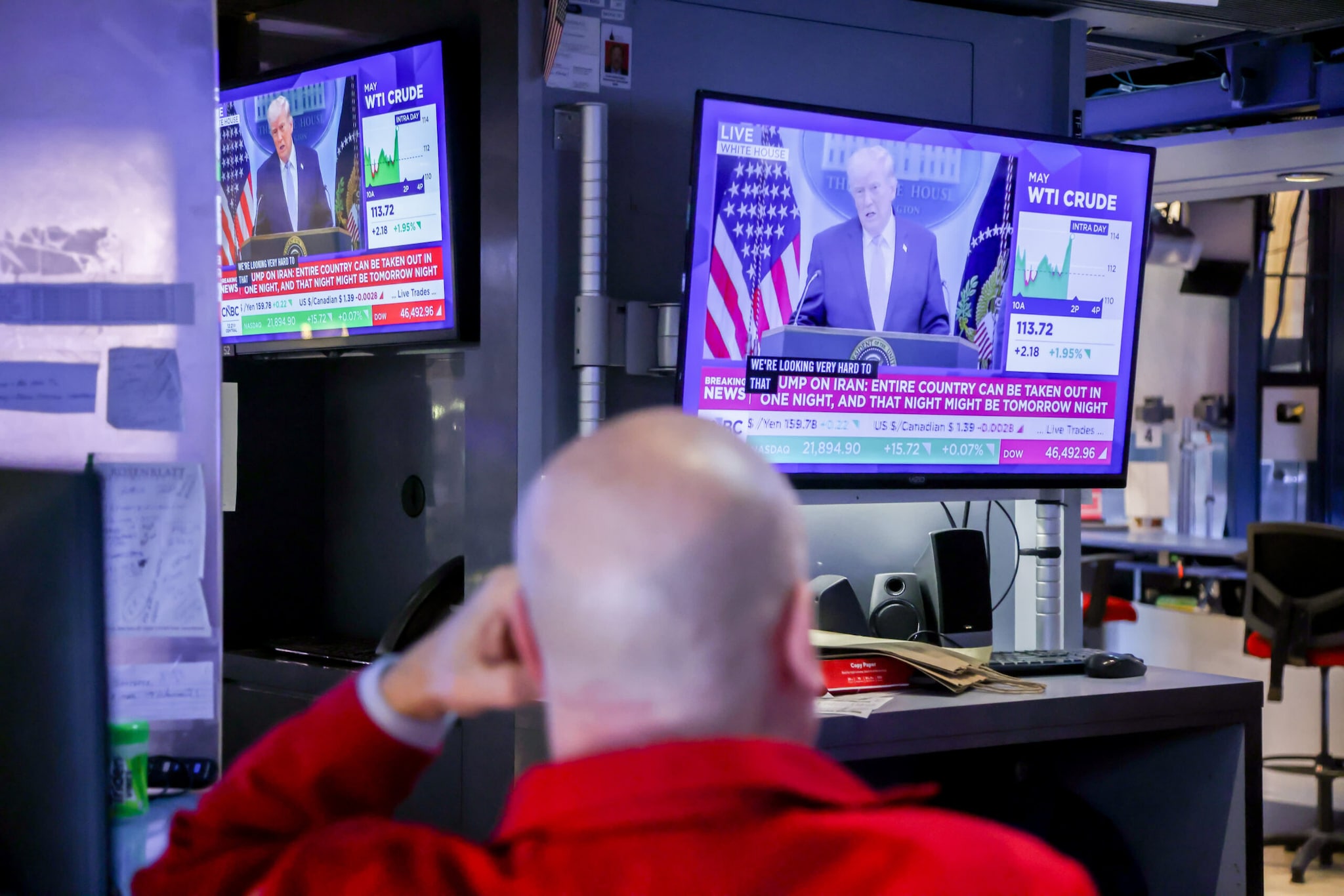
The headlines flashed across the screen in bold, celebratory green, and for a fleeting second, the world exhaled. A tentative truce. The Strait of Hormuz, choked by conflict for months, was finally slated to reopen. On Wall Street, the reaction was instantaneous—the S&P 500 rallied, and the international benchmark for crude oil dipped from its terrifying peaks back down toward eighty-three dollars a barrel. The collective sigh of relief was almost audible across suburbia.
But headlines do not fill a gas tank. They do not buy groceries, and they certainly do not fund a plane ticket home. Meanwhile, you can read other developments here: Why Ukrainian Startups Are Outgrowing the War in 2026.
Consider Sarah. She is a fictional composite of a very real, very exhausted reality playing out across millions of households this month. Sarah sits at her kitchen table, staring at a digital flight itinerary that used to cost eight hundred dollars round-trip. Today, even with the news of peace vibrating through her phone, that same ticket to see her family sits at a staggering twelve hundred dollars. When she drives to the local supermarket, the numbers on the receipt still look like typographical errors.
There is a profound disconnect between the macroeconomics of a ceasefire and the microeconomics of the dinner table. We have been conditioned to believe that when the guns fall silent, the prices immediately drop. It is a comforting thought. It is also entirely wrong. To understand the bigger picture, we recommend the excellent article by Investopedia.
The harsh truth is that peace has a lag. A long, stubborn lag.
To understand why your wallet is still crying even though the geopolitical tension has eased, you have to look at the invisible architecture of global supply chains. When the conflict in West Asia escalated earlier this year, it didn't just turn off a tap; it smashed the plumbing. The Strait of Hormuz handles roughly twenty percent of the world’s petroleum and liquefied natural gas. When a critical chokepoint like that blockades, the global energy market experiences an immediate, violent cardiac arrest.
Now, the blockage is lifting, but restarting the flow is not as simple as flipping a light switch.
Tankers loaded with millions of barrels of crude have been stranded in the Persian Gulf for over three months, static ghosts on maritime tracking maps. Before those ships can move, maritime insurance companies must reassess the risk of regional waters. Actuaries do not share the optimism of stock traders. They move slowly. Crew contracts must be renegotiated, safety sweeps must be conducted, and port schedules from Singapore to Rotterdam must be completely realigned. Energy experts warn it will take months for the logistics industry to unwind this knot. Until that happens, the supply remains artificially choked.
Then there are the permanent scars of the conflict. In March, an attack struck Qatar's massive LNG production infrastructure at Ras Laffan. That single event wiped out a massive chunk of global gas capacity. The damage there cannot be undone by a diplomatic handshake in a neutral European city. It requires physical steel, engineering expertise, and three to five years of complex reconstruction. The supply is fundamentally smaller than it was a year ago, and a smaller supply in a world with unchanging demand means higher prices stay baked into the system.
But the most insidious delay is happening at the local level, far away from the desert sand. It is called price asymmetry, though economists informally call it the "rockets and feathers" phenomenon.
When war breaks out, retail prices rocket upward overnight. Gas stations raise their prices instantly to cover the anticipated cost of their next, more expensive delivery. But when a truce is signed, retail prices drop like feathers drifting through calm air. Station owners are holding expensive fuel they bought at the height of the crisis. They will not lower their prices until they bleed through that costly inventory. You, the consumer, are forced to subsidize their bad timing.
This lag creates a brutal compounding effect on our most basic human necessity: food.
The Food Policy Institute recently dropped a sobering reminder that the Strait of Hormuz isn't just an oil highway; it is the central artery for the global fertilizer trade. For months, the raw components needed to nourish crops globally were stranded. Think about a farmer in the Midwest. The fertilizer they ordered two months ago arrived late and cost twice what they budgeted, driven up by catastrophic shipping premiums and energy spikes. That expensive fertilizer is already in the dirt. The energy required to harvest, process, and transport those crops has already been spent at peak crisis rates.
The truce cannot retroactively lower the cost of the wheat growing in the field right now. The grocery supply emergency may have evolved into a diplomatic success story, but the food on the shelves this summer will carry the financial baggage of last month's warfare.
The aviation industry is perhaps the starkest example of this permanent friction. Airlines are currently wrestling with jet fuel prices that nearly doubled earlier this year, sitting around one hundred and seventy-three dollars a barrel. Because fuel accounts for up to forty percent of a carrier's total operating expenses, major international airlines had no choice but to implement sweeping surcharges.
But it gets worse. The conflict forced airlines to completely redraw their maps to avoid missile threats and restricted airspace. A standard flight from Delhi to New York that used to take seventeen hours was stretched into a grueling twenty-two-hour marathon.
More time in the air means more fuel burned, more crew hours logged, and more wear on aircraft that are already in short supply due to manufacturing backlogs. Even with a ceasefire, airlines will not instantly revert to their old flight paths. Airspace synchronization requires deep regulatory approvals and ironclad security guarantees. Until planes can fly in straight lines again, passenger tickets will remain prohibitively expensive.
It is a exhausting cycle to watch. Just as the global economy threatened to normalize, a new shock wave scrambled the calculus. In May, US inflation jumped to an annual rate of four.two percent—a three-year high driven almost entirely by the energy volatility of this war. The Federal Reserve, which many hoped would be cutting interest rates by now, is backed into a corner, forced to keep borrowing costs high to combat the stubborn residual heat of this conflict.
So, how do we navigate this weird, deceptive middle ground?
The first step is psychological. We must rid ourselves of the expectation of immediate relief. Preparing for a slow, undulating descent in the cost of living prevents the whiplash of false hope. Budgeting for the next six months must assume that energy and food costs will remain stubborn.
Ultimately, this moment exposes the fragile illusion of distance. A localized conflict thousands of miles away dictates the price of a gallon of milk in Ohio or a commuter bus fare in Nairobi. The truce is a vital, necessary beginning. It stops the bleeding.
But healing the global economy takes time. The scar tissue remains, visible every time we swipe a card at the pump, scan our groceries, or look for a way to fly home. Peace has finally arrived at the negotiating table, but it hasn't trickled down to the pavement just yet.
This breakdown of the current economic climate clarifies how global supply chains directly dictate local pricing structures. For an in-depth analysis of how international logistics fail to recover immediately after geopolitical shocks, see this detailed breakdown of global trade networks: