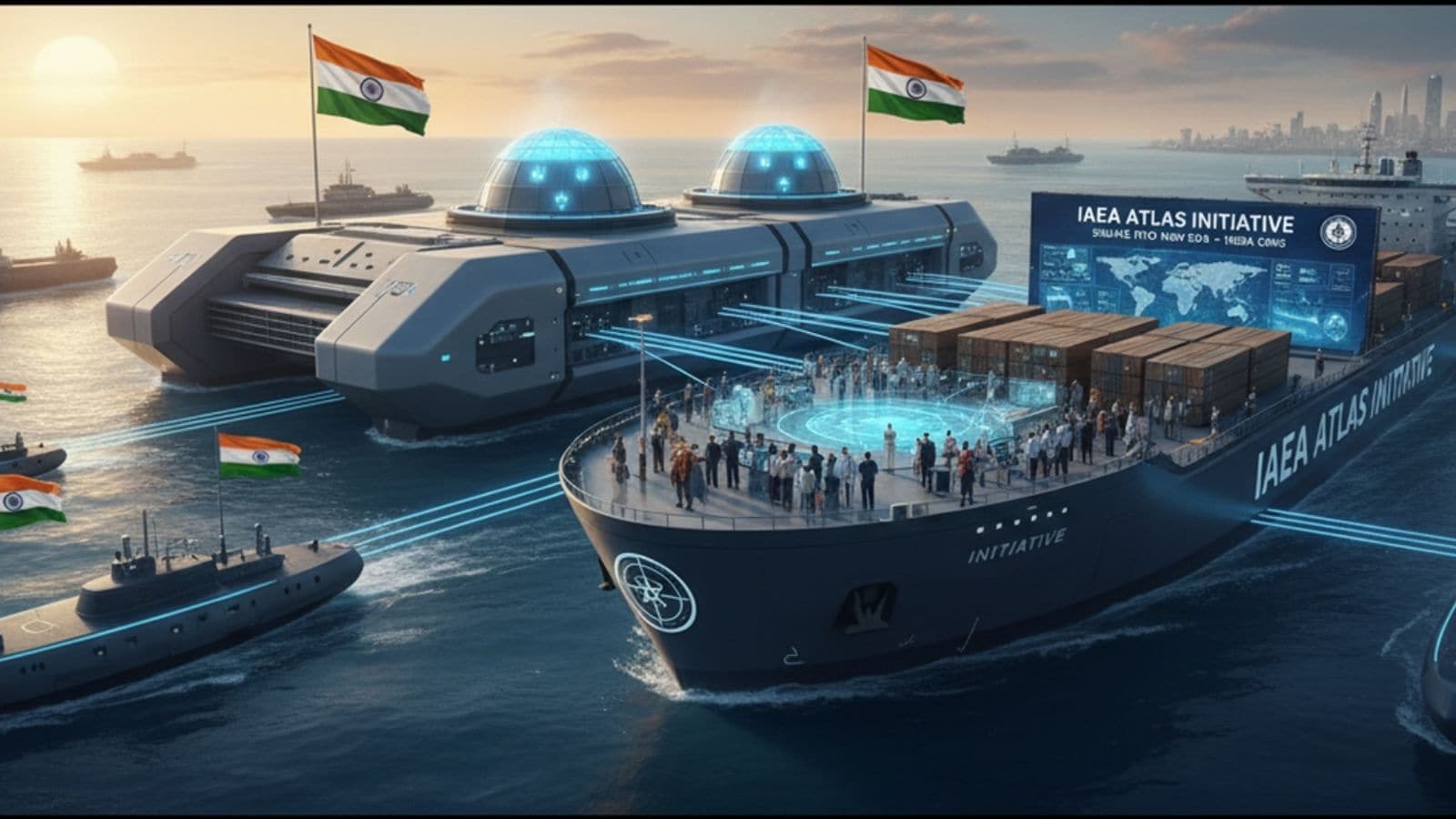
India is quietly drafting plans to integrate nuclear propulsion into civilian marine vessels and offshore energy platforms, a move that could permanently alter maritime logistics and heavy industry.
For decades, civilian shipping has relied entirely on bunker fuel and liquefied natural gas, accepting massive carbon emissions as the price of global trade. Now, New Delhi wants to bypass conventional transitions entirely. State-run agencies and private shipyards are drawing up frameworks to adapt compact modular reactors for commercial hulls. This is not merely about green shipping targets. It is a strategic scramble to secure maritime dominance in an era where energy security dictates geopolitical weight.
The Weight of History
We have seen this script before. The Soviet Union launched the Lenin icebreaker in 1959, proving that civilian atoms could push steel through frozen water. The United States followed with the NS Savannah, a sleek hybrid passenger and cargo ship designed to showcase peaceful nuclear power to a skeptical public.
The Savannah was a floating monument to brilliant engineering and commercial failure. High port fees, stringent labor union demands, and the sheer unpredictability of international canal access doomed the project. Governments panicked over liability. Port authorities refused entry. Insurance underwriters simply shrugged, unable to calculate the risk of a floating reactor colliding with a reef in a crowded harbor.
India faces these exact ghosts today. The engineering hurdle of building a small modular reactor is trivial compared to the diplomatic marathon required to berth an atomic cargo ship in Singapore, Rotterdam, or Dubai.
Inside the Engineering Pivot
Why nuclear, and why now? Conventional container ships burn thousands of tons of heavy fuel oil every week. As international maritime regulations tighten sulfur and carbon limits, shipowners are cornered. Ammonia and green hydrogen are widely discussed, but both require massive storage volumes and present severe toxicity or flammability hazards.
A civilian nuclear marine propulsion system changes the math entirely. A reactor the size of a shipping container can theoretically power a massive bulk carrier for twenty years without refueling. No bunkers. No mid-ocean pit stops.
"We are looking past transitional fuels because transitional fuels still tie us to global supply chain volatility," explains a senior naval architect advising state-run maritime boards in Mumbai. "If you eliminate refueling, you eliminate half your operational vulnerability."
Indian planners are eyeing small modular reactors derived from their indigenous pressurized heavy water reactor designs and naval submarine propulsion programs. The naval connection is crucial. India has spent decades mastering reactor cores small enough to fit inside the hulls of the Arihant-class submarines. Scaling that technology up for a commercial oil tanker or an offshore floating power barge is a logical industrial step, even if the regulatory chasm remains wide.
The Offshore Energy Frontier
The most immediate commercial application for India may not be moving cargo across oceans, but anchoring energy production right above deep-water oil and gas fields.
Offshore platforms require staggering amounts of continuous power to run drilling rigs, dynamic positioning systems, and carbon capture units. Currently, operators burn natural gas extracted right from the wellhead to generate this electricity, venting greenhouse gases into the atmosphere. Floating nuclear barges could moor alongside these platforms, supplying zero-emission electricity day and night, regardless of weather conditions that render wind and solar intermittent.
This approach solves one of the biggest headaches of marine nuclear power: port access. A floating power station anchored fifty miles offshore does not need to navigate crowded civilian harbors or negotiate municipal waste-disposal treaties with nervous local governments. It sits in international or territorial waters, isolated, secure, and monitored by national defense assets.
The Regulatory Minefield
No amount of engineering brilliance can override international maritime law. The Safety of Life at Sea convention and the International Atomic Energy Agency codes were written with land-based plants and naval warships in mind. They have no coherent category for a privately operated commercial container ship carrying civilian uranium through international straits.
Who inspects the core when a commercial vessel docks for routine maintenance? What happens if a crew goes on strike while operating an active reactor? Which nation bears legal liability if a floating nuclear barge breaks its moorings during a monsoon and drifts toward a major population center?
India's push will collide head-on with these unresolved questions. Western maritime nations, historically cautious about nuclear proliferation, will scrutinize every blueprint. Environmental groups will launch immediate legal challenges, pointing to the nightmare scenario of an atomic hull compromised in a typhoon.
Yet, economic necessity has a way of rewriting international law. If India successfully demonstrates that civilian nuclear shipping can cut logistics costs while achieving net-zero emissions, commercial pressure from competing shipping nations will force the global regulatory apparatus to adapt.
The high seas have always belonged to those willing to master the most dangerous energy sources available. India is betting that the atomic age is finally ready for civilian waves.