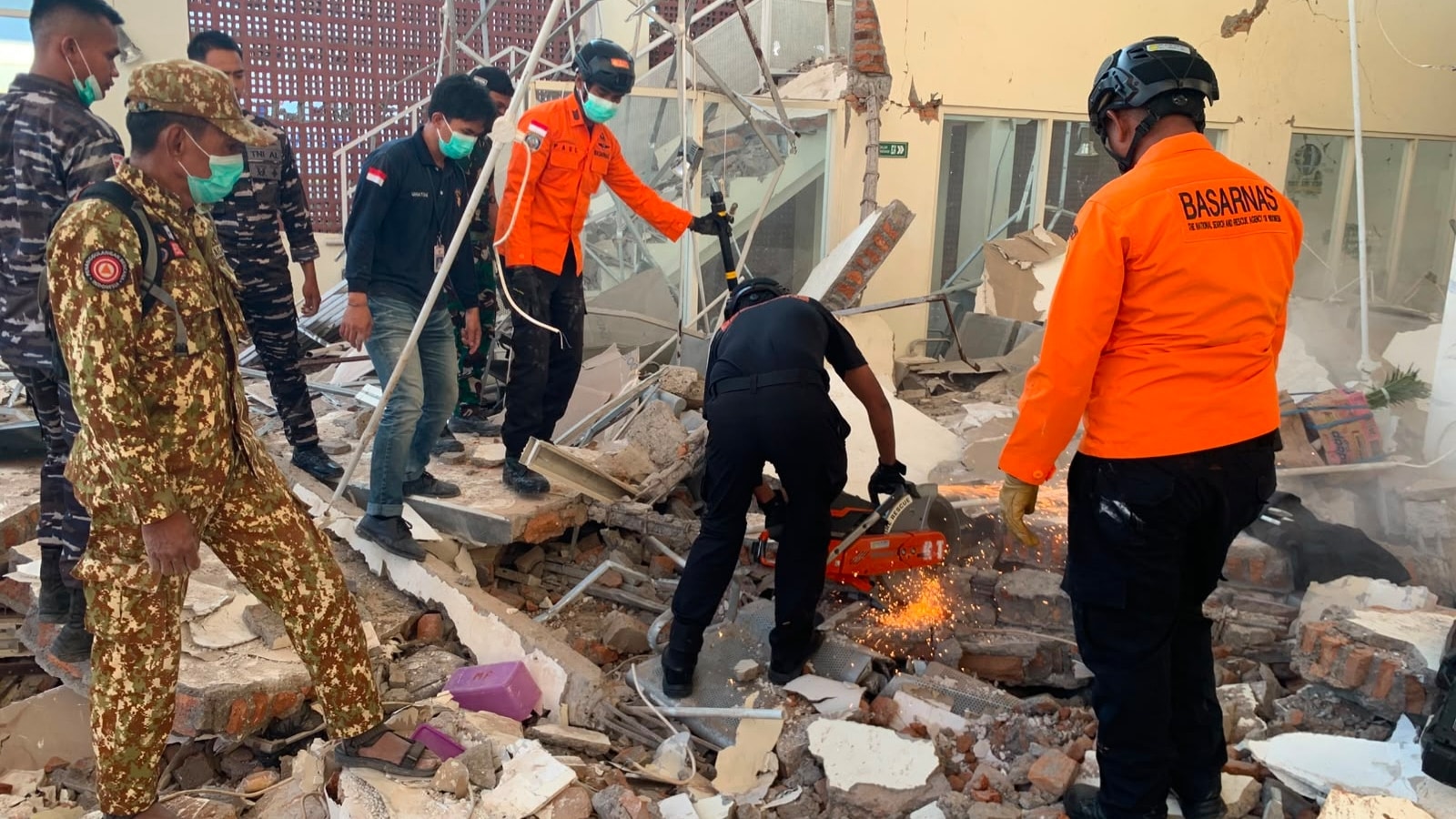
Ground shaking violently, buildings folding inward like cheap cardboard, and sirens screaming warnings across coastal towns. That is the terrifying reality residents face when a major seismic event hits Indonesia.
If you are looking at the headlines about the latest Indonesia earthquake killing dozens, collapsing structures, and sending panic-fueled crowds fleeing from coastal zones due to tsunami alerts, you already know things are bad. But standard news reports often skip the mechanics of why these disasters keep happening in the exact same places with such devastating predictability.
Let us break down what actually happens during these events, why the warning systems matter, and how emergency response works on the ground in one of the most volatile tectonic zones on earth.
The Brutal Physics Behind Indonesia’s Seismicity
Indonesia sits squarely on the Pacific Ring of Fire. This is not just a catchy geographical term. It is a horseshoe-shaped belt of intense seismic activity driven by colliding tectonic plates.
To understand why a magnitude-scale quake here causes catastrophic building collapse, look at the faults. The Indo-Australian plate grinds relentlessly beneath the Eurasian plate. When massive friction locks these plates together, pressure builds for decades. When the rock finally snaps, the energy release is astronomical.
Shallow earthquakes are particularly destructive. If a rupture happens close to the earth's surface, the seismic waves hit populated areas with unfiltered ferocity. Traditional masonry buildings, homes built without reinforced concrete, and poorly engineered commercial structures simply cannot handle horizontal shear stress. They disintegrate. That is why casualty numbers climb so fast within the first few hours.
The Tsunami Threat and Warning Realities
When the earth heaves beneath the ocean floor, the water above has nowhere to go. This vertical displacement generates a tsunami.
Early warning systems are supposed to buy time. Sirens wail, text messages blast to mobile phones, and coastal residents scramble for high ground. Yet, technology has limits. When an epicenter is close to the coastline, evacuation windows shrink to mere minutes.
You cannot outrun a wave if you only have a three-minute warning. That harsh truth means community preparedness beats high-tech alerts every single time. Coastal villages that run regular drills survive with minimal loss of life. Areas relying solely on automated sirens often suffer worse outcomes because people hesitate, confused about which direction to run or whether the alarm is a false positive.
Immediate Emergency Response Challenges
Search and rescue operations in the immediate aftermath of a major Indonesian quake face monumental hurdles.
- Blocked Roads: Landslides and collapsed bridges cut off entire districts.
- Power Failures: Grid blackouts plunge neighborhoods into darkness, hampering nighttime rescue efforts.
- Communications Breakdown: Downed cell towers leave families frantically searching for news about loved ones.
First responders rely on heavy machinery to lift concrete slabs, but getting those cranes into remote villages takes hours or days. Local citizens often act as the first wave of rescuers, digging through rubble with bare hands and improvised tools long before official disaster teams arrive.
What Recovery Actually Looks Like
Once the dust settles, the media moves on to the next crisis, but the real struggle begins for the survivors. Displaced families crowd into makeshift tents under tarps, facing extreme heat, humidity, and the constant threat of waterborne diseases.
Rebuilding takes years, not weeks. Communities face a grim choice: rebuild in the exact same hazard-prone coastal zones because fishing is their livelihood, or relocate inland and abandon their cultural roots. Governments push for stricter building codes, but enforcement in rural areas remains patchy due to economic constraints.
Check your emergency preparedness plans, keep disaster supplies accessible if you live in active zones, and support humanitarian efforts that deliver direct aid to communities hit hardest by these recurring disasters.