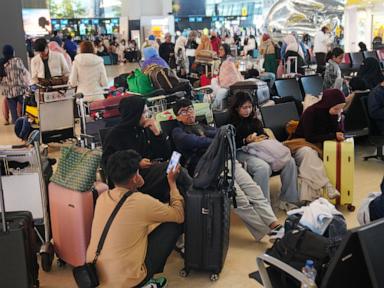
You stare at the departure board, watching your flight status flip to canceled. Outside, the sky looks deceptively clear. You wonder why authorities refuse to open the airspace when the fiery explosions on the ground have supposedly slowed. It feels overly cautious. It feels bureaucratic. But if you have ever traveled through Southeast Asia during a seismic crisis, you quickly learn that volcanic reality does not work on a neat, predictable schedule.
Indonesia sits squarely on the Pacific Ring of Fire. With over a hundred active volcanoes, dealing with sudden eruptions is simply part of daily life here. Yet, travelers are continually caught off guard when airports remain shut long after a primary eruption peak passes. Understanding why aviation authorities keep gates locked when the smoke starts clearing requires looking past the surface smoke and into the physics of airborne debris. Also making waves in related news: Why Volcanic Ash Chaos Grounds Flights and How Travelers Always Pay the Price.
The Invisible Threat Hanging Above the Runway
People think volcanic hazards vanish the moment lava stops glowing. That assumption costs airlines millions and strands thousands of passengers. Ground eruptions get the headlines, but microscopic glass particles floating miles high pose the real danger to commercial aircraft.
When mountains like Mount Lewotobi Laki-Laki or Anak Krakatau blow their tops, they eject pulverized rock, sulfur dioxide, and silicate minerals. These tiny shards do not just float away harmlessly. High-altitude jet streams catch the ash plumes and push them across massive geographical zones. More insights regarding the matter are explored by Lonely Planet.
Jet engines run at temperatures hot enough to melt volcanic glass. Once that molten glass enters a turbine, it coats the internal cooling blades, solidifies instantly, and suffocates the engine flame out. Pilots lose power entirely. AirNav Indonesia and transport regulators do not keep airports closed out of an abundance of unnecessary caution; they do it because flying a multi-million-dollar aircraft through an invisible cloud of powdered glass is a gamble no safety inspector will ever take.
Why Easing Eruptions Do Not Mean Immediate Open Skies
A common frustration among stranded travelers involves timing. The news reports that an eruption has quieted down, yet terminal doors remain firmly locked.
Wind patterns dictate aviation safety just as much as volcanic output. Even if a crater stops spewing fresh magma, old ash lingers in the upper atmosphere for days. Weather systems push these plumes across flight paths unpredictably.
Transport officials rely on satellite data from agencies like the Darwin Volcanic Ash Advisory Centre to track these plumes. If radar detects lingering particulate matter drifting over approach vectors for hubs like Jakarta's Soekarno-Hatta International Airport or smaller regional fields, operations stay suspended. Safety margins leave zero room for error. A volcano can idle at a lower alert level while high-altitude winds continue funneling hazardous debris straight into commercial airspace.
The Logistical Nightmare Behind Reopening Terminals
Restarting an aviation network is not like flipping a light switch. When a cluster of airports shuts down—such as the recent sweeping closures affecting upwards of eight airports and halting well over 1,500 flights—the ripple effects break airline schedules for days.
Planes are in the wrong cities. Flight crews hit their mandatory legal rest limits while stuck in stranded hotels. Ground handlers face massive backlogs of angry passengers trying to rebook seats.
Airlines cannot simply launch every grounded plane simultaneously once the airspace clears. Air traffic control imposes strict flow management to prevent mid-air congestion and apron gridlock. If you are waiting out a closure, expect rolling delays long after the official ban lifts. Aircraft rotation schedules take time to untangle.
How to Protect Your Trip When Volcanoes Act Up
If you are planning a trip through the Indonesian archipelago, hope for the best, but build a buffer into your itinerary. Volcanic activity cannot be scheduled or accurately forecasted weeks in advance.
Keep these practical steps in mind when traveling through active seismic zones:
- Build at least a 24-hour buffer into tight connections, especially if you are catching long-haul international flights out of regional hubs.
- Monitor real-time updates directly from local agencies like BMKG or AirNav Indonesia rather than relying solely on international news aggregators that may lag behind fast-moving local updates.
- Book tickets through carriers that offer flexible rebooking policies or use travel insurance explicitly covering force majeure and natural disruptions.
- Keep physical and digital copies of your airline contacts handy so you can secure alternative transit options before airport service desks are overwhelmed by crowds.
Volcanoes dictate their own timelines. Respecting the closure notices keeps everyone on the ground safe, even if it means losing a day or two of your vacation.