The material architecture of continental security shifted fundamentally on July 15, 2026, when the European Union and Ukraine finalized a comprehensive defense-industrial partnership known as the Drone Deal. Backed by an immediate disbursement of €1 billion and structured to deploy up to €2 billion in targeted capital, the bilateral framework represents a deliberate pivot from short-term security assistance to systemic defense integration. By attempting to merge Ukraine’s field-tested iterative design cycles with Western Europe’s capital reserves and secure manufacturing footprints, the agreement addresses a critical structural bottleneck: the raw physics of output capacity in a high-intensity war of attrition.
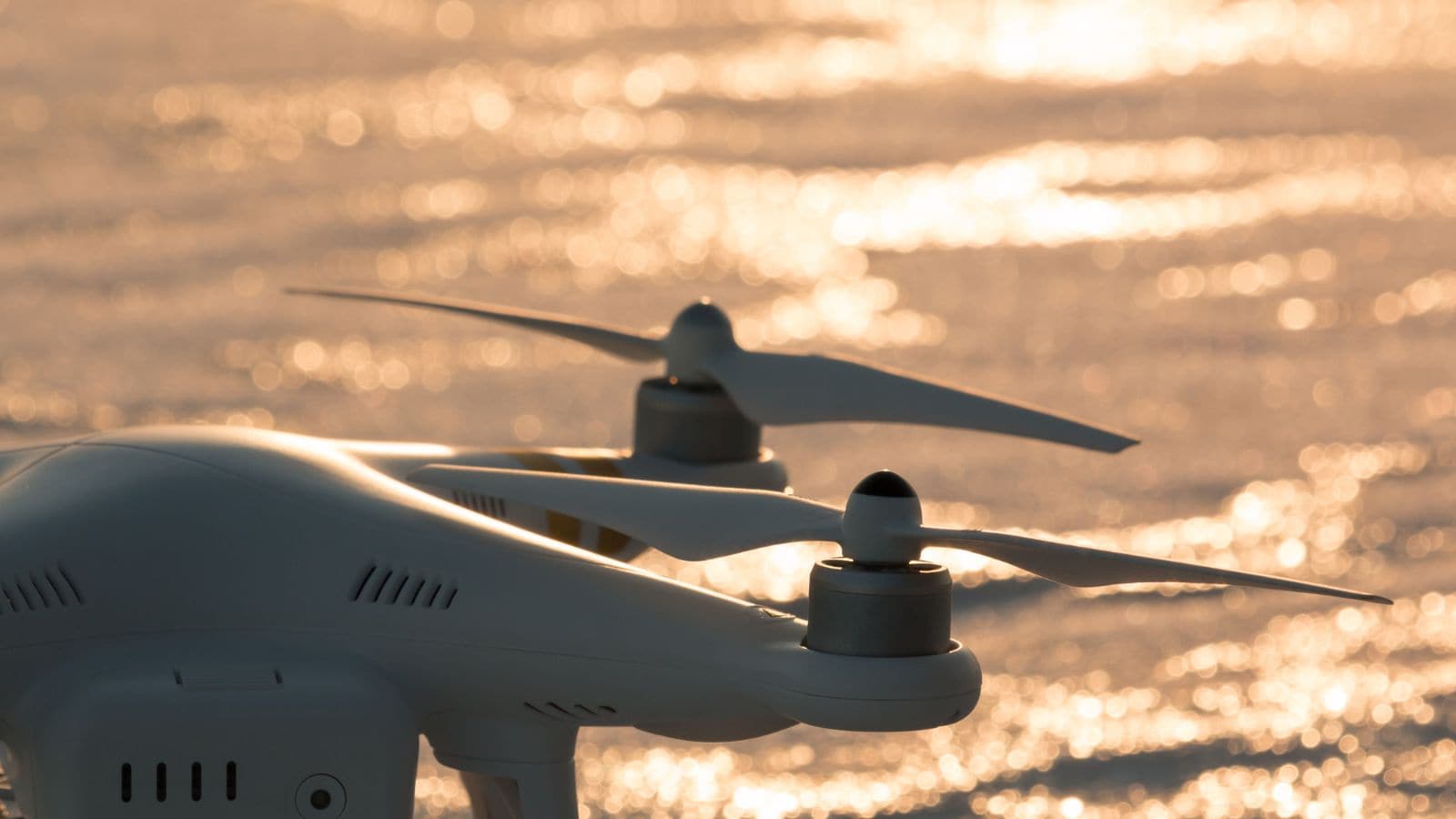
The agreement marks the transition of Ukraine from a net consumer of security hardware to an upstream exporter of operational doctrine and technological blueprints. Currently producing an estimated 10 million uncrewed aerial vehicles (UAVs) annually, Kyiv has committed to doubling its output to 20 million units per year under this joint framework. Achieving this milestone requires resolving a deep industrial paradox. While Ukrainian firms possess unparalleled operational agility, their domestic production nodes remain exposed to persistent kinetic degradation from Russian long-range strikes. Conversely, European Union aerospace firms operate within secure, high-compliance legal jurisdictions but lack the rapid feedback loops generated by active electronic warfare environments. Resolving this friction is the core objective of the new industrial framework.
The Asymmetric Production Frontier
The economic rationale underpinning the EU-Ukraine partnership relies on optimizing an asymmetric production frontier. Modern electronic warfare is defined by hyper-short technology lifecycles; software adaptations and radio-frequency modifications must be deployed in days, not fiscal quarters. The standard Western defense procurement model—dependent on multi-year development phases, rigid specifications, and consolidated prime contractors—is structurally unsuited for this environment.
Ukraine's domestic defense ecosystem bypassed these constraints by building a highly decentralized network of small-to-medium enterprises (SMEs). This distributed assembly model reduces vulnerability to single-point-of-failure kinetic strikes and relies on open-source hardware components. However, this model faces severe marginal utility constraints due to localized supply chain vulnerabilities and component shortages, particularly in specialized semiconductors and precision optical sensors.
[Ukrainian Iterative Prototyping] ---> [EU Regulatory & Scale Infrastructure]
               ^                                      |
               |                                      v
[Real-Time Electronic Warfare Data] <--- [Secure Geographic Production Nodes]
The Drone Deal creates a formal pipeline to export these highly optimized Ukrainian designs into secure European production facilities. By shifting heavy manufacturing components to EU territory, the partnership achieves geographical decoupling. This ensures that the capital-intensive phase of the supply chain—such as automated component machining and cleanroom PCB assembly—is insulated from physical destruction, while the resulting hardware remains deeply integrated with Ukrainian operational software.
The Capital Allocation Architecture
The capital deployment strategy within the first €6 billion tranche of the broader Ukraine Support Loan targets specific structural vulnerabilities within the defense industrial base. The €2 billion allocation earmarked specifically for joint drone and missile production is divided into two operational vectors:
- Upstream Scaling (€1 Billion): Direct capital injections into Ukrainian domestic defense firms specializing in dual-use technologies, radar systems, and sensor suites. This funding provides the working capital required to secure long-lead components in global supply chains.
- Downstream Coproduction (€1 Billion): Financing the establishment of licensed manufacturing facilities within the EU. These plants will mass-produce Ukrainian-designed platforms, such as the Freyja interceptor system, ensuring high-volume output away from the front line.
This funding mechanism operates alongside established initiatives like BraveTechEU, aiming to institutionalize what was previously a fragmented collection of bilateral arrangements into a unified bloc-wide procurement framework. A major structural challenge is standardizing components across different regulatory environments. For example, integrating Ukrainian software with European safety certifications can delay deployment timelines if not properly managed.
The Kinetic Interceptor Pivot
Beyond low-cost reconnaissance and first-person view (FPV) strike drones, the strategic weight of the partnership lies in the acceleration of long-range counter-drone and kinetic interceptor programs. Russia’s reliance on mass-produced loitering munitions and tactical ballistic strikes has created a severe cost-imposition asymmetry for European air defenses. Utilizing a $3 million Patriot interceptor missile to neutralize a $20,000 low-altitude drone is economically unsustainable over an extended horizon.
The joint venture addresses this imbalance by prioritizing the mass production of low-cost, specialized interceptor UAVs designed to engage and neutralize enemy assets via physical impact or proximity detonation.
Traditional Air Defense: High Cost ($3M+ per Interceptor) / Low Output Volume
Asymmetric Air Defense:  Low Cost ($10K-$50K per UAV)  / High Output Volume
By substituting expensive rocket propulsion and legacy guidance systems with algorithms trained on real-world electronic warfare data, these interceptors drastically alter the cost-per-kill equation. The framework aims to establish mature manufacturing pipelines for these platforms within the EU by the end of the year, providing a scalable model for a shared ballistic and uncrewed aerial defense architecture across the continent.
Strategic Risks and Operational Bottlenecks
The structural alignment of the EU-Ukraine partnership is highly logical, yet execution faces serious head-winds:
- Component Dependency and Sovereign Supply Chains: Despite scaling assembly operations, both entities remain heavily reliant on external commercial off-the-shelf components for flight controllers, brushless electric motors, and optical modules. A tight restriction on global semiconductor exports could paralyze production targets regardless of capital availability.
- Technology Transfer and Counter-Intelligence Vulnerabilities: Moving highly sensitive Ukrainian electronic warfare codebases and frequency-hopping algorithms into multi-national European manufacturing facilities creates a broader surface area for espionage. Securing these digital supply chains is technically complex.
- Capital Absorption Capacity: Infusing billions of euros into a wartime defense sector consisting of fragmented startups risks creating localized asset bubbles and structural inefficiencies, rather than linear increases in industrial output.
The Long-Term Defense Integration Play
The long-term trajectory of this agreement extends far beyond the immediate security requirements of the current conflict. By integrating Ukraine into the European Defence Fund’s structural mechanisms, the EU is effectively testing a new model for rapid defense industrial mobilization. This establishes a template for how the bloc can absorb external operational innovations to modernize its own legacy defense firms.
The ultimate strategic play is the creation of a permanently mobilized, technologically advanced defense corridor stretching from the Baltic states through Poland to Ukraine. For European policymakers, this partnership provides the precise industrial capabilities needed to counter evolving security threats across member states. For Kyiv, securing European industrial scale represents the only viable path to sustaining a high-volume defense posture over a multi-year timeline. The success of this framework will not be measured by signed agreements, but by the raw volume of standardized, electronic warfare-resistant hardware rolling off joint assembly lines before the winter campaign begins.