The intersection of state-sponsored kinetic action and high-level psychological operations creates an environment where the perceived status of a head of state functions as a market-moving and military-altering variable. When claims surface regarding the death of a figure like Supreme Leader Ali Khamenei following joint US-Israeli military operations, the veracity of the claim often matters less in the immediate term than the structural volatility the claim introduces into the global security architecture. Assessing these reports requires a clinical breakdown of succession protocols, the mechanics of information verification in closed autocracies, and the secondary effects on regional proxy networks.
The Architecture of Iranian Succession
The death of a Supreme Leader in the Islamic Republic is not merely a change in personnel; it is a stress test for the Assembly of Experts, the 88-member body of clerics tasked with selecting a successor. Under Article 107 of the Iranian Constitution, the transition period creates a high-friction power vacuum that dictates the behavior of the Islamic Revolutionary Guard Corps (IRGC).
Succession logic is governed by three primary constraints:
- Constitutional Legitimacy: The Assembly must convene immediately to prevent a total breakdown of the Velayat-e Faqih (Guardianship of the Jurist) system. Any delay signals internal fracturing among the clerical elite.
- The IRGC Security Prerogative: While the Assembly selects the leader, the IRGC provides the physical security for the regime. A sudden vacancy forces the IRGC into an "active defense" posture, which typically involves a spike in regional proxy activity to deter foreign intervention during the transition.
- The Mojtaba Khamenei Variable: The influence of Khamenei’s son, Mojtaba, represents a significant deviation from traditional meritocratic clerical selection. His potential ascension would signal a shift toward a dynastic security state, likely triggering domestic unrest from factions that view hereditary rule as a betrayal of the 1979 Revolution’s republican pretenses.
Verification Bottlenecks in Autocratic Information Environments
Reports of leadership death in sanctioned, closed societies face a unique verification lifecycle. Unlike democratic states where a "Chain of Command" is publicly visible and media-accessible, Iran utilizes Strategic Ambiguity to manage domestic and international perceptions.
The verification process follows a rigid hierarchy of signals:
- Official State Media Silence: A total blackout of regular programming on IRIB (Islamic Republic of Iran Broadcasting) is the first structural indicator of a high-level crisis.
- The Friday Prayer Proxy: The identity and rhetoric of the cleric leading Friday prayers in Tehran serve as a barometer for internal stability. If a hardline regime loyalist fails to appear or if the sermon lacks a routine endorsement of the current Leader, the probability of a leadership vacuum increases.
- Digital Footprint and Network Throttling: The Iranian Ministry of Information and Communications Technology typically implements localized or national internet shutdowns (BGP hijacking or DNS filtering) during periods of high political sensitivity to prevent the coordination of protests.
Claims originating from external political actors—specifically those in a state of kinetic conflict with the target—must be weighted against the Incentive Structure of Psychological Operations (PSYOPS). Disseminating reports of a leader's death serves to demoralize the rank-and-file military, trigger premature celebrations that expose underground dissent networks, and force the regime to produce proof of life, which may reveal the leader's actual location or health status.
Kinetic Triggers and Israeli-US Tactical Objectives
The link between US-Israeli military strikes and reports of Khamenei’s death suggests a specific escalation ladder. If strikes target "Command and Control" (C2) nodes rather than just nuclear enrichment sites or missile batteries, the objective shifts from Non-Proliferation to Regime Degradation.
The Targeted Strike Logic
The technical difficulty of confirming a fatality in a hardened underground bunker (such as those in the "Beit-e Rahbari" complex) means that initial reports are often based on SIGINT (Signals Intelligence) or the cessation of specific encrypted transmissions. The US and Israel utilize a "Targeting Cycle" known as F2T2EA: Find, Fix, Track, Target, Engage, and Assess. The "Assess" phase is the weakest link; Battle Damage Assessment (BDA) can take days to confirm via satellite imagery or human assets on the ground.
The Cost of Premature Reporting
If reports of a leader's death prove false, the strategic cost to the reporting entity is high. It grants the target a "Resurrection Narrative," bolstering their perceived invulnerability and exposing the intelligence gaps of the adversary. Conversely, if the report is true but unconfirmed, the delay allows the IRGC to consolidate power, purge rivals, and secure the capital before the public can react.
Economic and Geopolitical Ripple Effects
The global markets process Iranian leadership instability through the lens of the Strait of Hormuz Risk Premium.
- Energy Volatility: Approximately 20% of the world's petroleum liquids pass through the Strait. Any perceived instability in Tehran increases insurance premiums for tankers and triggers algorithmic buying in Brent and WTI crude futures.
- Proxy Activation (The "Octopus" Strategy): The "Head of the Octopus" theory, often cited by Israeli security officials, posits that the IRGC (the body) will lash out via its tentacles (Hezbollah, Houthis, PMF) if the head (Tehran’s leadership) is threatened. A leadership vacuum does not lead to an immediate stand-down; it leads to decentralized aggression as regional commanders act without centralized oversight.
- Sanctions Architecture: A change in leadership forces a recalibration of the US Treasury’s OFAC (Office of Foreign Assets Control) designations. If the new leader is not yet sanctioned, there is a brief legal window where international actors might attempt to shift assets, necessitating rapid legislative or executive updates.
Structural Weaknesses in the Current Narrative
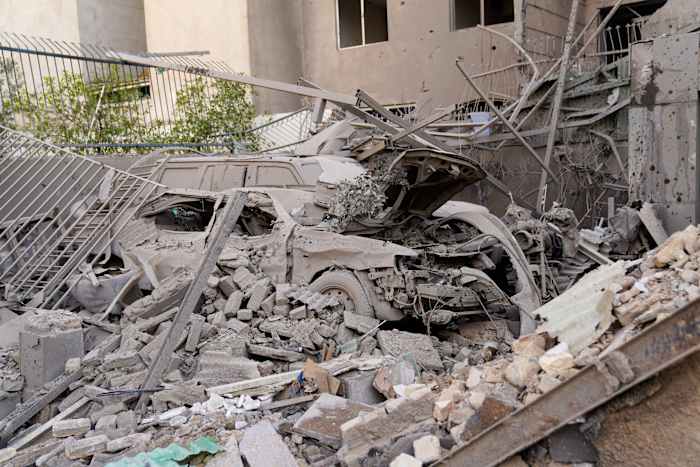
The specific claim that Ali Khamenei died "after US-Israeli attacks" requires scrutiny of the military capabilities involved. Standard air-to-surface munitions are unlikely to penetrate the deep-earth fortifications surrounding the Supreme Leader’s residence unless specialized thermobaric or "bunker-buster" (GBU-57 MOP) ordnance was deployed in a sustained, multi-wave campaign.
A lack of reported seismic activity or massive structural collapse in North Tehran contradicts the "death by strike" hypothesis. A more plausible mechanism for such a report, if true, would be a health failure (such as his long-rumored prostate cancer) exacerbated by the stress of a high-intensity military confrontation, rather than a direct hit from a projectile.
Tactical Response for Global Stakeholders
In the event of unconfirmed reports regarding the death of a regional hegemon's leader, the following strategic maneuvers are required:
- Intelligence Community: Transition from "Targeting" to "Monitoring Succession." The priority shifts to identifying the movement of the 88 members of the Assembly of Experts.
- Corporate Security: Implement "Non-Essential Personnel" evacuation protocols for regional hubs in the Levant and the Persian Gulf.
- Diplomatic Channels: Utilize "Back-Channel" communications via neutral parties (e.g., Oman or Switzerland) to assess the regime's level of internal panic.
The immediate strategic play is to treat the report as a State of High Probability Ambiguity. Do not move assets based on the binary assumption of life or death. Instead, position for the "Interregnum Period"—the 24 to 72 hours between the event and its official confirmation—during which the IRGC is most likely to execute its pre-planned "contingency of chaos" to mask its internal vulnerability. Focus surveillance on the Imam Khomeini International Airport and the highways leading to Qom, as these are the primary transit routes for the clerical and military elite during a power transition.