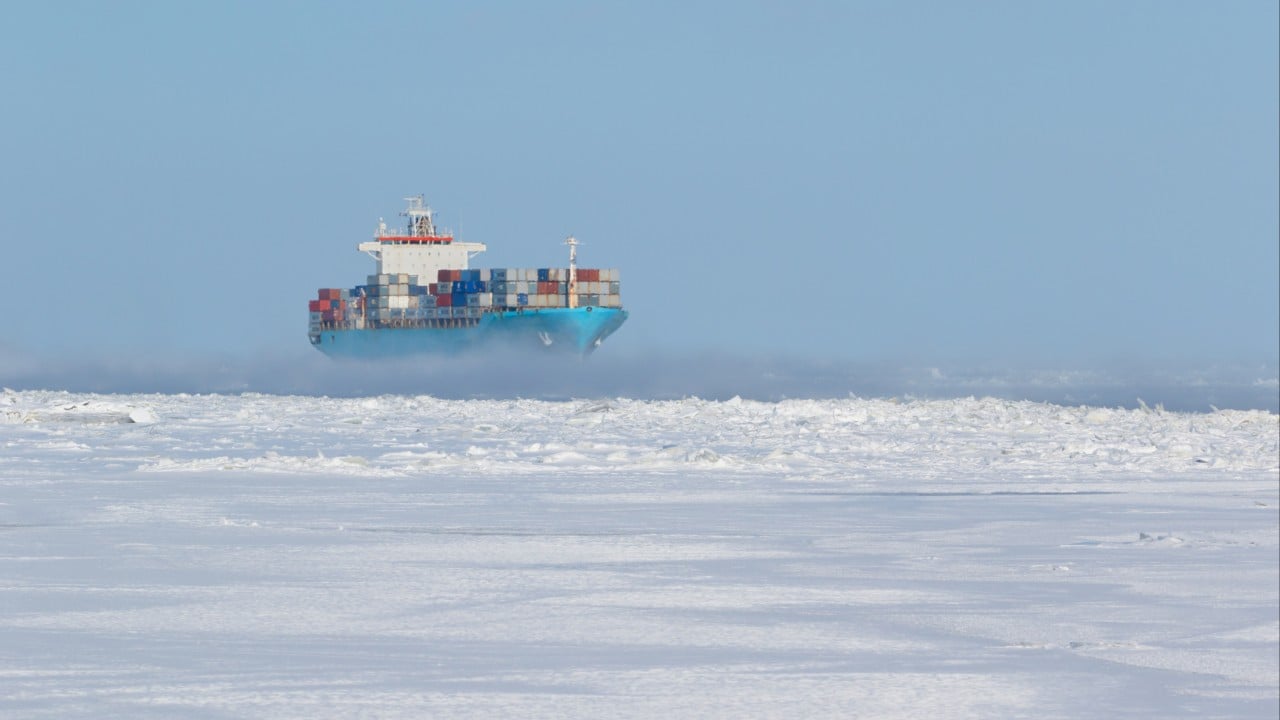
The European Union watches from the sidelines as Chinese and Russian operators aggressively build out year-round commercial transit along the Northern Sea Route, choosing diplomatic distance over high-risk polar expansion. While Beijing and Moscow ink joint ventures for custom-built ice-class container ships, Brussels maintains a policy of deliberate avoidance. Bureaucrats in European capitals frame this inaction as environmental prudence and geopolitical sanction enforcement. The reality is far more uncomfortable. Europe is effectively frozen out of the next major corridor of global logistics because it lacks both the industrial shipbuilding capacity and the stomach for the brutal operational hazards of the High North.
For decades, the concept of a Polar Silk Road was dismissed in Western shipping circles as a geopolitical fever dream. Skeptics pointed to shifting pack ice, punishing maintenance costs, and a total lack of emergency rescue infrastructure along the Siberian coastline. Those objections missed the strategic pivot taking place in East Asia. As security bottlenecks multiply in traditional southern chokepoints like the Red Sea and the Strait of Hormuz, Chinese firms are no longer running exploratory stunts. Operators like NewNew Shipping Line and Sea Legend are launching scheduled, recurring cargo transits that cut transit times between Asian manufacturing hubs and European markets down to roughly twenty days.
The Anatomy of Russian Control
To understand why the European Union refuses to participate, one must look at who holds the keys to the ice. Unlike open oceanic shipping lanes governed by freedom of navigation principles, the Northern Sea Route hugs the Russian mainland. Moscow treats these frigid waters as internal historic waterways, backed by domestic legislation that requires foreign vessels to secure mandatory permits, pay steep transit fees, and accept mandatory escorts from state-owned nuclear icebreakers.
This framework places European maritime operators in an impossible compliance trap. Utilizing the route means paying direct administrative tolls to Russia's state nuclear corporation, Rosatom, pouring hard currency directly into the coffers of a sanctioned state. Furthermore, it requires bowing to Moscow's operational authority in international commercial waters. For Brussels, legitimizing Russian administrative overreach in the Arctic directly undermines its broader foreign policy objectives regarding Ukraine and European security architecture.
Consequently, European policymakers have chosen ideological and regulatory purity. They have categorized Arctic transit not as an economic opportunity, but as a compliance minefield. Yet, this stance carries an invisible cost. By refusing to engage, European capitals are forfeiting any leverage over how polar navigation rules, environmental safeguards, and safety standards are written for the coming century.
The Industrial Void in the West
The reluctance of European shipping lines to push north is not merely a matter of political posturing. It is an indictment of Western industrial decline. Navigating multi-year ice requires specialized tonnage that European shipyards simply do not build at scale.
Consider the technical parameters of the latest joint push between Russian shipbuilders and Chinese logistics providers. The ongoing development focuses on massive Arc7-class container ships, engineered with reinforced hulls capable of independently grinding through nearly two meters of level ice. These vessels feature specialized propulsion systems and beam dimensions tailored specifically to match the channels carved by Russia's heavy nuclear icebreaker fleet.
European maritime infrastructure is optimized for predictable, deep-water southern routes served by ultra-large container vessels that would fold like tin foil upon encountering an Arctic floe. Without access to heavy-ice shipbuilding ecosystems—which are presently concentrated in East Asia and dominated by Russian state coordination—European firms cannot physically compete even if they wanted to. South Korean and Chinese shipping lines are absorbing the early financial losses of trial runs, treating them as long-term strategic investments in future trade geography. European operators, bound by strict quarterly returns and risk-averse institutional investors, cannot justify the underwriting costs.
Environmental Paradox and Geopolitical Blind Spots
The European defense of its Arctic cold shoulder frequently centers on ecology. Environmental groups warn that regular shipping traffic through the High North threatens vulnerable polar ecosystems, accelerates black carbon deposition on receding ice packs, and introduces catastrophic oil spill risks in waters devoid of cleanup infrastructure. These concerns are entirely valid.
Yet, this environmental logic creates a stark paradox. When maritime traffic diverts around the Cape of Good Hope or crowds into congested Middle Eastern canals due to regional conflict, fuel burn and total greenhouse gas emissions skyrocket over thousands of extra nautical miles. Shorter polar transits theoretically offer fuel savings and lower carbon footprints per container, provided the vessels run on cleaner fuels than heavy bunker oil. By completely abdicating involvement, Europe loses its seat at the table to enforce stringent environmental standards on the ships that do sail north.
China's integration into the Russian Arctic supply chain deepens this isolation. Bilateral cargo volumes continue to surge, fueled by northbound industrial components for Russian markets and southbound raw materials, oil, and gas. Beijing is carefully securing resource extraction rights and logistics corridors, cementing an economic axis that stretches from the Pacific across the top of the world.
Brussels remains insulated behind a wall of sanctions and regulatory bans, hoping that logistical unpredictability and high operational costs will keep the Northern Sea Route a niche Siberian shortcut rather than a global trade superhighway. That hope is turning into a liability. As ice-class fleets expand and navigation seasons lengthen due to a warming climate, the commercial reality of polar shipping is hardening. Europe is not giving the Arctic the cold shoulder out of strength. It is standing shivering on the pier while the rest of the world rewrites the map.