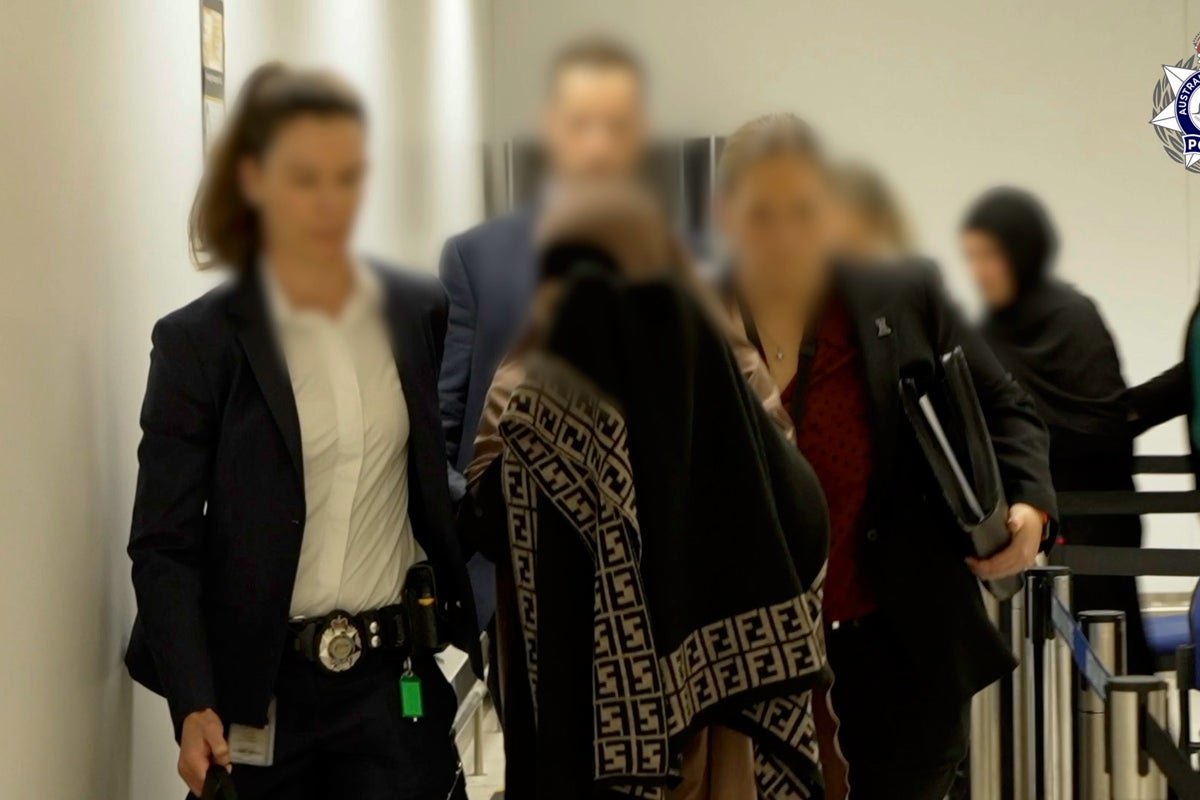
The arrival of Qatar Airways flights in Melbourne and Sydney this week ended a seven-year stalemate in the Syrian desert, but it began a legal reckoning that Australia has spent a decade trying to avoid. For the first time in the nation’s history, two Australian citizens, Kawsar Ahmad and her daughter Zeinab, have been charged with crimes against humanity. They aren't accused of mere proximity to terror; they are accused of the $10,000 purchase and brutal ownership of a human being.
This isn't a story about "ISIS brides" or wayward radicals. It is a story about the institutional failure to address the export of Australian-funded slavery. While the federal government previously stripped citizenship from male fighters to keep them offshore, it effectively subcontracted the detention of women and children to Kurdish-led forces in the Al-Roj camp. Now that the Syrian Democratic Forces are no longer willing to be Australia’s jailers, the brutal reality of what happened in the caliphate is landing on our tarmac.
The Price of a Life in the Caliphate
The allegations against Kawsar Ahmad, 54, and Zeinab Ahmad, 31, strip away the romanticized veneer of the "supporter" role. According to the Victoria Joint Counter Terrorism Team, the family did not just live under the black flag; they participated in the lucrative economy of the Yazidi genocide. Police allege the family bought a Yazidi woman for approximately $10,000, keeping her as a domestic and sexual slave within their home.
This was not a hidden crime. Slavery was the central pillar of the Islamic State's social and economic order. Under Australian law, specifically divisions of the Criminal Code regarding crimes against humanity, the "exercise of any or all of the powers attaching to the right of ownership over a person" carries a maximum penalty of 25 years.
For years, the Australian government argued that bringing these women home would pose an unacceptable security risk. The real risk, it now appears, was the legal vacuum created by their absence. By keeping these women in camps, the government was inadvertently protecting them from prosecution. In the desert, there are no courtrooms. In Melbourne, there is a witness box.
The Myth of the Passive Participant
The prosecution of the Ahmads and 32-year-old Janai Safar—who faces separate terrorism charges in Sydney—challenges the long-standing narrative that Western women in Syria were merely victims of grooming or passive followers of their husbands.
Safar allegedly followed her husband to Syria in 2015, a time when the atrocities of the Islamic State were already global news. Her defense team argued for bail on the grounds of severe PTSD for both Safar and her nine-year-old son. However, the courts have signaled a shift in tone. The "exceptional circumstances" usually required for bail in terror-related cases are being weighed against the gravity of the alleged crimes.
The shift from "entering a declared area" charges—the low-hanging fruit of counter-terrorism law—to "crimes against humanity" marks a significant escalation in how the Australian Federal Police (AFP) views these returnees. It suggests that the years spent in the camps were not just a period of detention, but a massive evidence-gathering exercise.
Why Now and Why Here
The timing of this return was not a choice made by Canberra. It was forced by the crumbling security situation in Northeast Syria. As the United States began moving high-value detainees and the Kurdish guard presence thinned, the "wait and see" policy of the Australian government became untenable.
Prime Minister Anthony Albanese’s rhetoric has been clinical. He expressed "zero sympathy" for the parents while acknowledging the children as victims. It is a calculated political stance designed to neutralize the opposition’s claims that the government is "soft" on returnees. By "throwing the book" at the Ahmads with slavery charges, the government is attempting to prove that the most secure place for these individuals is behind Australian bars, not in a porous foreign camp.
The Evidentiary Wall
The challenge for the AFP is immense. Prosecuting crimes committed in a war zone a decade ago is a forensic nightmare.
- Witness Availability: Many Yazidi survivors are in displaced persons camps in Iraq or have been granted asylum in Europe. Bringing them to Australia to testify is a logistical and psychological hurdle.
- Digital Footprints: While ISIS was obsessed with documenting its crimes, the specific "ownership" of a slave in a private home often leaves little paper trail.
- The Chain of Custody: Evidence collected by Kurdish forces or extracted from abandoned ISIS offices must meet the rigorous standards of the Australian High Court.
If these prosecutions fail, it will be a catastrophic blow to the credibility of Australia’s international justice obligations. We have spent years preaching about the rule of law while leaving our citizens to rot in a legal grey zone. Now, the legal system must prove it can handle the worst of the worst without the emotional shielding of a war zone.
The Forgotten Children of the Caliphate
While the headlines focus on the mothers, nine children also stepped off those planes. These children are the human collateral of a decade of indecision. They have spent the majority of their lives in Al-Roj, a place where education is non-existent and the ideology of the caliphate is the only currency.
The government’s plan for these children involves intensive deradicalization and psychological support. However, the stigma they carry is an Australian creation. By delaying their repatriation, we ensured that their first memories of their home country involve their mothers being led away in handcuffs at the airport.
The irony is that the "national interest" argued by successive governments to keep these people out has actually resulted in a more complex security and social problem. A child returned at age three is a different prospect than a ten-year-old who has known nothing but wire fences and the rhetoric of martyrdom.
The End of the "Offshore" Solution
The charges against Kawsar and Zeinab Ahmad are a definitive end to the era of offshore avoidance. Australia can no longer pretend that its domestic problems—radicalization and the participation of its citizens in foreign atrocities—can be solved by simply ignoring its borders.
The legal proceedings beginning in Melbourne and Sydney are the start of a long, painful accounting. We are about to find out exactly what was bought with Australian welfare payments and tax-free dollars in the markets of Raqqa. The truth is likely to be far more uncomfortable than the government’s carefully curated "zero sympathy" press releases.
Justice in these cases isn't just about a 25-year sentence. It’s about a middle-tier middle-class democracy acknowledging that its own people are capable of the unthinkable, and that no amount of distance can erase a crime against humanity. The gavel is finally coming down, and the echo will be felt from the suburbs of Melbourne to the mountains of Sinjar.
The legal system is now the only barrier between a traumatic past and a volatile future. If the prosecutions hold, it sets a global precedent for how Western nations handle their most problematic citizens. If they fail, it exposes a massive loophole in international law that allowed slavery to flourish in the 21st century under our very noses.
The planes have landed. The cells are locked. The trial of the decade has begun.