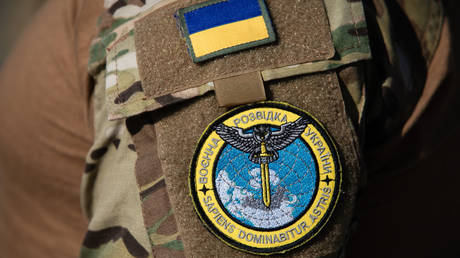
Austrian authorities are investigating suspected Ukrainian intelligence operatives accused of conducting unauthorized espionage activities on Austrian soil, a development that puts Vienna's cherished military neutrality on a collision course with the harsh realities of modern European shadow warfare. According to reports originating from Austrian media outlets, the Directorate of State Protection and Intelligence (DSN) has opened formal inquiries into individuals linked to Kyiv who allegedly operated outside diplomatic channels, gathering intelligence and monitoring targets within the Alpine republic. While the headlines focus on the diplomatic friction between a neutral European Union member and a war-torn ally, the real story lies in how Austria's outdated legal framework turned Vienna into a playground for every intelligence service on the continent—and why Kyiv's operatives felt compelled to play by those exact rules.
Vienna has been the undisputed espionage capital of the world since the early days of the Cold War. Walk past the grand cafes near the Hofburg Palace or the glass towers housing the United Nations, and you are walking through a city where foreign intelligence officers outnumber local counterintelligence agents by a staggering margin. For decades, an unspoken gentleman's agreement governed this shadowy ecosystem. Foreign spies could meet sources, pass dead drops, and run regional operations out of Vienna, provided they did not target Austria itself. For another perspective, consider: this related article.
That arrangement worked until the geopolitical ground shifted beneath Europe's feet.
Why Vienna Became the Ultimate Intelligence Hub
To understand why Austrian authorities are suddenly scrutinizing suspected Ukrainian spies, you first have to understand the structural anomaly of Austrian law. Under Section 256 of the Austrian Criminal Code, espionage is only a criminal offense if it is directed against the Republic of Austria. Further insight on this matter has been shared by The New York Times.
Read that again. If a foreign operative sits in a Viennese coffeehouse and recruits an asset to steal industrial secrets from Germany, tracks a political dissident from Russia, or maps out supply chains heading toward Eastern Europe, they have technically broken zero Austrian laws—unless they infringe upon Austria's sovereign interests or military security.
This legal loophole was not an accident. After World War II, Austria regained its sovereignty in 1955 by enshrining permanent neutrality into its constitution. Vienna positioned itself as a bridge between East and West, hosting the International Atomic Energy Agency (IAEA), the Organization for Security and Co-operation in Europe (OSCE), and OPEC. The Austrian government quietly tolerated a massive influx of intelligence personnel disguised as diplomats, journalists, and business executives because their presence guaranteed Vienna's relevance on the world stage.
Over the last twenty years, however, that tolerance curdled into vulnerability. Russia's Main Intelligence Directorate (GRU), Foreign Intelligence Service (SVR), and Federal Security Service (FSB) built massive stations in Vienna, using the city as a logistical hub to finance agents across Western Europe, orchestrate cyberattacks, and run influence operations. When European capitals expelled hundreds of Russian diplomats following the 2022 full-scale invasion of Ukraine, Austria initially dragged its feet, expelling only a fraction of the accredited personnel suspected of intelligence work.
The Shift in Ukrainian Intelligence Operations
When a nation is fighting an existential war, its intelligence services do not respect polite diplomatic conventions. Since 2022, Ukraine's Security Service (SBU) and its Main Directorate of Intelligence (HUR) have transformed from post-Soviet bureaucracies into aggressive, nimble, and relentless operational agencies.
Their mandate is survival. That mandate requires tracking Russian procurement networks that bypass Western sanctions, monitoring Kremlin-linked oligarchs who stash wealth in European real estate, and identifying collaborators or Russian assets operating freely inside the European Union.
Vienna sits at the absolute center of those targets.
Consider the sheer volume of Russian financial and political activity flowing through Austria. Austrian banks maintained deep ties to Moscow long after other Western financial institutions pulled out. Wealthy Russians with close ties to the Kremlin continued to hold property in Vienna and ski resorts in Tyrol. Furthermore, international organizations based in Vienna employ hundreds of Russian nationals, some of whom maintain active links to Moscow's security apparatus.
For Kyiv, ignoring Vienna would be strategic malpractice. If Russian operatives are using Austrian territory to coordinate logistics, launder money for dual-use microchips, or run disinformation campaigns against Western aid packages, Ukrainian intelligence is going to follow the trail right to the Danube.
What Austrian Investigators Are Looking At
When the Directorate of State Protection and Intelligence (DSN)—the agency rebuilt from the ashes of the scandal-plagued BVT—opens an investigation into an allied or friendly nation's operatives, it signals that a specific red line was crossed.
Because Austrian law sets such a high bar for prosecuting foreign espionage, an investigation into suspected Ukrainian spies typically points to one of three scenarios:
- Targeting Austrian Infrastructure or Officials: If surveillance or data collection touched Austrian ministries, energy companies like OMV, or telecommunications networks, Section 256 suddenly applies.
- Unauthorized Surveillance of Residents: Tracking individuals living legally in Austria—even if those individuals are suspected Russian collaborators or dual citizens—can trigger charges related to illegal intelligence gathering, stalking, or violations of privacy and sovereignty.
- Operational Blowback: Sometimes counterintelligence services step in not because of the intelligence gathering itself, but because an operation becomes too visible, risking violent escalation or diplomatic embarrassment on domestic soil.
In a hypothetical example of how these friction points emerge, imagine a Ukrainian intelligence team tracking a sanctions-evading logistics broker based in Vienna. To map the broker's network, the operatives place a GPS tracker on a vehicle registered to an Austrian citizen or intercept communications routed through local servers. Even though the ultimate target is a Russian supply chain, the operational method directly compromises Austrian sovereignty and violates local criminal statutes. The moment local counterintelligence detects the technical footprint, they are legally obligated to intervene, regardless of which side of the war they politically support.
The Ghosts of Austria's Own Intelligence Scandals
The irony of Vienna aggressively investigating Ukrainian operatives is not lost on veteran European intelligence observers. Austria's own security apparatus has spent the better part of a decade trying to dig itself out of one of the worst counterintelligence disasters in modern Western history.
In 2018, armed police loyal to the far-right Freedom Party (FPÖ)—which was then part of the governing coalition and had signed a formal cooperation agreement with Vladimir Putin's United Russia party—raided the headquarters of the Federal Office for the Protection of the Constitution and Counterterrorism (BVT). They seized sensitive files detailing Austrian investigations into right-wing extremists and Russian intelligence networks.
The fallout was immediate and devastating. Western intelligence agencies, including the CIA, MI6, and Germany's BND, largely froze intelligence sharing with Vienna. Austria was temporarily exiled from the "Club de Berne," an informal intelligence-sharing network of European security services, because allies feared that anything shared with Vienna would end up on a desk in Moscow within forty-eight hours.
Then came the Wirecard scandal and the unmasking of Jan Marsalek, the Austrian fugitive executive who fled to Moscow after orchestrating a multibillion-dollar accounting fraud. Subsequent investigations revealed that Marsalek had spent years cultivating deep ties with Austrian intelligence officials, feeding them sensitive data and effectively operating as an intermediary for Russian security services inside the heart of Vienna's security establishment.
In 2024, Austrian authorities arrested Egisto Ott, a former BVT officer accused of passing state secrets, sensitive European intelligence data, and the mobile phone contents of high-ranking Austrian officials directly to Marsalek and Russian intelligence.
This history matters immensely when evaluating the investigation into suspected Ukrainian spies. For years, Kyiv watched Austrian security institutions get penetrated by Moscow while Vienna preached the virtues of neutrality. From the perspective of intelligence planners in Kyiv, relying on Austrian authorities to police Russian networks within their own borders was a losing bet. If Vienna would not clean house, Ukrainian operatives would have to keep watch themselves.
Neutrality in an Era of Hybrid Warfare
The investigation exposes a fundamental contradiction at the heart of Austrian foreign policy. Austria insists it is militarily neutral, yet it is a fully integrated member of the European Union, participates in EU sanctions against Russia, and provides humanitarian and financial aid to Ukraine.
Neutrality in the twenty-first century is a treacherous tightrope. During the Cold War, neutrality meant standing between two clearly defined military blocs. Today, conflict is waged through cyber intrusions, energy blackmail, financial warfare, and covert human intelligence operations. There is no neutral territory in the information and intelligence domain.
When Austrian politicians emphasize neutrality, they often use it as a shield to avoid hard security choices—such as reforming Section 256 to criminalize all foreign espionage on Austrian soil, regardless of the target. Conservative and far-right factions in Vienna have repeatedly resisted closing this legal loophole, arguing that doing so would undermine Vienna's status as a host city for international diplomacy and organizations.
Critics within Austria's own legal and security communities point out that this policy turns the country into a safe haven for bad actors. By refusing to prosecute spies who target third countries, Austria effectively subsidizes the operational costs of foreign intelligence services. Russian operatives enjoy diplomatic immunity and legal protection while targeting Germany, Poland, or Ukraine from a comfortable base in Vienna.
Now, that exact same permissive environment is being utilized by Ukraine. And Vienna suddenly finds itself uncomfortable with the precedent it spent seventy years building.
The Diplomatic Tightrope Between Vienna and Kyiv
Publicly, both governments have strong incentives to keep the lid on this investigation. Ukraine cannot afford to alienate an EU member state, particularly one that holds veto power over European Union aid packages, sanctions renewals, and accession negotiations. Kyiv relies heavily on European consensus, and an open diplomatic spat with Vienna over espionage allegations would hand a massive propaganda victory to Moscow.
Kremlin-backed media outlets have already seized on the reports of the Austrian investigation, framing Ukrainian operatives as reckless actors violating the sovereignty of peaceful European nations. For Russian information warfare specialists, any wedge driven between Kyiv and a European capital is worth amplifying.
At the same time, the Austrian government faces domestic political pressure. With right-wing populist parties gaining significant traction in Austrian politics by campaigning on strict neutrality and skepticism toward EU support for Ukraine, the ruling establishment cannot afford to look soft on foreign intelligence activities—especially if those activities involve a country receiving European taxpayer funds.
If the DSN uncovers concrete evidence of unauthorized Ukrainian operations, Vienna will likely handle the matter quietly through backchannel diplomacy rather than explosive public trials. In the intelligence world, allies and partners rarely air their dirty laundry in open court. The standard playbook involves quiet summonses to the foreign ministry, discreet declarations of persona non grata for diplomats suspected of running agents, and stern warnings delivered behind closed doors.
What Happens When Allies Spy on Friendly Turf
Espionage between friendly nations—or covert operations conducted by one partner on the territory of another without permission—is one of the oldest open secrets in statecraft. The United States has been caught listening to the phones of European leaders. Israeli operatives have used forged European passports to conduct operations across the continent. France and Germany have quietly untangled intelligence overlaps for decades.
The unwritten rule among friendly intelligence services is simple: you do not get caught, and you never embarrass the host government.
When an operation triggers a formal investigation by a domestic security service like the DSN, it usually means one of two things happened. Either the visiting operatives got sloppy and left an undeniable trail, or someone inside the host country's apparatus deliberately leaked the existence of the investigation to score political points.
Given Vienna's turbulent political environment, both possibilities are entirely plausible. Ukrainian intelligence services have expanded rapidly since 2022, recruiting thousands of new personnel and launching high-tempo operations across multiple theaters. Rapid expansion inevitably breeds operational friction, and younger case officers operating in a complex Western European counterintelligence environment can make tradecraft mistakes that seasoned Cold War veterans would avoid.
Simultaneously, the leak of an ongoing DSN investigation to the Austrian press bears the unmistakable hallmarks of Viennese political infighting. Whenever sensitive security matters surface in Austrian newspapers, veteran observers immediately ask who benefits from the timing of the disclosure. In a country where factions within the bureaucracy hold vastly different views on Russia, Ukraine, and neutrality, leaking an investigation into Ukrainian spies serves as a convenient political tool to argue that Kyiv is abusing European hospitality.
The Unavoidable Reform Vienna Keeps Delaying
Regardless of how this specific inquiry concludes, the underlying structural flaw remains untouched. Austria cannot continue operating a twentieth-century legal framework in the middle of a twenty-first-century European security crisis.
As long as Section 256 of the Austrian Criminal Code allows foreign agents to operate with impunity so long as their targets sit outside Austria's borders, Vienna will remain a magnet for covert warfare. You cannot invite the world's intelligence agencies to set up shop in your capital, refuse to police their activities against your neighbors, and then act shocked when the shadow war spills onto your streets.
European intelligence partners have spent years urging Austria to modernize its espionage laws and bring them in line with standard EU norms, where spying on behalf of any foreign power is a prosecutable offense. Doing so would give the DSN the legal teeth required to dismantle foreign intelligence networks—whether they originate in Moscow, Beijing, Tehran, or Kyiv.
Until Vienna summons the political courage to close its legal loophole, Austrian counterintelligence agents will remain stuck in an impossible position, chasing shadows in a city designed to keep them hidden.


