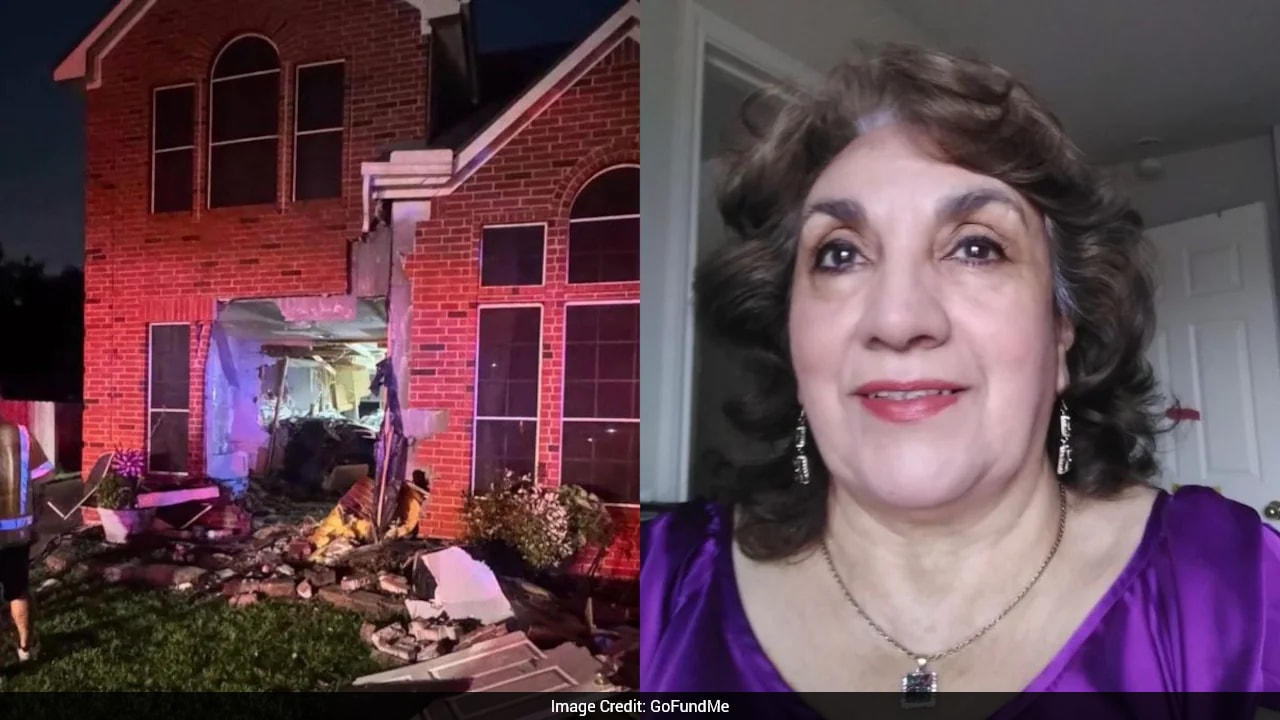
A Tesla Model 3 traveling at high speed failed to navigate a routine right turn at a suburban intersection in Katy, Texas, plowing directly through a brick wall and into the front room of a residential home. The impact instantly killed 76-year-old Martha Avila, who was simply standing inside her own house when the vehicle breached the structure. The 44-year-old driver immediately informed the Harris County Precinct 5 Constable’s Office that the vehicle was operating on Autopilot at the time of the crash. This horrific incident exposes the dangerous reality of the automation complacency trap, where drivers treat driver-assistance packages as autonomous systems, with catastrophic real-world results.
The tragedy in Katy, which occurred on a Friday evening along Rose Hollow Lane, is not an isolated anomaly. It represents the sharp edge of a systemic regulatory and design crisis that has been brewing for a decade. The U.S. National Highway Traffic Safety Administration (NHTSA) is already deeply entrenched in an Engineering Analysis into nearly three million Tesla vehicles equipped with advanced driver-assistance software. This probe escalated after repeated reports of vehicles running red lights, misjudging highway geometry, and executing erratic maneuvers. By examining the mechanics of this latest crash, the physical limitations of camera-only computer vision, and the legal framework of driver responsibility, we can see exactly why the promise of self-driving technology keeps collapsing into fatal failure modes.
The Illusion of Autonomy
The fundamental flaw in current consumer automotive automation lies in the gap between marketing perception and engineering reality. Tesla markets two distinct tiers of driver-assistance software: basic Autopilot, which is essentially traffic-aware cruise control paired with lane-centering, and Full Self-Driving (Supervised). Despite the ambitious nomenclature, neither system transforms a vehicle into an autonomous entity. Both are classified as Level 2 driver-assistance systems under the standard established by SAE International. This means the human behind the wheel remains the primary driver, legally and operationally responsible for every action the vehicle takes.
Human psychology is poorly equipped to handle the demands of Level 2 automation. When a machine handles 99% of a task successfully, human attention naturally drifts. This phenomenon, known by human-factors engineers as automation complacency, means that a driver's reaction time slows drastically when an emergency suddenly requires manual intervention. In the Katy crash, video captured by neighbors showed the Model 3 traveling at a high rate of speed without slowing down as it approached the T-intersection.
Whether the system suffered a software lag or the driver experienced complete situational detachment, the result was the same. The car went straight where the road turned right. By the time a human operator realizes an automated system is making a fatal error, the vehicle's momentum often outruns the physics of braking distance.
The Blind Spots of Camera Only Vision
To understand why a vehicle might fail to recognize a dead-end or a structural wall at an intersection, one must look at the underlying hardware philosophy. Years ago, Tesla made the controversial decision to eliminate radar and ultrasonic sensors from its vehicles, opting for a system called Tesla Vision. This approach relies entirely on optical cameras and neural networks to interpret the three-dimensional world.
The engineering trade-offs of a camera-only suite are severe. While human beings navigate using vision, our eyes are backed by biological intelligence that instantly understands context. A computer vision system must calculate depth and object classification by analyzing two-dimensional pixels. Certain environmental factors can degrade this process:
- Low Contrast Shadows: At dusk or night, a brick wall or a house facade can blend into the background, causing the neural network to miscalculate the distance or fail to recognize an obstacle entirely.
- Glare and Localized Blindness: Headlights, streetlights, or sudden transitions in ambient lighting can saturate camera sensors, creating temporary data gaps.
- Geometric Anomalies: T-intersections require a system to rapidly identify that the drivable path has terminated and that a cross-street requires a 90-degree trajectory change. If the software fails to detect the boundary lines, it may assume the path ahead is clear.
When a camera-only system encounters an edge case—a scenario it has not been heavily trained on in simulated or real-world data miles—it does not necessarily stop. It executes based on its highest statistical guess. If that guess is wrong, the vehicle continues forward with the full force of its electric powertrain.
The Legal and Corporate Shield
Whenever a high-profile crash occurs involving Autopilot or Full Self-Driving, a familiar corporate script unfolds. The manufacturer reviews the vehicle log data, which is continuously uploaded to the cloud, and frequently points out that the driver's hands were not on the wheel, or that the driver disengaged the system a few seconds before the impact.
This creates a convenient legal shield. By placing explicit disclaimers in the owner's manual stating that the driver must maintain continuous oversight, the liability is shifted squarely onto the consumer. In past litigation, defense attorneys for the automaker have successfully argued that the driver failed to heed warnings, effectively transforming the customer into the ultimate safety redundant system.
Yet, safety advocates argue this defense is disingenuous. The software is specifically engineered to look and feel like it is driving itself, which encourages the exact behavior that leads to crashes. The vehicle coaxes the user into letting their guard down, then blames them for not being vigilant when the system makes a sudden, unprompted error.
The Missing Data and Federal Scrutiny
The investigative trail for federal regulators has been complicated by how data was historically managed. During recent legal proceedings, it was revealed that the automaker did not systematically track or maintain comprehensive records of Autopilot-related crashes during the first three years following the technology's public launch. This lack of historical baseline data has made it incredibly difficult for independent researchers and federal agencies to determine the exact statistical risk of these systems compared to human drivers.
NHTSA is currently looking into whether the company has been fully transparent in reporting crashes under the Standing General Order, which mandates that manufacturers report incidents where driver-assistance systems were active within 30 seconds of an impact. The agency's ongoing Engineering Analysis is focusing heavily on whether the driver-monitoring systems—which use a cabin camera and steering wheel torque sensors—are robust enough to prevent misuse.
The current monitoring methods are notoriously easy to circumvent. A driver can look at a phone or stare out the window for several seconds before the car issues an audible alert. In high-speed environments, a few seconds of distraction is all it takes to cover the distance between a roadway and a citizen's living room.
The Redesign of Public Safety
The death of Martha Avila inside her home highlights a terrifying evolution in automotive risk. Motor vehicle accidents used to be restricted to the asphalt and the immediate shoulder. Now, as high-power electric vehicles equipped with experimental software navigate dense residential neighborhoods, the boundary of risk has expanded.
Resolving this crisis will not happen through consumer software updates alone. It requires a fundamental shift in regulatory oversight. Regulatory agencies must move past voluntary compliance frameworks and establish strict, quantifiable standards for driver-monitoring systems. If a vehicle cannot guarantee that a human driver is looking at the road and ready to take over within milliseconds, the automated system should refuse to engage.
Until software capabilities match corporate nomenclature, the public will remain unwitting participants in an unfinished engineering experiment. The responsibility cannot rest entirely on the driver when the product itself is engineered to foster a false sense of security.
The investigation into the Katy crash by the Harris County Sheriff's Office remains active. Technicians will extract the data directly from the vehicle’s black box to verify the driver’s claims. But regardless of the final telemetry readouts, the structural issue is clear. The industry has deployed a technology that outpaces the psychological limits of the humans using it, and the cost of that misalignment is being paid by people sitting in their own homes.