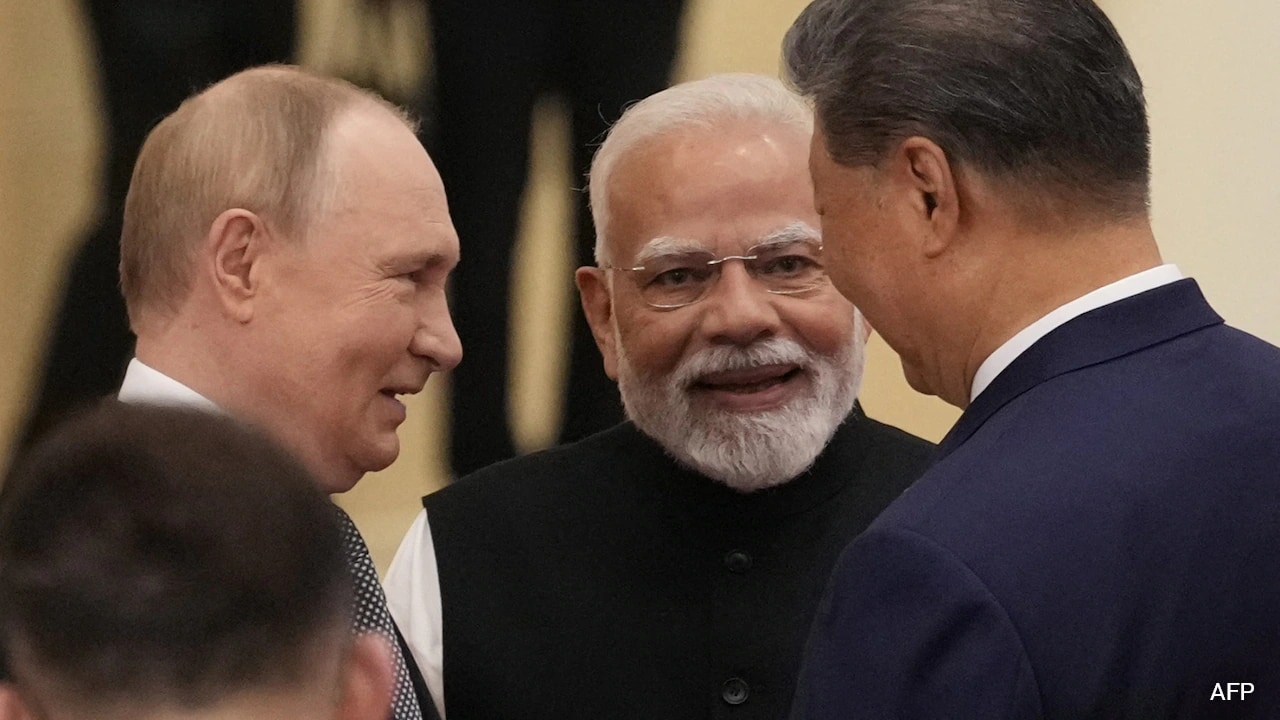
The capital of Kyrgyzstan is currently hosting a diplomatic gathering that western foreign ministries prefer to ignore. Leaders from India, China, Russia, and Iran are sitting around the same table in Bishkek for the 26th Shanghai Cooperation Organisation summit. Official communiqués will speak of mutual prosperity, regional security, and the twenty-fifth anniversary of the bloc. Strip away the diplomatic theater, however, and the reality is far more transactional. This coalition of Eurasian heavyweights is bound less by shared affection and more by shared opposition to western financial dominance.
Look closely at the guest list. New Delhi and Beijing maintain a bitterly contested military frontier in the Himalayas. Moscow remains bogged down in an intractable European war that consumes its economic bandwidth. Tehran operates under severe international sanctions while projecting power across West Asia. Yet, as the bloc marks a quarter-century since its inception as the Shanghai Five, these governments find utility in institutionalizing an alternative diplomatic orbit.
The Myth of Eurasian Monolithism
Analysts in Washington and Brussels frequently misread the Shanghai Cooperation Organisation as an eastern counterpart to NATO. That comparison displays a fundamental misunderstanding of regional dynamics. The bloc possesses no integrated military command structure, no mutual defense clause, and no uniform ideology.
India's participation alone ensures the group cannot function as an anti-western military pact. New Delhi maintains a delicate balancing act, deepening its security ties with Washington through the Quad while simultaneously engaging with Moscow and Beijing within Eurasian forums. For Indian Prime Minister Narendra Modi, the summit provides a necessary mechanism to manage friction with China face-to-face rather than through hostile cross-border rhetoric. Regular physical proximity between Indian and Chinese leadership remains one of the primary practical utilities of the platform.
At the same time, Beijing views the organization as a vehicle to anchor Central Asia firmly within its economic sphere. Through infrastructure financing and resource extraction agreements, Chinese capital dominates the landlocked republics situated between the Caspian Sea and the Chinese border. Moscow, historically accustomed to treating Central Asia as its exclusive backyard, now watches its historical dominance dilute under the weight of Chinese economic gravity.
The Connectivity Illusion
Trade corridors form the bedrock of official speeches at Bishkek. The International North-South Transport Corridor, linking Mumbai to St. Petersburg via Iran, receives perennial praise in bilateral meetings. The logistical bottlenecks tell a different story.
Consider a hypothetical cargo shipment moving from western India through the Iranian port of Chabahar toward Central Asia. Bureaucratic delays at border crossings, incompatible rail gauges, and inadequate insurance frameworks routinely turn a multi-modal transit route into an administrative nightmare. Iranian integration into the bloc was supposed to streamline these passages, but financial isolation keeps major international shipping lines wary of utilizing Iranian infrastructure to its full potential.
The structural problems are organizational rather than financial. Central Asian states want trade diversification, not dependency on a single external actor. Kyrgyzstan, presiding over the current summit cycle, uses its host status to attract foreign investment and elevate its diplomatic visibility rather than to advance grand geopolitical designs. Bishkek cares deeply about practical deliverables, such as standardized accreditation for the thousands of foreign medical students studying in the country, rather than abstract declarations on a multipolar world order.
Security Realities Beyond the Rhetoric
Counter-terrorism remains the official glue holding the ten member states together. The Tashkent-based Regional Anti-Terrorist Structure functions as a modest intelligence-sharing hub. The persistent threat of radicalization spilling across borders from Afghanistan keeps regional security agencies on edge.
Yet, member states harbor divergent definitions of extremism. What one government classifies as a legitimate domestic political opposition movement, another views through the lens of regional stability. This divergence prevents the bloc from executing coordinated military interventions. Security cooperation largely stops at border management protocols and routine intelligence exchanges.
The summit in Kyrgyzstan ultimately serves as a diplomatic pressure valve. It allows heavily sanctioned economies like Russia and Iran to project normalcy and commercial viability on an international stage. It gives Beijing a platform to showcase multilateral leadership in its immediate neighborhood. It offers New Delhi a seat at the table to protect its vital continental equities and prevent Central Asia from becoming an exclusive condominium of its rivals.
The collective weight of these nations accounts for over forty percent of the global population and a quarter of global economic output. That scale ensures the organization commands attention, regardless of its internal contradictions. As the leaders depart Bishkek and return to their respective capitals, the grand proclamations of sustainable peace will fade, leaving behind the hard, unyielding mechanics of bilateral competition masked as regional harmony.