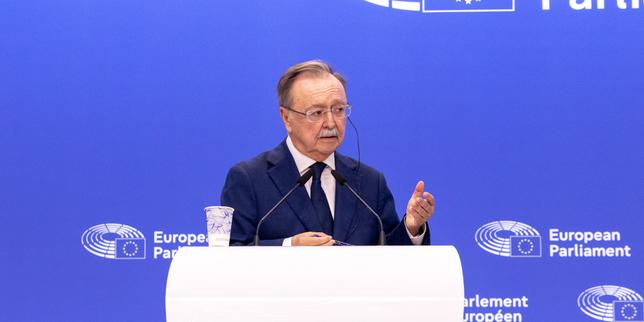
The tiny Spanish enclave of Ceuta on the North African coast has once again become a pressure cooker, forcing Mayor Juan Jesús Vivas to appeal directly to the European Parliament for emergency funding and active border protection. When tens of thousands of migrants cross into a territory measuring just eighteen square kilometers, the strain ceases to be a local administrative headache. It transforms into an acute stress test for the entire Schengen architecture. Yet, the response from Brussels and Madrid remains a familiar choreography of bureaucratic hesitation, emergency cash infusions, and finger-pointing that solves nothing long-term.
For decades, border towns on the outer edges of the continent have functioned as shock absorbers for geopolitical friction. When diplomatic tensions flare between Spain and Morocco, or when migration routes shift due to instability in the Sahel, Ceuta absorbs the immediate impact. Mayor Vivas is asking for a permanent European presence—specifically requesting the deployment of Frontex and the European Asylum Agency directly on the ground. He wants Europe to own the border it claims to protect.
The core issue extends far beyond a simple shortage of beds or temporary reception facilities. It exposes a structural hypocrisy at the heart of European integration.
The Geometry of Isolation
Look at a map. Ceuta is geographically part of Africa, separated from mainland Spain by the Strait of Gibraltar, yet legally and politically embedded in the European Union. This creates a bizarre paradox for anyone trying to manage the frontier. Migrants view the double-fenced perimeter of Ceuta as the literal gateway to Western Europe. For Brussels, it is treated as an externalized outpost—geographically distant and politically convenient to manage through remote funding rather than direct operational ownership.
When Prime Minister Pedro Sánchez promises millions in supplementary aid and structural investments to pacify local unrest, it reads as a band-aid on an amputation. Money does not manufacture space. Ceuta is densely populated, confined by steep hills and the Mediterranean Sea. There is no physical room to expand detention centers or social infrastructure indefinitely without collapsing the local economy and municipal services relied upon by its permanent residents.
Local leaders know this reality intimately, which explains the desperation behind the recent trips to Brussels. They are dealing with a crisis of scale that national governments treat as a seasonal weather pattern rather than a systemic structural failure.
The Geopolitical Leverage Game
Migration across the North African littoral is rarely accidental or spontaneous. It operates as a complex barometer of international relations. Whenever diplomatic friction develops between Rabat and Madrid, border enforcement mechanisms experience sudden, convenient lulls. While Spanish officials tread carefully to avoid direct accusations, the unspoken reality hangs heavy over every bilateral negotiation.
Morocco acts as an indispensable gatekeeper for Southern Europe. This dynamic grants Rabat immense diplomatic leverage. Whenever European leaders criticize human rights policies or trade terms, the pressure naturally reflects at the border fences of Ceuta and Melilla.
European institutions prefer to look the other way, channeling billions in development aid to neighboring states under the banner of migration management, hoping to buy stability. That strategy assumes money can permanently suppress human movement driven by economic desperation and regional conflict. History suggests otherwise. Every transaction creates a new baseline of expectation, turning border control into a permanent geopolitical shakedown.
The Limits of Bureaucratic Solvents
Can Frontex or the European Union Asylum Agency actually fix what is broken in Ceuta? Deploying more uniforms and administrative staff provides temporary triage, but it does not address the foundational paradox. If an enclave is designated as European territory, it must enjoy the full security umbrella and resource commitment of the Union. Leaving Spain to shoulder the primary diplomatic and financial burden creates a two-tiered system of border security where front-line states carry risks while interior nations dictate policy.
National capitals further north view Mediterranean arrivals through the lens of domestic electoral politics. Hardline rhetoric dominates parliaments in Paris, Berlin, and Rome, while the actual administrative weight remains concentrated on municipal authorities in towns like Ceuta, Lampedusa, and Lesbos.
Until the Union shifts from reactive crisis management to a cohesive, federally shared border responsibility model, mayors like Vivas will continue making the pilgrimage to Brussels. They will ask for solidarity, receive a fraction of what is required in emergency checks, and return to a perimeter that remains just as vulnerable to the next geopolitical shift as it was twenty years ago. The fences grow taller, the rhetoric grows sharper, and the underlying fault lines remain entirely unaddressed.