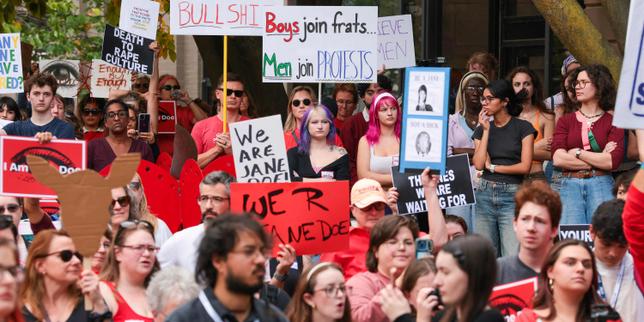
Cornell University banned fraternity parties and social events through the end of the 2026–2027 academic year in October 2026, reacting to explosive public scrutiny over alleged gang rape at a campus fraternity house in October 2024. The freeze followed a September 2026 civil lawsuit, a renewed criminal probe, and mounting political and faculty pressure.
Look closely at what happened, and the party ban begins to look less like a comprehensive structural reform and more like damage control. Campus administrators halted social gatherings inside fraternity houses while allowing chapter meetings, rituals, and alumni events to continue under strict substance limits. Meanwhile, state officials and university leaders scrambled to contain a crisis that had been brewing for two years. If you liked this article, you might want to read: this related article.
After two decades covering higher education governance, campus safety crises, and institutional risk, I have watched universities reach for social freezes whenever a scandal spirals out of control. A ban on parties is visible. It signals urgency to donors, parents, and lawmakers. Yet it rarely alters the deeper incentives, housing dynamics, or investigative blind spots that enable harm in the first place.
Why a Two-Year-Old Case Triggered a Campus Freeze
A freeze imposed in October 2026 over an incident from October 2024 raises an obvious question. Why did the sweeping party ban arrive two years later rather than immediately after the report? For another angle on this event, see the latest coverage from The Washington Post.
When the complainant, identified in litigation as Jane Doe, first reported the alleged assault to Cornell University Police in November 2024, the university acted swiftly on certain fronts. Cornell placed a temporary suspension on the Chi Phi chapter and suspended seven students over alleged Student Code of Conduct violations. A formal Title IX investigation opened in January 2025, culminating in multiple days of hearings in May 2025 and disciplinary outcomes that included expulsions and suspensions.
Criminal prosecution took a very different path. Tompkins County District Attorney Matthew Van Houten declined to present the case to a grand jury in 2024 after reviewing a six-page police summary of Doe’s statement. No criminal charges were filed at that time.
Everything shifted in autumn 2026. Doe filed a civil lawsuit in September 2026 naming Cornell and seven Chi Phi members, alongside other defendants. Reporting and leaked records intensified scrutiny over how the 2024 statement was summarized, how intoxication and consent were evaluated, and what top university leaders knew and when.
By October 2026, the pressure became impossible to ignore. New York Governor Kathy Hochul criticized the handling of the case, the state attorney general’s office became involved, Cornell retained former Deputy U.S. Attorney General Sally Yates and the law firm King & Spalding to conduct an independent review, and university leadership announced the suspension of fraternity parties through May 31, 2027, while giving state police a role in investigating campus assault reports.
The Consent and Intoxication Trap
Strip away the headlines about fraternity houses, and the hardest legal and institutional questions in this dispute center on consent, intoxication, and drug facilitation. Few issues in campus misconduct cases are more contentious, and few are more frequently misunderstood by the public.
In her 2026 civil complaint, Doe alleged that she lost consciousness early in the morning and that men pressured her to take additional ketamine until she became completely incapacitated. Prosecutors and legal commentators examining the 2024 record pointed to sharp disputes over what her initial sworn statement said about voluntariness, consciousness, and requests to stop. That tension highlights a structural gap that routinely trips up both students and institutions.
- Criminal law vs. campus policy: Criminal prosecutors must prove elements of an offense beyond a reasonable doubt under state statutory definitions of consent and incapacitation. University Title IX and conduct panels operate under institutional rules and preponderance or clear-and-convincing standards, meaning an incident can violate university policy even when a district attorney declines to bring criminal charges.
- Summaries vs. full transcripts: Condensed investigative summaries can flatten nuance, omit exact phrasing, or create conflicting interpretations between advocates, defense counsel, and prosecutors.
- Competing claims of intoxication: In campus proceedings, disputes over heavy alcohol or drug use often collide, including instances where a respondent argues his own intoxication affected his awareness or capacity.
Public debate often treats the gap between no criminal indictment and severe campus sanctions as proof of a cover-up or a witch hunt. In reality, the two systems answer different legal questions under different evidentiary rules. Misunderstanding that distinction fuels outrage on every side.
What Fraternity Party Bans Actually Change
Banning parties inside fraternity houses is a blunt instrument. It stops large, alcohol-fueled gatherings on the premises for a set period—here, through May 31, 2027—and threatens chapters with sanctions up to suspension or dismissal if they violate the rules.
It does not erase the social ecosystem around Greek life. College students rarely stop socializing simply because a university closes a house’s social calendar. Instead, activity often shifts off campus, into private apartments, commercial bars, or unmonitored off-site rentals where university oversight is weaker and bystander accountability is thinner.
| Mechanism | What It Targets | Key Limitation |
|---|---|---|
| In-house party ban | Large social gatherings and alcohol events inside fraternity houses | Can push gatherings off campus into less regulated spaces |
| External independent review | Institutional policies, reporting chains, and leadership response | Findings take months and depend on full access and follow-through |
| State police involvement | Criminal investigation quality and public confidence in law enforcement | Still bound by statutory consent thresholds and evidentiary proof |
| Mandatory prevention training | Awareness of alcohol, drugs, consent, and bystander intervention | Cannot overcome entrenched peer norms or predatory behavior alone |
Consider a hypothetical scenario to see how displacement works in practice. Suppose a university bars a chapter from hosting weekend parties in its house. Members may still gather in smaller groups at off-campus residences or downtown venues, where there is no chapter risk manager at the door, no university housing inspection, and no clear line of institutional responsibility until something goes terribly wrong.
A party ban treats a visible venue as if it were the root cause. Culture lives in group norms, power dynamics, and substance habits, not drywall.
Even Cornell’s own rules acknowledge that chapters still exist as active organizations during the freeze. Interfraternity Council chapters can hold meetings, rituals, brotherhood events, and substance-free philanthropy or alumni gatherings. Keeping the organizational structure intact while freezing social events creates a delicate balancing act: administrators want to curb high-risk environments without triggering endless legal battles over chapter recognition or due process.
Governance Fallout Inside the University
When a crisis stretches from an alleged assault in 2024 to litigation, state intervention, and faculty pushback in late 2026, the damage spreads far beyond Greek row. Trust inside the institution begins to fracture.
In November 2026, Cornell faculty passed a no-confidence measure targeting school leaders amid the fallout over the case, while the university’s leadership faced intense questions over communication, oversight, and accountability. That kind of internal revolt signals a deeper governance problem than a single bad event.
Universities are notoriously slow at admitting institutional blind spots. Leaders often rely on legalistic statements, multi-page FAQs, and blue-ribbon reviews to project control. Faculty, students, and lawmakers, meanwhile, look for candor about whether warning signs were missed, whether reporting channels confused students, and whether leaders waited too long to confront systemic issues.
An outside review led by seasoned legal figures like Sally Yates and King & Spalding can bring real credibility, provided the mandate is genuine and the resulting recommendations are not quietly shelved once media attention fades. History shows that independent reports only matter when boards force uncomfortable operational changes.
What Real Reform Requires Beyond a Freeze
If Cornell—or any major research university facing a similar reckoning—wants durable change rather than a temporary truce, a social freeze is only step one. Real accountability requires tighter execution across four areas.
First, intake and investigative transparency must improve so survivors and accused students understand how police reports, summaries, and Title IX proceedings interact. Clearer protocols reduce confusion and prevent preventable disputes over what was documented or omitted.
Second, off-campus risk monitoring has to match reality. Focusing exclusively on fraternity basements while ignoring off-campus houses, party houses, and local bars leaves massive blind spots.
Third, leadership accountability cannot be symbolic. If policies failed or information stalled at senior levels, naming those breakdowns plainly does more to restore trust than sweeping seasonal restrictions ever will.
Fourth, evaluation after the freeze must be rigorous. When May 31, 2027 arrives and Cornell assesses whether in-house social events can safely resume, the decision should rest on hard safety metrics, conduct data, and independent review findings—not calendar convenience. A party ban can buy time, but only structural honesty earns back trust.

