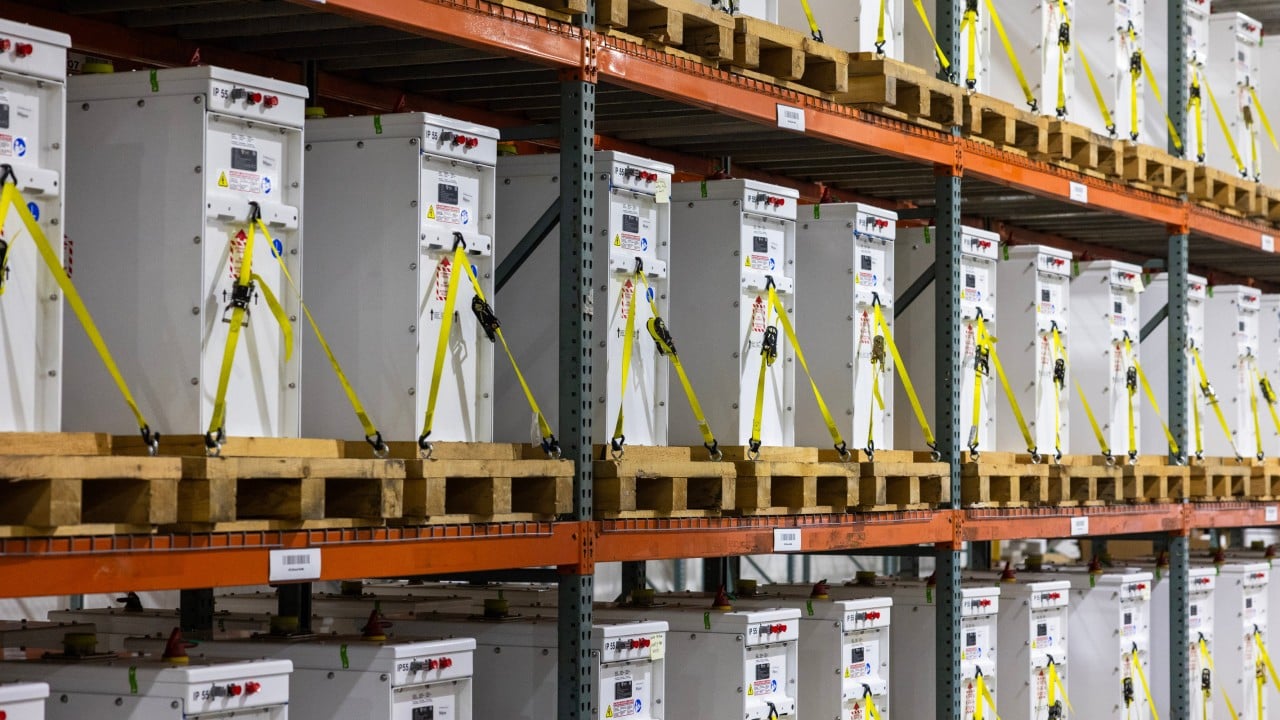
One in four utility-scale energy storage projects is currently stalling out before a single shovel hits the dirt. The culprit is not regulatory red tape or local opposition, though both play their part. It is extreme price volatility across China-dominated critical minerals supply chains—specifically lithium, cobalt, nickel, and manganese—which has shattered traditional project financing models. When raw material costs swing wildly within a single quarter, battery manufacturers refuse to lock in fixed-price contracts, leaving developers unable to secure debt financing and forcing massive grid-scale installations into indefinite limbo.
For years, energy transition advocates celebrated the falling cost of lithium-ion battery packs as an unstoppable trend. That narrative hit a wall. The mechanics of building a utility-scale Battery Energy Storage System (BESS) depend entirely on predictability. Developers sign Power Purchase Agreements (PPAs) or capacity contracts years in advance, locking in the revenue they will earn from grid operators. To make the math work, their capital expenditure—roughly 60 percent of which goes directly toward the battery enclosures and cells—must remain fixed.
China controls roughly 60 to 80 percent of the global processing and refining capacity for battery-grade lithium, cobalt, and graphite, alongside nearly 80 percent of global battery cell manufacturing. This concentration creates a single point of failure. When spot prices for lithium carbonate surge by several hundred percent over twelve months, or crash just as violently the following year, the shockwaves hit Western and international developers immediately.
How Spot Market Chaos Breaks Project Finance
Bankers hate surprises. When a project developer approaches an infrastructure fund or commercial bank for a non-recourse loan, the lender demands certainty around construction costs. They want an Engineering, Procurement, and Construction (EPC) wrap—a binding contract where the builder guarantees the final price and completion date.
In a stable market, battery suppliers absorb minor fluctuations in raw material costs. Today, that buffer is gone. Faced with erratic Chinese spot markets and sudden export licensing changes from Beijing, cell makers and system integrators have shifted to index-linked pricing.
Consider a hypothetical example of a 200-megawatt storage facility planned for Texas or South Australia. The developer signs a grid services contract based on a battery pack cost of $140 per kilowatt-hour. Six months later, a supply crunch in Sichuan or a sudden policy shift in Beijing sends lithium hydroxide prices skyrocketing. The battery supplier invokes a price-adjustment clause, raising the pack price to $185 per kilowatt-hour. The project's internal rate of return collapses overnight. The bank freezes the credit facility. The developer is forced to either renegotiate the offtake agreement—a process that takes months and often fails—or mothball the project entirely.
Paradoxically, falling mineral prices cause delays too. When lithium prices plummet, developers who have not yet signed final procurement contracts deliberately hit the pause button. They wait, hoping to capture lower hardware costs six months down the line. Whether prices spike or crater, the result for the power grid is identical. Construction stops.
The Processing Chokepoint Nobody Wants to Fund
Mining is not the real problem. Lithium, nickel, and manganese are relatively abundant in the earth's crust, scattered across Australia, Chile, Argentina, Indonesia, and North America. The true bottleneck sits in the middle of the supply chain: chemical refining and precursor manufacturing.
Turning raw spodumene rock from Western Australia or brine from the Atacama Desert into battery-grade lithium hydroxide requires complex, capital-intensive chemical engineering. For the past fifteen years, Chinese state-backed enterprises and private giants aggressively built out this refining capacity while Western miners were content to ship raw concentrate overseas.
China did not achieve this dominance by accident. Beijing treated battery materials as strategic industrial assets long before Western policymakers realized the grid would need gigawatt-hours of chemical storage. Through subsidized energy, rapid permitting, and coordinated industrial policy, Chinese refiners drove down processing costs to levels that Western competitors simply could not match.
Building a new lithium hydroxide refinery or a cathode active material plant in North America or Europe takes five to seven years and costs billions of dollars. Environmental permitting is grueling. Local opposition to chemical processing plants is fierce. Even when governments offer tax credits or grants, private equity and institutional investors hesitate to fund Western refineries because they know Chinese producers can flood the market, depress prices, and bankrupt high-cost Western entrants before those new plants even reach commercial operation.
Why Alternative Chemistries Are Not a Quick Fix
Whenever lithium prices spike, pundits point to alternative battery chemistries as an immediate escape hatch. The reality is far messier.
Lithium Iron Phosphate (LFP) has already taken over the stationary storage market, largely because it eliminates expensive cobalt and nickel while offering superior thermal stability and cycle life. Yet LFP actually deepens reliance on China. Chinese manufacturers hold over 95 percent of global LFP cathode and cell production capacity, protected by a dense web of intellectual property and manufacturing know-how that Western firms are only beginning to license.
Sodium-ion batteries represent the next great hope. Sodium is cheap, abundant, and easily extracted from soda ash or seawater. Several gigafactories in China have already started commercial production of sodium-ion cells. However, sodium-ion has lower energy density than LFP, meaning you need more physical space, more steel enclosures, more wiring, and more land to store the same amount of electricity. Those balance-of-system costs eat away at the raw material savings. Furthermore, the supply chain for sodium-ion hard carbon anodes and electrolytes is, once again, overwhelmingly concentrated in China.
Long-duration technologies like iron-air batteries, vanadium redox flow batteries, and thermal storage bypass lithium altogether. They hold real promise for multi-day grid reliability. Still, they remain years away from matching the manufacturing scale, bankability, and round-trip efficiency required to replace lithium-ion in standard four-hour grid applications.
The Hidden Costs of Supply Chain Whiplash
A delayed storage project does not just sit harmlessly in a spreadsheet. The ripple effects hit the broader power sector immediately.
Grid operators rely on scheduled storage additions to balance intermittent wind and solar generation. When a quarter of planned battery installations slip by twelve to twenty-four months, utilities are forced to keep aging, inefficient natural gas peaker plants online longer than planned. In extreme weather events, the absence of that scheduled storage capacity increases the risk of rolling blackouts and price spikes in wholesale electricity markets.
Developers also face brutal interconnection queue penalties. In major power markets across the United States and Europe, securing a grid connection slot takes years and requires posting millions of dollars in security deposits. If a developer cannot procure batteries on time due to mineral price disputes, they risk missing commercial operation milestones, forfeiting their deposits, and losing their place in line entirely.
Meanwhile, engineering teams sit idle, transformer orders—which already suffer from two-to-three-year backlogs—go unutilized, and smaller independent power producers run out of working capital. The industry is slowly consolidating around massive utilities and sovereign-backed funds capable of absorbing nine-figure balance sheet shocks.
How Savvy Developers Are Rewriting the Playbook
Waiting for Western governments to build a fully independent, mine-to-grid supply chain is not a viable business strategy for anyone trying to deploy megawatts before 2030. The smartest operators in the sector have stopped fighting the volatility and started engineering their contracts around it.
First, major developers are bypassing traditional system integrators to sign direct tolling and supply agreements with upstream miners and refiners. By purchasing lithium carbonate directly on long-term floor-and-ceiling contracts—known as collars—and handing that material to a cell manufacturer to process for a fixed fee, developers strip out the speculative margin stacking that happens at every tier of the supply chain.
Second, project financiers are finally learning to price index-linked risk. Rather than demanding rigid fixed-price EPC contracts that suppliers will only sign at exorbitant risk premiums, sophisticated lenders are structuring reserve accounts and dynamic offtake agreements. In these newer PPAs, the electricity price paid by the utility adjusts within a pre-agreed band based on a transparent benchmark, such as the Fastmarkets or Benchmark Mineral Intelligence lithium index, up until the moment the batteries ship from the factory.
Third, procurement teams are diversifying geographically wherever possible, pairing South American or Australian mineral extraction with Korean or Japanese cell manufacturing to qualify for domestic tax incentives while keeping a portion of their pipeline tied to Chinese LFP suppliers for sheer volume and cost efficiency.
The era of effortless, predictable cost declines in energy storage is dead. Building grid-scale batteries is no longer a simple procurement exercise; it is a high-stakes exercise in commodity risk management. Until Western refining capacity scales up—or until utilities accept that storage pricing must float with the underlying metals—every megawatt-hour added to the grid will have to fight its way through a gauntlet of raw material volatility.