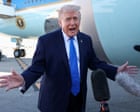
The United States Senate is poised to confirm Senator Markwayne Mullin as the next Secretary of Homeland Security on Monday night, a move intended to decapitate a leadership crisis that has left the department paralyzed and its funding in a 34-day freefall. Mullin, a Republican from Oklahoma and former mixed martial arts fighter, is not entering a functioning bureaucracy. He is inheriting a smoking crater left by the abrupt firing of Kristi Noem and a department currently unable to pay its own light bills.
The transition comes as a 54-37 cloture vote on Sunday signaled the end of debate, clearing the path for Mullin to take the helm of the federal government’s most sprawling and fractured agency. While the confirmation seems certain, the underlying reality is a Department of Homeland Security (DHS) that is effectively broken, caught between a president demanding aggressive mass deportations and a Congress that has responded by choking off its oxygen.
The Noem Aftermath and the Vacancy Crisis
The elevation of Mullin was born out of necessity rather than a traditional search for administrative expertise. President Donald Trump ousted Kristi Noem on March 5 after a disastrous stretch involving the fatal shooting of two American citizens by federal agents in Minneapolis and a $220 million advertising controversy. That firing didn't just remove a leader; it triggered a total systemic failure.
With the department now more than a month into a funding lapse, the consequences have moved from the halls of D.C. to the front lines of American life. Security lines at major airports are snaking into parking garages as TSA agents work without pay during the height of spring break. Morale is not merely low; it is non-existent. Mullin’s primary mission is not policy implementation but basic stabilization—preventing a total walkout of essential personnel while convincing a hostile Democratic minority to release the purse strings.
The Fetterman Wildcard and the Bipartisan Bridge
One of the most jarring aspects of this confirmation is the support Mullin has garnered from Senator John Fetterman. In a political climate where "bipartisanship" is often a dirty word, Fetterman’s "yes" vote was the decisive factor in moving the nomination through the Homeland Security and Governmental Affairs Committee.
Fetterman’s reasoning is pragmatic to the point of being blunt. He argues that a leaderless, unfunded DHS is a greater threat to national security than a DHS led by a staunch Trump loyalist. This calculation highlights a growing rift among Democrats: those who want to use the funding freeze as a cudgel to force changes in immigration policy, and those who fear the optics of a collapsed border and grounded air travel will be pinned on them.
By securing Fetterman and New Mexico’s Martin Heinrich, Mullin has managed to present himself as a figure who, despite his pugnastic reputation, can actually talk to the other side. It is a rare moment of political survivalism.
Temperament Under the Microscope
The most significant hurdle during Mullin’s confirmation hearings wasn't his lack of executive experience in a 260,000-person agency. It was his history of verbal and physical aggression.
Senator Rand Paul, the committee’s Republican chair, emerged as Mullin’s most vocal critic. Paul focused heavily on Mullin’s past comments regarding a 2017 assault on Paul by a neighbor, where Mullin allegedly stated he "understood" why it happened. This personal friction nearly derailed the process, with Paul calling Mullin a "snake" and questioning if a man who "applauds violence" is fit to lead the nation’s premier law enforcement agency.
The Management Paradox
Mullin’s resume is thin on traditional security credentials. He ran a family plumbing business and fought in the MMA cage before entering the House of Representatives in 2013. His supporters argue this "blue-collar" background is exactly what the agency needs to cut through the red tape. Critics, however, point to his vague answers regarding "classified" congressional trips and his lack of a coherent vision for FEMA as evidence that he is out of his depth.
The FEMA Restoration Gamble
Perhaps the most sensitive file on Mullin’s desk is the future of the Federal Emergency Management Agency. Under Noem, FEMA was gutted. Staffing levels were slashed, and a rule was implemented requiring the Secretary to personally sign off on any expenditure over $100,000. This micromanagement effectively froze disaster response during a season of extreme weather events.
Mullin has promised to reverse these trends. He pledged to:
- Revoke the $100,000 expenditure review requirement.
- Nominate a qualified, professional FEMA Administrator (a position that has remained vacant through much of the current administration).
- Shift the focus back to state-led first response, though he remains vague on how federal funding will support that transition.
This pivot is essential for Mullin to gain any modicum of trust from state governors who have watched FEMA’s capabilities dwindle. However, his history as a climate change skeptic and his past votes against disaster relief packages for Hurricane Sandy survivors continue to haunt the narrative.
Enforcement vs. Accountability
The central tension of Mullin’s tenure will be the "how" of immigration enforcement. The Minneapolis shootings and subsequent protests have created a public backlash against the use of force by DHS agents. In a surprising concession during his hearing, Mullin signaled he would reverse agency guidance that allowed agents to enter homes using administrative warrants rather than judicial ones.
If he follows through, it would be a significant shift toward civil liberties. If he doesn't, he risks further escalating the standoff with Democrats that has kept the department's budget in limbo. He is walking a razor-thin line between the President’s demand for a 3,000-per-day arrest quota and the constitutional constraints that have already sparked a funding war.
The Senate floor remains a theater of high-stakes theater, but for the thousands of agents currently working for IOUs, the outcome of tonight's vote is the only thing that matters. Mullin is being sold as a steady hand, but he is stepping into a storm that has already claimed more experienced politicians.
Would you like me to look into the specific funding amendments the Senate is debating alongside the Mullin confirmation?