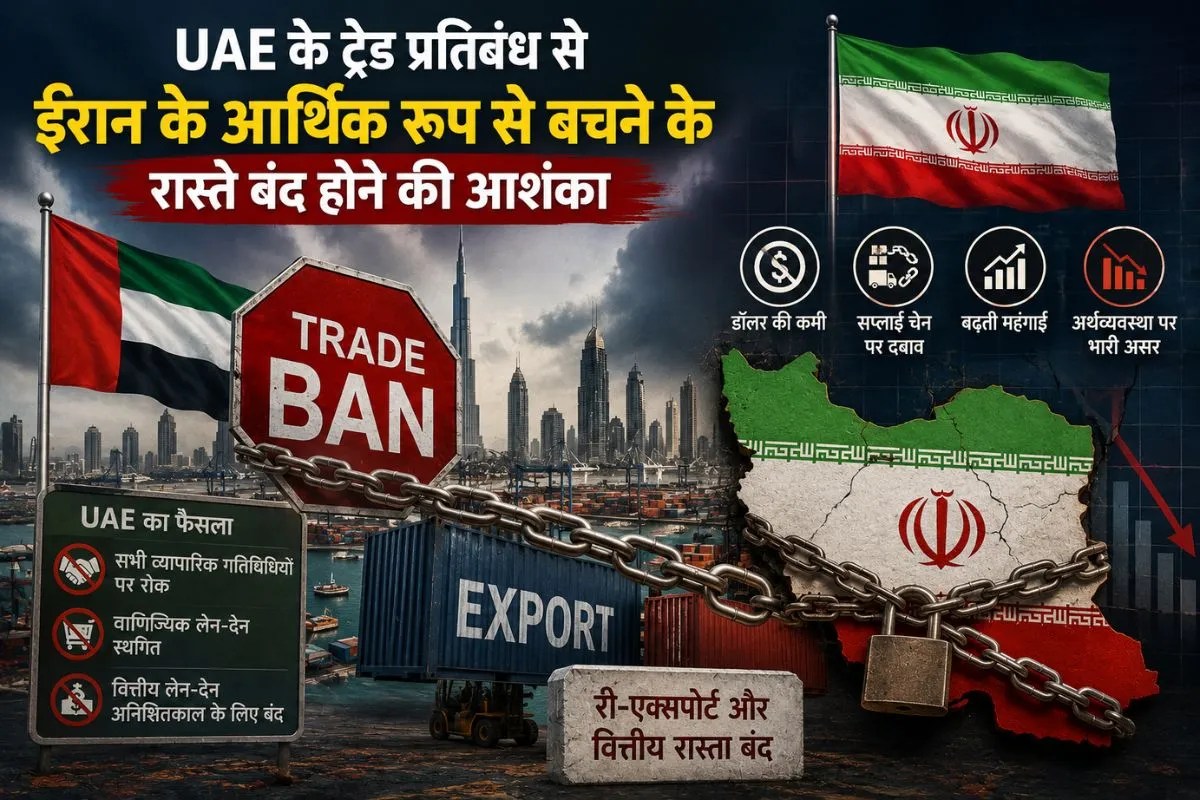
The absolute severing of commercial ties between Abu Dhabi and Tehran is not merely a diplomatic spat. It is a structural amputation. When the United Arab Emirates announced a total suspension of all trade, commercial exchanges, and financial transactions with Iran, the decision struck at the single most vital artery keeping the Iranian economy afloat under decades of Western sanctions.
For years, policymakers in Washington and European capitals played an elaborate game of whack-a-mole with Iranian shell companies, tracking illicit tankers and offshore accounts. Yet, they often ignored the pragmatic, high-volume corridor operating right across the Persian Gulf. Dubai and the wider UAE emirates functioned as Iran's primary economic shock absorber.
The Anatomy of a Transit Hub
To understand why this sudden embargo matters, look past direct bilateral trade numbers. While billions of dollars in non-oil goods moved officially between the two neighbors, the true value of the Emirati corridor lay in re-exporting.
Iran cannot easily procure heavy industrial machinery, specialized electronics, medical components, or foreign currency through direct channels. International banking compliance, enforced by the shadow of American secondary sanctions, makes direct Western trade an impossibility for most mainstream Iranian enterprises.
The workaround was simple and institutionalized. Third-party goods arrived legally at Jebel Ali port in Dubai. They were cleared, repackaged, and quietly transshipped to Iranian ports or funneled through dhows crossing the Gulf. Thousands of Iranian-owned trading firms operating out of Dubai free zones managed these supply chains, acting as the invisible plumbing of the Iranian market.
When the UAE Ministry of Foreign Affairs halted all financial transactions, that plumbing was abruptly shut off. The trigger—two ballistic missiles detected targeting maritime traffic near Emirati waters—provided the immediate political justification, but the structural consequence is what threatens Tehran's macroeconomic stability. Iran has officially denied launching the projectiles, but the denial changes nothing about the economic reality on the ground.
The Dollar Supply Crunch
Beyond physical goods, the UAE served as Iran's primary external window for hard currency liquidity. Operating inside a heavily isolated financial system with a severely depreciated currency, Iranian importers relied on Dubai-based exchange houses and informal hawala networks to source U.S. dollars and dirhams.
These channels allowed Iranian businesses to settle accounts for international cargo originating from Asia and Europe. Without access to the UAE's financial infrastructure, finding deep liquidity pools becomes exponentially harder.
Consider a hypothetical scenario of an Iranian pharmaceutical importer trying to secure critical raw materials for antibiotics. Previously, the importer could clear payments through multi-tiered intermediary accounts running through Dubai commercial banks. With those channels frozen overnight, the transaction path collapses. The importer must now rely on riskier, slower, and vastly more expensive alternative corridors in Central Asia or Iraq, driving up domestic prices and deepening shortages for everyday citizens.
The Limits of Self-Reliance
Tehran has long championed a policy of "resistance economy," designed to insulate domestic production from foreign shocks. Government officials frequently point to domestic manufacturing initiatives and non-oil export growth with neighboring states.
However, manufacturing self-reliance is an illusion when a country's industrial base depends on imported capital goods, chemical catalysts, and precision components. You cannot bake bread without flour, and you cannot run modern industrial machinery without imported spare parts that domestic factories cannot replicate.
By closing its commercial doors, the UAE has effectively narrowed Iran's margins for error to near zero. Other regional partners do not possess the deep maritime logistics, warehousing capacity, or financial liquidity that Dubai built over decades of open-market positioning.
The Broader Fallout
The timing of this rupture compounds an already catastrophic period for the Iranian state. Plagued by chronic high inflation, severe energy shortages, and the broader economic contractions tied to regional military escalations, the Iranian rial was already under historic pressure.
If this embargo persists, the long-term migration of Iranian capital and merchant families out of Dubai's commercial ecosystem will accelerate. Wealthy expatriates who once used the UAE as a safe harbor for assets will find themselves forced to liquidate or relocate those holdings elsewhere, draining professional talent and investment capital away from Tehran's reach.
Abu Dhabi has framed its decision as an inevitable defense of regional security and financial integrity. For Tehran, the rhetoric matters far less than the balance sheet. The emergency valve has been welded shut, leaving an isolated economy to absorb the full weight of its own isolation.