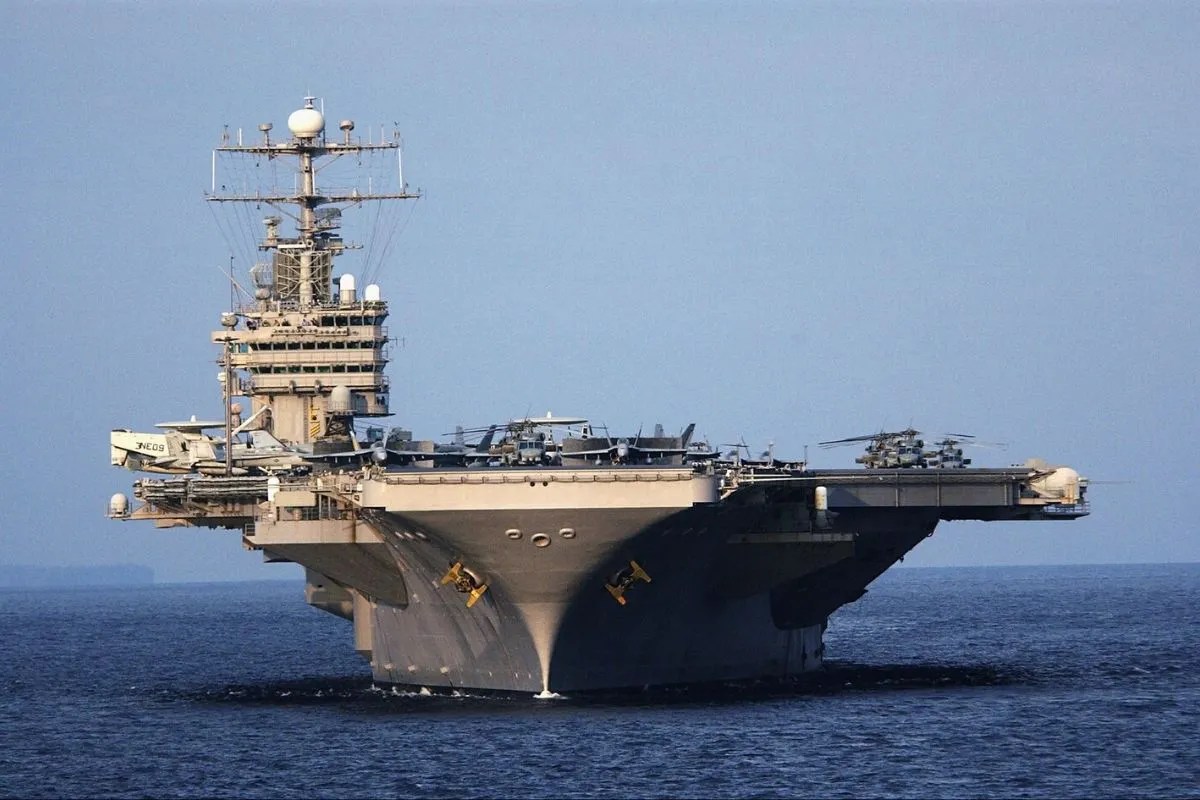
The USS Abraham Lincoln is steaming toward a scheduled port call in Thailand after enduring more than 250 consecutive days at sea, a grueling stretch defined by continuous combat operations in the Middle East and an unprecedented operational tempo. Official statements from regional authorities confirm that the Nimitz-class supercarrier will pull into port for routine logistics, crew rest, and recuperation. Yet beneath the standard military phrasing lies an exhausting reality of modern naval deployment. The ship's transit away from the Central Command area of responsibility lays bare the unsustainable strain placed on America's flat-top fleet during the recent conflict involving Iran.
Military planners rarely advertise the breaking point of machinery and men. When the Lincoln left San Diego in late November 2025, the crew anticipated a standard six-month tour. Instead, shifting geopolitical flashpoints and the kinetic demands of the U.S. campaign against Iranian forces resulted in repeated mission extensions. The carrier spent over two hundred days without a single port visit, shattering modern endurance benchmarks and testing the psychological resilience of nearly five thousand sailors and Marines jammed into floating gray steel. If you liked this piece, you should check out: this related article.
The True Cost of Extended Deployments
Prolonged sea periods create cascading failures that extend far beyond low morale. While defense officials have downplayed reports of deteriorating conditions on board, leaked accounts from service members and distress calls forwarded by worried families paint a stark picture. Closed-loop waste systems struggle under continuous usage, resulting in chronic plumbing failures, limited hot water access, and a diet heavily reliant on shelf-stable rations rather than fresh provisions.
For a hypothetical task force operating at peak combat readiness, these quality-of-life degradations are treated as minor inconveniences. Over the course of eight or nine months of continuous tension, however, they compound into acute operational hazards. Sleep deprivation becomes structural. Maintenance backlogs grow as technicians patch aging steam catapults and arresting gear with dwindling spare parts. When a carrier strike group remains locked in a high-threat theater without a reset, the margin for error shrinks to zero. For another angle on this development, check out the recent update from The New York Times.
Congressional inquiries into the mental health strain on the Lincoln's crew highlighted a deeper institutional vulnerability. Reports of sailors attempting to jump overboard forced defense leadership into public defense mode, underscoring a widening chasm between strategic command objectives and the physical endurance of the enlisted force.
Why Thailand Matters Logistically
Choosing Thailand as a pit stop before the final trans-Pacific leg home is not a random geographic selection. As America's oldest treaty ally in mainland Southeast Asia, the country offers deep-water access capable of accommodating a nuclear-powered supercarrier without heavily transiting congested or hostile choke points.
Logistical replenishment for a ship of this scale requires monumental coordination. Pallets of fresh food, mail bags, engine components, and ordnance handling equipment must be transferred seamlessly while thousands of personnel rotate off the brow for solid ground. For the crew, stepping onto a pier in Thailand represents the first opportunity in eight months to escape the constant hum of reactor coolant pumps, flight deck vibrations, and general quarters alarms.
Yet the stop also serves a diplomatic signaling function. Maintaining visible, cooperative ties with regional partners reassures Asian allies of American staying power, even as Washington's strategic focus is repeatedly dragged back toward the Middle East.
The Broader Crisis of Fleet Capacity
The predicament of the Lincoln is a symptom of a larger math problem plaguing the Pentagon. The U.S. Navy is simply trying to cover too much ocean with too few hulls. When simultaneous crises erupt across multiple combatant commands, carrier strike groups are forced to bridge the gap by staying on station longer.
This creates a vicious cycle of deferred maintenance and accelerated wear on the airframes and flight decks. Supercarriers are engineered for a specific structural lifespan measured in operating cycles. Running them past their limits to manage regional flare-ups eats directly into the future readiness of the force. By the time these vessels finally return to home yards for overhaul, they often require far more extensive structural work than originally scheduled.
As the Lincoln completes its stop in Southeast Asia and resumes the final stretch toward the United States, the strategic calculus remains unchanged. The ship delivered on its tactical mandate during a volatile war, but the invisible price tag was paid entirely by the sailors who watched the calendar flip past the eight-month mark with no harbor in sight.