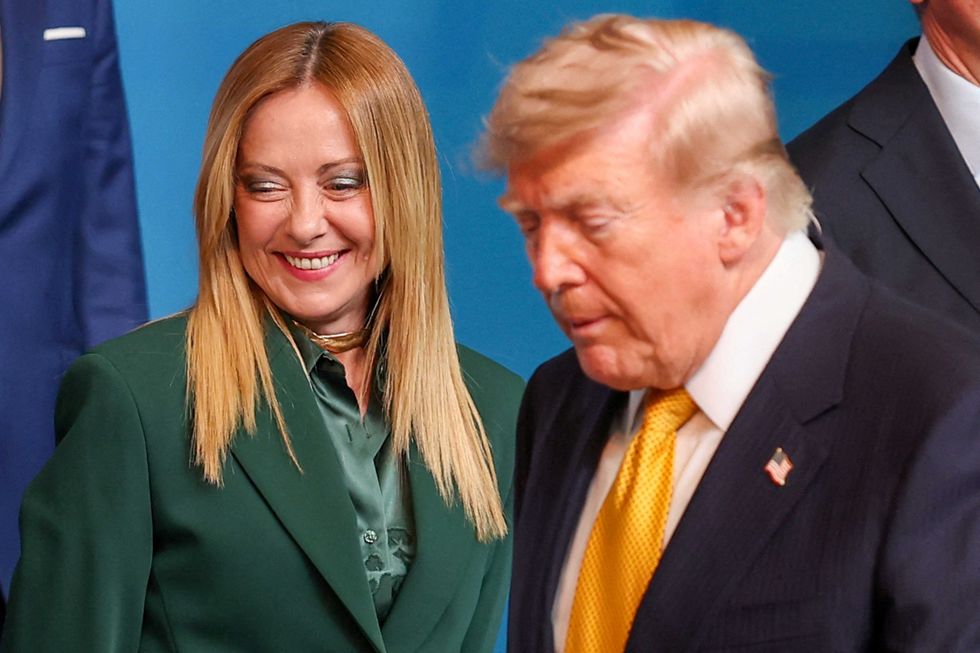
A sharp departure from decades of conventional statecraft has finally pushed Washington's closest allies past their breaking point. What began as a transactional approach to international relations has deteriorated into a series of fractured personal relationships with key world leaders, leaving the United States increasingly isolated on the global stage. The core issue is not merely the harsh public rhetoric, but a profound miscalculation of how modern global power structures operate, assuming foreign capitals will always bow to economic pressure regardless of the personal or national insults endured by their leaders.
The traditional architecture of Western alliances relies heavily on predictable, institutional relationships that survive changes in leadership. When public broadsides cross the line into personal offense, those foundational institutions begin to erode. This is the structural reality underlying the recent wave of diplomatic friction that has left American foreign policy adrift.
The Friction of Transactional Diplomacy
Foreign policy professionals have long observed that personal rapport between heads of state acts as a shock absorber during trade disputes and security crises. When that rapport is replaced by public denunciation, the machinery of international cooperation grinds to a halt. The assumption that world leaders can be bullied in public and reasoned with in private has proven to be a major strategic error.
Consider how middle-powers and traditional partners react when backed into a corner. No democratically elected prime minister or president can afford to look like a client state to their domestic audience. When an American administration delivers a public slight, it forces foreign leaders to choose between maintaining the alliance or maintaining their own political survival at home. They will choose their own survival every single time.
This dynamic has triggered a quiet but profound shift in capitals across Europe and the Asia-Pacific region. Diplomats are no longer asking how to collaborate with Washington on global security initiatives. Instead, they are actively planning how to insulate their economies and militaries from American volatility.
The Institutional Cost of Burning Bridges
The damage of a broken diplomatic bridge extends far beyond a single bad headline or an uncomfortable summit meeting. It filters down through the entire bureaucracy of the state department, defense intelligence, and trade ministries.
- Intelligence sharing slows down. Agencies become hesitant to share sensitive data when they fear it might be used as political leverage or leaked during a late-night social media outburst.
- Joint military exercises lose coordination. Strategic long-term planning requires a baseline of institutional trust that cannot exist when the commander-in-chief views alliances as a protection racket.
- Trade negotiations stall completely. Complex economic agreements require months of quiet, good-faith bargaining that is impossible to maintain under the constant threat of sudden, unilateral tariffs.
This institutional paralysis is exactly what adversaries have spent decades trying to achieve. By alienating the precise network of nations that won the Cold War and built the global financial system, Washington is effectively doing the work of its rivals for them.
The Myth of the Better Deal
The central defense of this aggressive approach to diplomacy has always been that it yields superior economic and strategic concessions. The data shows otherwise. While a sudden threat or a sharp insult might yield a short-term political talking point for a domestic audience, it rarely produces a durable treaty.
True leverage in international relations comes from a position of shared interests and collective strength. When the United States acts alone, its economic weight is formidable, but it is not infinite. A coalition of alienated allies can quietly form alternative trade blocs, bypass American financial systems, and refuse to support Washington's initiatives at the United Nations security council.
Shifting Coalitions in a Multi-Polar World
The world of 2026 is fundamentally different from the unipolar era of the late twentieth century. Emerging powers are eager to offer alternative security arrangements and economic partnerships to nations that feel abandoned or insulted by the United States.
When Washington burns a bridge with a traditional partner, that partner does not simply disappear from the map. They look for new options. We are already seeing European powers quietly deepening their economic ties with middle-market nations in Latin America and Africa, deliberately bypassing American-led supply chains. This diversification is born out of necessity, but its long-term effect will be the irreversible decline of American economic dominance.
This is the real crisis that Washington insiders are hesitant to discuss openly. The global influence of the United States was never based entirely on military might or gross domestic product. It was sustained by the willingness of other sovereign nations to follow American leadership because they believed that leadership was stable, predictable, and fundamentally fair.
The Path Back to Stability
Rebuilding these fractured alliances will take years, if not decades. It cannot be accomplished with a single apologetic press release or a high-profile state dinner. The trust that takes generations to build can be dismantled in a single afternoon of reckless rhetoric.
To fix this systemic failure, foreign policy makers must return to the basic tenets of professional diplomacy. This means respecting the domestic political constraints of partner nations, honor existing treaty commitments without threatening to abandon them for momentary leverage, and keeping personal grievances out of the public square.
The illusion that the United States can stand completely alone in a complex, interconnected global economy is a luxury of a bygone era. Without a functioning network of allies, Washington will find itself attempting to manage regional conflicts, economic coercion, and global security threats in total isolation. The price of that isolation will be paid not by the politicians who deliver the insults, but by the citizens who depend on a stable and prosperous nation.



