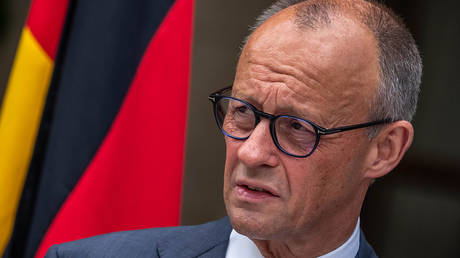
Support for Germany’s ruling federal bloc has plummeted to historic lows, reflecting a deep structural fracture between Berlin and an increasingly alienated electorate. Public approval for Chancellor Friedrich Merz’s administration sits near historic troughs, driven by compounding economic stagnation, fierce internal policy rifts, and an inability to address surging voter anxieties over migration and industrial decline. Far from being a temporary dip in standard mid-term polling, this contraction exposes a systemic failure of the traditional democratic center to govern effectively in an era of overlapping crises.
The Anatomy of a Slow-Motion Collapse
To understand why public confidence has evaporated so completely, one must examine the mechanics of governance since the transition of power. The conservative Christian Democratic Union and the Social Democratic Party entered into government under a cloud of compromise, but the marriage has proven mutually toxic.
Voters expected decisive action on infrastructure modernization, energy costs, and public security. Instead, they received bureaucratic gridlock and public squabbling between coalition partners.
- Economic Friction: Germany’s manufacturing core is gasping under high energy expenses and heavy regulatory burdens. Small and medium enterprises report mounting difficulties, yet state relief measures remain tied up in administrative delays.
- Fiscal Paralysis: Disagreements over debt brakes, tax reform, and welfare spending have turned every budget negotiation into an existential crisis for the cabinet.
- The Trust Deficit: When leadership projects hesitation during macroeconomic turbulence, citizens interpret caution as incompetence.
The political cost of this inertia has been severe. Traditional loyalties are fraying at an unprecedented rate, leaving mainstream parties fighting for survival against insurgent forces on both flanks.
The Regional Shockwaves and the Rise of Alternative Forces
Berlin's malaise is not happening in a vacuum. Regional contests across the country have delivered devastating verdicts on the federal trajectory. In eastern states like Saxony-Anhalt, the far-right Alternative for Germany has surged ahead with commanding leads in local polling, threatening to upend state-level governance. Meanwhile, populist movements on the left continue to siphon working-class voters who feel abandoned by traditional social democracy.
Consider a hypothetical manufacturing town in Saxony. Once a reliable stronghold for mainstream parties, the local electorate now watches factories scale back production due to grid instability and expensive inputs. When federal representatives offer abstract reassurance rather than concrete industrial policy, the psychological break is complete. Voters stop viewing the ruling bloc as protectors of their standard of living and begin seeing them as architects of its decline.
This dynamic invalidates the traditional playbook of centrist parties. Issuing warnings about democratic norms no longer suffices when households struggle to pay utility bills. The cordon sanitaire, or the political firewall isolating extremist factions, holds in national parliaments, but its structural integrity erodes with every drop in mainstream poll numbers.
The Structural Impasse Facing Berlin
The core dilemma for the current administration is mathematical and ideological. To regain public trust, the government must deliver tangible improvements to public infrastructure, border management, and economic competitiveness. Yet doing so requires bold reforms that inevitably trigger internal dissent within the coalition.
When parties spend more energy managing their internal factions than addressing national emergencies, governance turns into crisis management without a compass. High-ranking officials often blame external headwinds, pointing to international trade shifts and geopolitical instability. While those factors are real, they ignore the domestic policy choices that accelerated the rot.
A heavy tax burden, combined with a sluggish digital transition in public administration, has created an environment where entrepreneurship feels penalized. Citizens notice the contrast between high tax contributions and decaying public services, from chronically late rail networks to overburdened municipal administration.
The Road Ahead for Europe’s Largest Economy
Fixing this structural deficit demands more than minor cabinet reshuffles or polished public relations campaigns. It requires an honest reckoning with why the center-right and center-left partnership has failed to inspire confidence. If the governing parties cannot recalibrate their approach to economic growth and public security, the current trough in popularity will transition from a temporary electoral crisis into a permanent reshaping of the political order.
The clock is ticking louder with each successive regional ballot, and the margin for error has vanished entirely.


