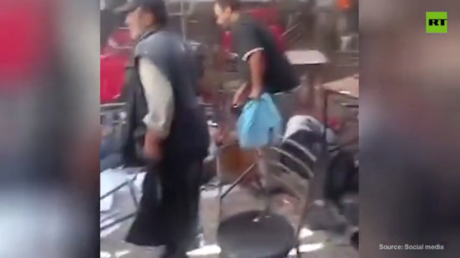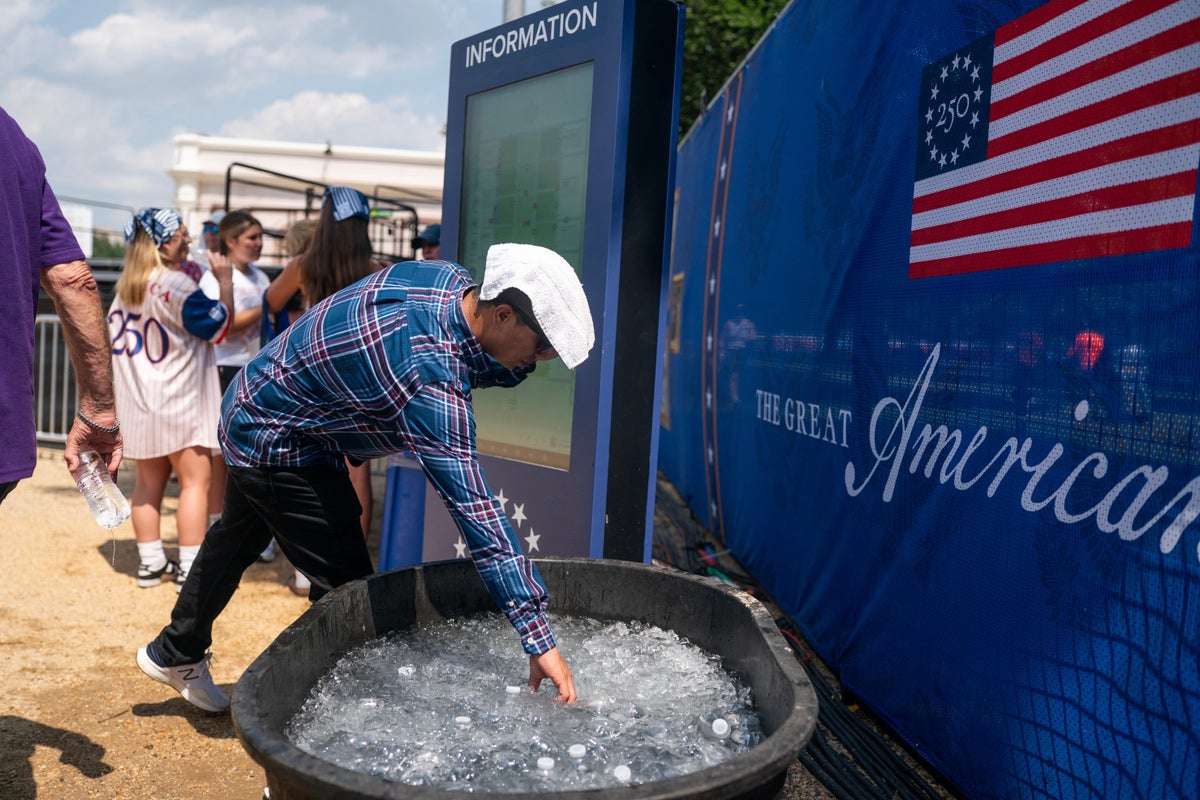
The breakdown of the cooling systems at the Great American State Fair on the National Mall is not just a story about a heatwave. It is a story about critical infrastructure buckling under the weight of hyper-partisan planning. When temperatures touched 100 degrees in Washington, D.C., the industrial-grade air conditioning units pumping air into the temporary exhibition pavilions simply quit. Workers walked away from melting displays, frozen dessert vendors watched their capital turn to liquid, and visitors draped wet towels across their faces. The immediate culprit was a series of intermittent power grid failures. But the deeper, systemic collapse stems from a chaotic logistical rollout by Freedom 250, the political entity formed to bypass established, nonpartisan event infrastructure.
Infrastructure is indifferent to political willpower. When an event of this magnitude is staged on the National Mall, it typically requires months of synchronized coordination with regional utility providers, municipal engineering departments, and nonpartisan federal event planners. Instead, the Great American State Fair was rushed into production through Freedom 250, a White House-backed task force operating independently from America250, the official, bipartisan congressional entity chartered to oversee the nation’s semiquincentennial. The result of this administrative partition has been an operational disaster that manifested first as empty stages and has now culminated in literal engineering failures.
Temporary power distribution for massive outdoor events relies on a delicate equilibrium of synchronized generators and trunkline infrastructure. When a 100-degree heatwave hits an asphalt-and-canvas layout, the electrical load required to compress refrigerant scales exponentially. If the primary generation units are under-spec’d or poorly integrated with local power grids, thermal overload protections trip automatically.
That is exactly what happened on the Mall. Generators overheated, the Ferris wheel ground to a halt, and the main exhibition tents became industrial greenhouses.
The physical vacancies at the fair mirror its operational vulnerabilities. The event was promoted as a grand showcase featuring representation from all fifty states. However, because the organizing entity was heavily hyper-partisan, multiple Democratic-led states withdrew entirely or minimized their investment to avoid political crossfire. The physical manifestation of this boycott is stark. The pavilions for Connecticut, Maine, and Hawaii sat virtually abandoned, housing little more than a couple of folding chairs. Alaska’s multi-thousand-dollar footprint consisted of a single rug and a small table. Oregon and Washington state boycotted the grounds completely.
This left vast, uncooled stretches of the National Mall empty, transforming what was supposed to be a unifying cultural milestone into a highly visible logistics failure.
The commercial fallout for vendors on the ground is severe. Independent contractors who paid premium fees for footprint rights based on promises of massive, packed crowds have instead faced empty pathways and fluctuating electricity. When the freezers lost power the day after opening night, thousands of dollars in perishable inventory dissolved in a matter of hours. For a small business, a single day of power loss during a peak festival cycle can wipe out an entire season's profit margin.
Compounding the problem is a parallel crisis on the entertainment stages. High-profile musical acts began pulling out weeks before the gates opened, citing misleading booking practices. Artists like Martina McBride, the Commodores, and Bret Michaels cancelled their appearances after realizing the event was being run as a political rally rather than a nonpartisan national birthday party. This left organizers scrambling to fill gaps, resulting in short entertainment sets, empty seating bowls, and an inevitably lower draw for foot traffic. Fewer bodies on the pavement meant less demand to push through the sweltering heat, further depressing the economic viability of the entire operation.
Publicly, the rhetoric remains completely detached from the physical reality on the ground. Statements broadcasted to social media platforms claim the event is packed to the brim with tens of thousands of satisfied visitors. But aerial photography and ground-level reporting tell a completely different story, one of vast empty fields and abandoned kiosks. Organizers are now banking heavily on a massive turnaround for the final July 4th push. The plan is to push forward with a marathon headline speech despite weather forecasts warning of heat indexes climbing as high as 107 degrees.
Executing a mass gathering under those extreme meteorological conditions requires flawless logistical support, pristine medical tent cooling, and an unwavering supply of water and power. Given that the underlying utility infrastructure has already failed under lesser strains, doubling down on exposure is a high-risk gamble. When the administrative framework of a major public event prioritizes political theater over basic mechanical and civil engineering, the systems do not bend to fit the narrative. They break.