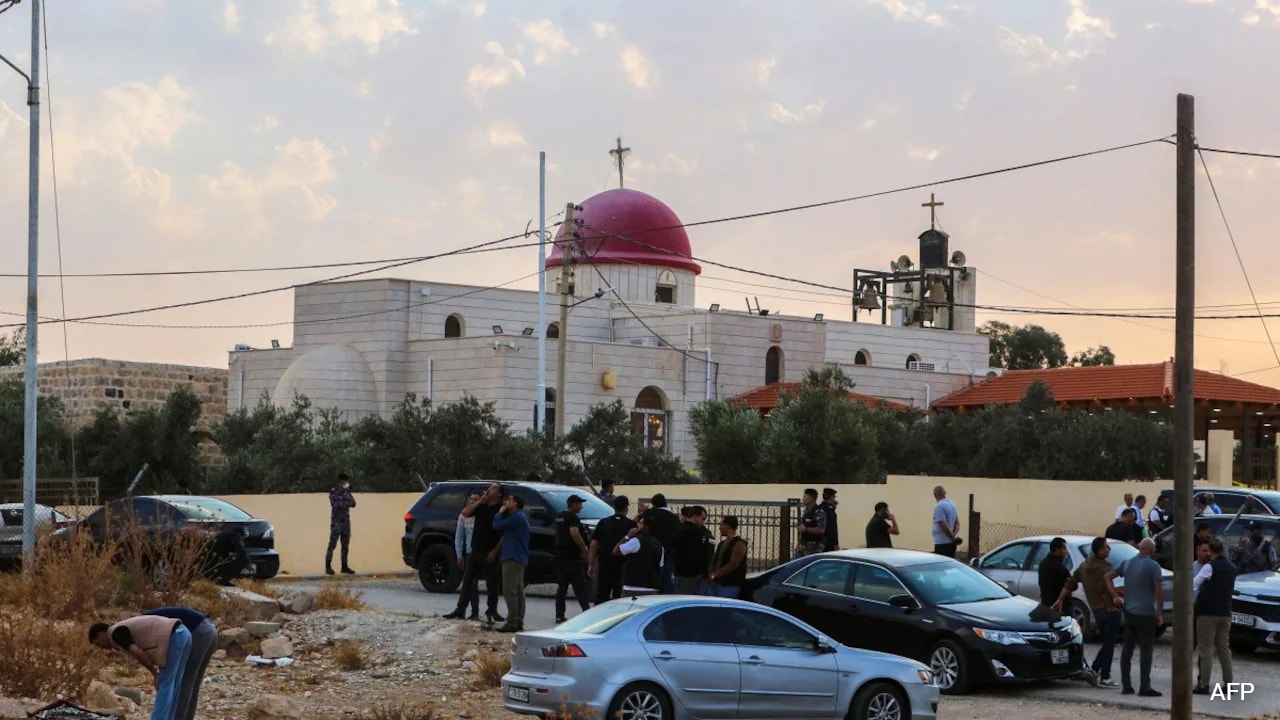
Gunmen opened fire on mourners during a funeral at a Christian church in the village of Hamoud near Karak, Jordan, on October 23, 2026. Initial reports cited seven dead and 34 injured, while subsequent reporting raised the death toll to nine and recorded up to 40 wounded.
Over three decades covering security crises across the Levant, I have watched intelligence agencies treat Jordan as a reliable island of containment. That assumption took a direct hit in Hamoud. Three attackers arrived by car, armed with handguns and at least one semiautomatic rifle, and turned a routine mourning gathering for a local woman into a sustained assault on a vulnerable minority community.
How the Assault Unfolded in Hamoud
CCTV footage and broadcast video captured the cold choreography of the strike. Two gunmen first approached through a vehicle entrance to the church compound, then pulled back and returned alongside a third assailant.
Between 150 and 200 people had gathered in and around the Greek Orthodox church. Firing from the sidewalk and taking cover behind trees and a wall before sprinting inside, the shooters raked fleeing mourners and trapped attendees for several minutes.
Single-incident wire reports often stop at the casualty tally and official condemnation. Yet the operational details point to a deeper vulnerability: small rural compounds hosting large crowds remain difficult to harden permanently without turning everyday community life into a fortress. Even in a country known for tight domestic policing, a coordinated three-man team found a window of opportunity during a funeral procession.
Why Karak Matters to Jordanian Stability
Karak is not a random waypoint on a map. Historically, the governorate and surrounding villages such as Hamoud have anchored an indigenous Arab Christian presence woven into local tribal life, shared customs, and civic institutions.
For generations, Muslim and Christian neighbors in southern Jordan navigated disputes, family ties, and daily work through overlapping social bonds. Attacking a funeral there struck directly at communal trust rather than just a single building.
Echoes of the 2016 Karak Violence
Memory in this part of Jordan is long. In 2016, militants carried out a deadly series of attacks in the Karak area targeting security forces and visitors near a Crusader castle, resulting in a prolonged standoff before forces killed the gunmen.
Ten years later, the October 2026 shooting proved that extremist threats had not been permanently extinguished. Security services had foiled many plots over the years, which sometimes breeds overconfidence among outside observers. A single breach in a rural village can undo years of quiet prevention.
Cross-Border Spillover and Retaliation
Within days of the shooting, the crisis spilled across the northern border. On October 26, 2026, the Royal Jordanian Air Force launched airstrikes in southern Syria against militant targets linked to the attack.
Retaliation carries sharp strategic trade-offs. Syrian authorities reported that seven people died in the strikes, including three children and a woman, and Jordan later acknowledged civilian deaths, prompting both sides to form a joint security committee to review the fallout.
Military strikes may disrupt cross-border safe havens in the short term. They also risk inflaming local grievances across a porous frontier where armed factions, smugglers, and intelligence networks overlap. Every civilian casualty in a neighboring state complicates diplomatic coordination and gives militant recruiters fresh propaganda.
Courts, Security, and Unresolved Questions
Jordanian authorities moved swiftly through the legal system after the attack. On November 15, 2026, the State Security Court sentenced three men to death by hanging over the church assault.
Capital sentences deliver rapid state retribution. They do not automatically answer every intelligence question about how radicalization takes root, how weapons move, or how external actors exploit regional turbulence.
The Broader Regional Pressure Cooker
The Hamoud shooting did not occur in a vacuum. Throughout 2026, Jordan operated under intense regional strain, including fallout from broader hostilities involving Iran, the United States, and Israel earlier in the year.
When regional conflicts escalate, domestic fault lines face heavier pressure. Even well-resourced security agencies face stretched bandwidth when monitoring border threats, diplomatic flashpoints, and internal extremism all at once.
What Security Analysts Must Watch Next
Protecting houses of worship and community gatherings requires more than reactive patrols after a tragedy. Local intelligence sharing, rapid-response perimeter planning for high-attendance events, and sustained community protection matter just as much as cross-border firepower.
Watch how Amman manages both its domestic minority reassurance efforts and its border security arrangement with Damascus in the coming months. The real test of resilience begins long after the sirens fade.
Shooting attack at Christian church in Jordan leaves seven dead and 34 injured
This video provides early broadcast coverage summarizing the initial casualty count and location of the church shooting in Karak.