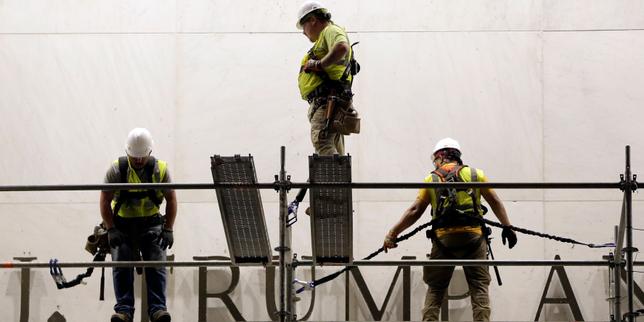
In the predawn hours of a humid Washington Saturday, a crew of construction workers in high-visibility vests stood on scaffolding outside the John F. Kennedy Center for the Performing Arts, prying heavy metallic letters from the building's marble facade. By 3:30 a.m., the name of Donald J. Trump had been systematically stripped from the monumental structure. The sudden removal capped off a bitter, multi-month legal battle that concluded with a federal judge declaring the venue’s recent rebranding illegal, forcing the administration to erase its presence by a hard court deadline.
While onlookers on the plaza cheered the physical dismantling of the signage, the crisis gripping the nation’s premier cultural institution runs far deeper than a simple dispute over exterior lettering. The forced removal of the branding exposes a fundamental and systemic clash over the control of public memory, federal law, and the financial architecture of the American arts.
The Battle of the Living Memorial
The crisis began boiling over in February 2025, shortly after the presidential transition, when the White House executed a swift purge of the Kennedy Center’s board of trustees. Political appointees were systematically installed, and by December, the newly reconstituted board voted to formally rename the venue "The Donald J. Trump and The John F. Kennedy Memorial Center for the Performing Arts." Within less than twenty-four hours, the branding was live on the website, and heavy lettering was already being bolted to the building’s exterior.
The administrative whiplash immediately triggered a legal firestorm.
Congress established the venue in 1964, just two months after the assassination of President John F. Kennedy, designating it as the sole national monument to his legacy within the capital. Under the specific terms of the institution's organic statute, the designation was permanent. Representative Joyce Beatty, an ex-officio board member who was muted during the virtual meeting where the renaming vote occurred, filed a sweeping lawsuit alongside arts advocates and members of the Kennedy family.
The legal mechanism used by the administration rested on the premise that a presidential appointment of trustees granted the board unilateral authority over executive branding. It was a flawed theory.
U.S. District Judge Christopher Cooper dismantled this argument in a scathing 94-page opinion, ruling that the statutory language written by Congress was absolute. The court made it clear that the board possessed no legal right to alter a monument established by federal statute. Congress gave the monument its designation, and only an explicit act of Congress could legally alter it.
The Structural Fallout of a Two Year Shutdown
The legal defeat did more than force a frantic, late-night removal of exterior lettering. Judge Cooper’s ruling also halted a highly controversial $257 million "revitalization project" that would have completely closed the Kennedy Center to the public for two consecutive years.
Managed by the Trump-aligned board, the proposed shutdown was framed as an urgent intervention to repair critical structural vulnerabilities. In emergency appeals filed just hours before the signage removal deadline, Justice Department lawyers argued passionately that the venue was facing catastrophic deterioration, citing rusted structural beams and crumbling parking garage ceilings. The filings warned of total collapse if the two-year closure was blocked.
Yet the sudden push for a multi-year dark period raised immediate suspicions throughout the broader cultural sector.
Downtime of that scale is unprecedented for a healthy national performing arts hub. Industry analysts noted that the closure would have effectively wiped out multiple seasons of the National Symphony Orchestra and the Washington National Opera, idling hundreds of specialized musicians, stagehands, and administrative professionals.
The long-term economic damage of a two-year operational freeze extends far beyond the payroll of the venue itself. The surrounding regional economy relies heavily on the steady foot traffic generated by the center’s multiple theaters. Nearby hotels, restaurants, and transport services faced millions of dollars in projected losses. Critics argued that the structural emergency was heavily exaggerated to justify a total operational reset, allowing the board to alter the institution’s core programming and institutional culture away from public scrutiny.
The Fundraising Cliff and Retribution Culture
The financial instability gripping the institution is further complicated by a volatile fundraising environment. In emergency motions filed with the U.S. Court of Appeals for the D.C. Circuit, government attorneys argued that removing the presidential branding would trigger an immediate funding catastrophe. They claimed that several high-net-worth donors had explicitly tied their financial commitments to the new naming structure. Without the branding in place, the board warned that fundraising would halt completely, forcing the immediate return of millions of dollars in capital campaign pledges.
This heavy reliance on a select pool of politically motivated donors points to a structural shift in how national cultural monuments are sustained. It also exposes a combative internal culture that has spent months targeting dissenting voices within the artistic community.
Consider the case of veteran jazz musician Chuck Redd.
When the renaming was announced, Redd pulled out of a planned Christmas Eve performance in protest. Instead of simply replacing the performer, the Kennedy Center leadership filed a aggressive breach of contract lawsuit against him. The litigation was widely interpreted as an attempt to enforce ideological compliance across the venue’s roster of talent.
The strategy backfired. A D.C. Superior Court judge dismissed the lawsuit with prejudice under the district's anti-SLAPP laws, which protect individuals from retaliatory legal action designed to chill free speech. The court found that the institution’s lawsuit was a form of political retribution rather than a legitimate contract dispute. The aggressive pursuit of an independent jazz artist demonstrated a willingness to alienate the very creative community the institution is mandated to support.
The Fragmented Path Forward
The frantic removal of the physical letters on Saturday morning provides a temporary resolution to a highly visible public controversy, but it leaves the internal governance of the venue severely fractured. The current board remains dominated by political allies committed to an ambitious, highly disruptive overhaul of the capital’s architectural and cultural landscape.
The administration’s legal team has signaled its intent to press forward with a full appeal in the coming weeks, hoping to overturn Judge Cooper's statutory interpretation. For now, the institution faces an uncomfortable, deeply divided reality.
The website has been scrubbed, internal memos have mandated the immediate removal of the joint branding from official letterheads, and the physical building has been restored to its original name. Yet the underlying fight over who controls the cultural identity of the capital is far from settled. The institution remains caught between its statutory mandate as a living memorial to a historic presidency and an aggressive executive apparatus determined to leave its mark on Washington’s monumental core.


