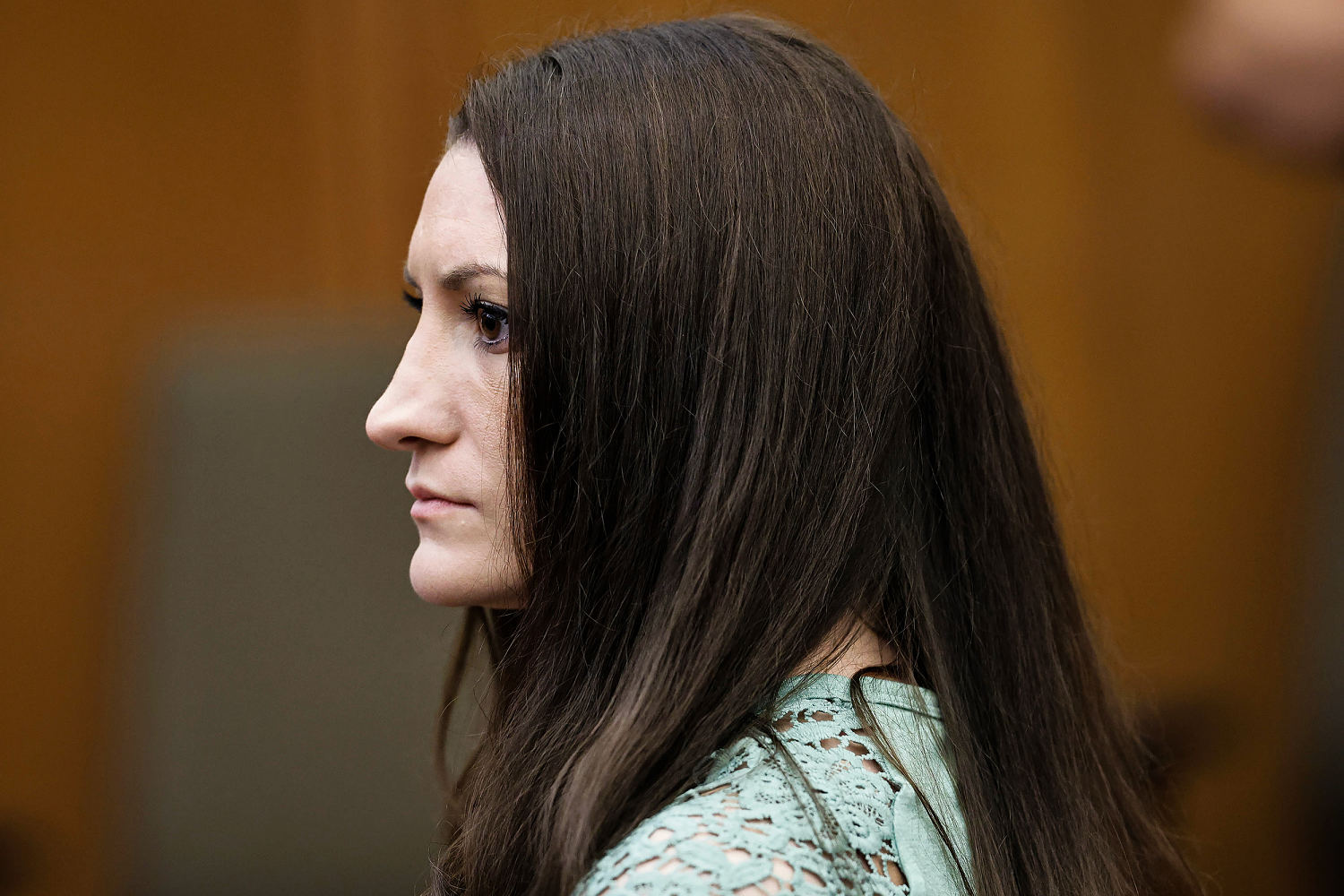
As the jury in Plymouth Superior Court weighs the fate of Lindsay Clancy, the legal and psychological architecture of the high-profile triple-murder trial is cracking open under intense public scrutiny. Clancy, a 36-year-old former labor and delivery nurse, faces charges of first-degree murder for the January 2023 strangulation deaths of her three young children—5-year-old Cora, 3-year-old Dawson, and 8-month-old infant Callan—inside their Duxbury, Massachusetts home. Defense attorney Kevin Reddington noted that his client is anxious and terrified inside a holding status as nine women and three men deliberate behind closed doors. Yet the underlying stakes extend far beyond one woman's freedom. This case forces a brutal reckoning over how the American legal system handles severe maternal mental illness, drawing a jagged line between clinical catastrophe and cold criminality.
The core fracture in the courtroom hinges on a deeply unsettling question: Can a mother who meticulously planned an errand for her husband be experiencing a complete psychotic break, or does that intentionality prove she knew exactly what she was doing?
Assistant District Attorney Jennifer Sprague laid out a meticulous timeline during closing arguments, pushing the prosecution's theory that Clancy acted out of deep depression, exhaustion, and a desire to end her own misery. Sprague argued that Clancy orchestrated an errand window—sending her husband, Patrick Clancy, out to pick up takeout and medicine—to secure the uninterrupted isolation required to carry out the killings. According to the state, the choice of the basement, the selection of the exercise bands as weapons, and the calculated sequence of events demonstrate a mind fully cognizant of its actions.
“She was depressed. She was exhausted. She was done,” Sprague told the jury. The prosecution framed the tragedy not as an unpredictable medical storm, but as an intentional choice made by a mother who felt her children were the "protective factor" keeping her from suicide, leading her to remove them. Forensic experts called by the state, including Dr. Gregory Saathoff and Dr. Kirk Heilbrun, testified that while Clancy suffered from severe psychiatric distress, she retained the capacity to understand right from wrong, classifying the tragedy as a murder-suicide plan rather than an acute manifestation of command hallucinations.
The defense countered with an entirely different reality of chemical over-saturation and medical failure. Reddington anchored his case on the testimony of forensic psychiatrist Dr. Phillip Resnick, an expert in filicide who testified that Clancy was "clearly psychotic" and functioning like a puppet whose strings were pulled by an unyielding disease. The defense presented a picture of a devoted mother whose brain chemistry collapsed under a barrage of powerful psychiatric medications prescribed during a desperate, month-long scramble for help that yielded little stabilization.
Postpartum psychosis remains a rare and profoundly misunderstood medical emergency. It arrives uninvited, fueled by catastrophic hormonal shifts, total sleep deprivation, and acute physiological trauma following childbirth. Defense experts argued that Clancy’s descent into severe mental illness stripped her of executive control, rendering her not criminally responsible for her actions.
The jury's path forward is narrow and fraught with complex statutory options. Jurors can return a verdict of first-degree murder involving extreme atrocity or cruelty, second-degree murder, manslaughter, outright acquittal, or a finding of not guilty by reason of lack of criminal responsibility. Each outcome carries a distinct structural reality. A first-degree murder conviction locks Clancy away for life without the possibility of parole. A verdict of not criminally responsible redirects her to a secure state psychiatric hospital for indefinite treatment. Meanwhile, legal analysts have pointed to manslaughter as a potential compromise verdict if the panel finds itself gridlocked over intent versus impairment.
Outside the courtroom, the cultural resonance of the trial has polarized observers. Women's advocates and maternal health groups argue that the prosecution's narrative minimizes the terrifying velocity of postpartum psychiatric deterioration, effectively punishing a patient for the failure of a medical establishment that repeatedly missed red flags. Conversely, prosecutors maintain that treating the courtroom as a referendum on the healthcare system ignores the cold evidentiary record of planning and execution left behind on that January afternoon.
As the jurors deliberate through their second day, cut off from the noise of public debate and media speculation, the decision rests entirely on how they interpret the terrifying intersection of human biology and criminal law. The verdict will not merely define Lindsay Clancy's remaining years; it will set a stark precedent for how the judicial system evaluates the breaking point of the human mind.