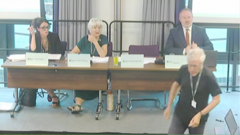
When a local government meeting degenerates into shouting matches and forces an abrupt adjournment, the immediate reaction is usually a mix of public embarrassment and swift bureaucratic damage control. This is precisely what happened following a recent, ill-tempered council meeting that was halted mid-session, triggering an official probe. While casual observers might view the chaos as an isolated outburst of political theater, a closer investigation reveals a far more systemic breakdown. This disruption is not merely about bad behavior. It is the visible symptom of a profound institutional failure that is paralyzing local administrations across the country.
The Microcosm of Disruption
The formal investigation currently underway aims to pin down the exact sequence of events that led to the meeting’s collapse. Witnesses describe an environment where procedural rules were ignored, personal insults replaced policy debates, and presiding officials completely lost control of the floor.
But focusing strictly on who shouted what misses the larger point.
Local councils are designed to operate under strict parliamentary procedures. These rules exist to ensure that even the most contentious debates remain civil and productive. When these structures fail so spectacularly that a meeting must be shut down entirely, it means the unwritten rules of political engagement have dissolved. The probe will likely recommend code-of-conduct reviews and sensitivity training for the elected officials involved. Unfortunately, these superficial fixes ignore the underlying structural pressures that create such volatile environments in the first place.
The Structural Pressures Cooking Local Government
To understand why a council chamber transforms into a battleground, one must look at the shifting realities of local governance. Over the past decade, municipalities have been forced to handle increasingly complex societal issues while operating under severe budgetary constraints.
The Funding Asymmetry
Councils are dealing with a brutal mismatch between responsibility and resource allocation. Central governments routinely pass down mandates regarding social care, housing shortages, and infrastructure maintenance without providing the necessary financial backing.
+------------------------------------+------------------------------------+
| Escalating Mandates                | Shrinking Resources                |
+------------------------------------+------------------------------------+
| Complex social care requirements   | Reduced central government grants  |
| Urgent affordable housing targets  | Highly restricted local tax bases  |
| Broad environmental regulations     | Depleted emergency reserves        |
+------------------------------------+------------------------------------+
When elected officials realize they cannot possibly fulfill their promises to constituents, anxiety spikes. Every agenda item becomes a high-stakes battle for survival over a shrinking pie. A debate over a minor zoning variance or a modest community grant can quickly escalate into a shouting match because it serves as a proxy war for larger, unresolvable financial anxieties.
The Hyper Localization of National Grievances
The nature of political discourse has fundamentally changed, and local council chambers are the new frontline. Ideological battles that used to be confined to national legislatures or cable news networks are now being fought at the municipal level.
Elected officials increasingly view local platforms not as arenas for practical administration, but as stages for broader political posturing. Grandstanding for social media clips has replaced the quiet, tedious work of committee consensus. When a counselor prioritizes a viral moment over a local planning decision, the legislative process grinds to a halt. The ill-tempered meeting that triggered the probe was a textbook example of this shift, where national partisan rhetoric completely derailed a local agenda.
Why Official Probes Routinely Fail to Fix the Problem
The public is told to wait for the results of the official inquiry, with the promise that accountability will follow. Historical precedent suggests otherwise. Most internal municipal investigations are designed to contain political fallout, not to diagnose systemic flaws.
The Limitation of Code of Conduct Reviews
The standard remedy for a dysfunctional council meeting is a rewrite of the local code of conduct. These documents are updated to include stricter definitions of bullying, harassment, and inappropriate language.
They rarely work.
A code of conduct can penalize an overt insult after the fact, but it cannot compel cooperation or mutual respect during a live debate. Clever politicians easily find ways to obstruct meetings and bait their opponents without technically violating the written rules. By focusing entirely on individual behavior, these probes shield the broader institutional culture from meaningful scrutiny.
The Threat of Bureaucratic Paralysis
When an investigation hangs over a local authority, decision-making stalls completely. Fearful of making a wrong move or fueling further controversy, officials retreat into hyper-cautious bureaucracy.
- Risk Aversion: Essential infrastructure projects are delayed as staff wait for political tensions to cool.
- Gridlock: Routine approvals require endless rounds of consultation, driving up administrative costs.
- Disengagement: Qualified, competent individuals choose not to run for local office, leaving the field open to ideologues who thrive on conflict.
The irony is acute. The probe intended to restore order often cements a state of perpetual paralysis, leaving the public with an administration that is civil only because it is doing absolutely nothing.
Rebuilding Institutional Authority From the Ground Up
Fixing this crisis requires a departure from traditional administrative fixes. If local councils are to survive as viable instruments of public service, the mechanics of how they operate must be modernized.
Insulating the Chair from Political Pressure
The role of the council chair or mayor during a meeting is fundamentally broken. In most municipalities, the person tasked with policing the debate is also a partisan politician with a vested interest in the outcome. This dual role creates an inherent conflict of interest that destroys the chair's authority the moment a meeting becomes heated.
A potential solution involves appointing an independent, professional parliamentarian to moderate meetings, possessing the absolute authority to enforce rules and mute microphones. When the referee is entirely neutral, the temptation to turn a council meeting into a partisan circus diminishes significantly.
Restructuring the Public Forum
Public participation is vital, but the current format of open-mic public comment periods often exacerbates council volatility. These sessions frequently degenerate into venting platforms for grievance rather than constructive engagement.
Municipalities need to transition to structured, topic-specific forums where citizens and councilors interact through facilitated workshops rather than adversarial speeches. This removes the performance aspect of the confrontation, forcing both sides to focus on data, trade-offs, and practical constraints.
The upcoming report from the current probe will undoubtedly name names and point fingers at specific individuals who crossed the line. But the real failure belongs to an archaic system that expects a nineteenth-century model of governance to withstand the pressures of twenty-first-century political polarization. Until the structural flaws, funding crises, and procedural gaps are directly addressed, the next halted meeting is not a matter of if, but when.


