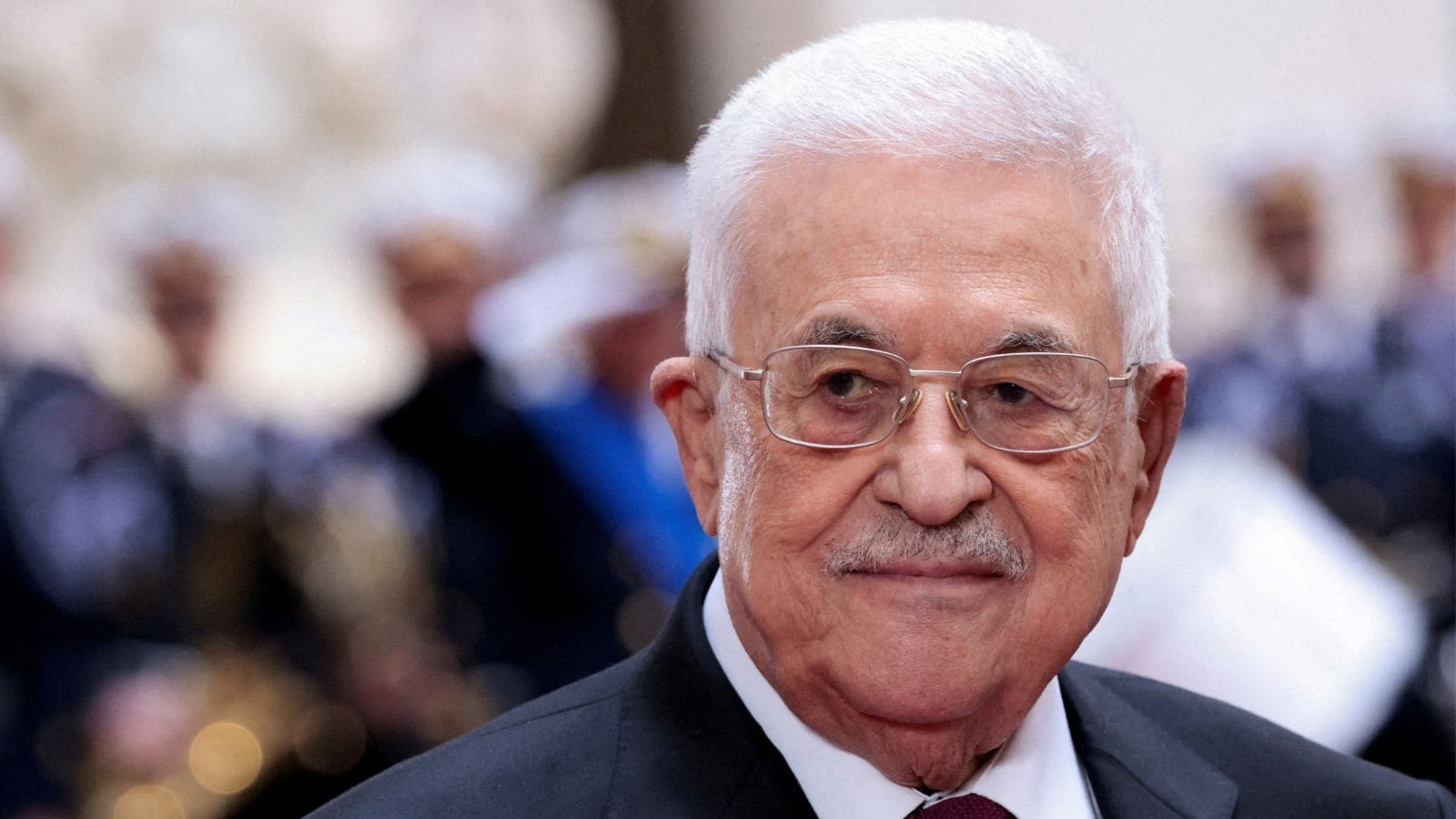
On October 10, 2026, Palestinian President Mahmoud Abbas issued a decree cancelling legislative elections scheduled for November 28, 2026, and rescheduling both parliamentary and presidential polls for September 11, 2027. That single stroke of the pen extended a democratic drought that has kept Palestinians away from national ballot boxes for two decades.
Most surface-level coverage treats this announcement as routine diplomatic friction, repeating Ramallah's official complaints about Israeli restrictions in East Jerusalem and Gaza alongside predictable condemnations from Western capitals. That framing misses the real story. Beneath the procedural excuses lies an existential struggle over political survival, factional arithmetic, and who gets to control the post-war governance of the Palestinian territories.
The Anatomy of a Familiar Delay
If the October 2026 decree feels like a rerun, that is because the script has barely changed since 2021. Five years ago, Abbas scheduled a legislative vote for May 22, 2021, only to pull the plug on April 29, citing Israel's refusal to guarantee voting access for Palestinians in East Jerusalem. In October 2026, the presidential decree pointed to those exact same barriers—restricted access for Central Elections Commission staff, limits on international observers in Gaza and East Jerusalem, and obstacles affecting the "inclusiveness, freedom of participation, and the integrity of the electoral process".
Israeli officials immediately dismissed the explanation. Foreign Minister Gideon Sa'ar labeled the accusation a "ridiculous lie", arguing that Abbas was using Israel as a scapegoat to avoid facing voters.
Meanwhile, Western governments—many of which had pressed Ramallah to democratize as a precondition for broader diplomatic backing—reacted with unusually sharp frustration. Australia, Canada, France, and the United Kingdom issued a joint statement rejecting the postponement, with Paris warning that Palestinian democratic renewal cannot be separated from preserving a two-state framework. The European Union echoed that regret, noting that an observation mission was ready to deploy for polls that were already long overdue.
Yet diplomatic statements rarely alter the calculus inside the Muqataa, Abbas's presidential compound in Ramallah. To understand why the November 2026 vote died seven weeks before ballots were meant to be cast, you have to look at the numbers Abbas was staring at—and the enemies closing in on his movement.
Why Fatah Could Not Afford a November Vote
Abbas has ruled by decree since his four-year presidential term expired in 2009, having won his sole mandate in 2005. The Palestinian Legislative Council (PLC) has not functioned since 2007, following the violent split between Abbas's secular Fatah party and the Islamist movement Hamas after Hamas won the 2006 parliamentary election.
Ahead of the planned November 2026 contest, Abbas attempted to engineer a favorable playing field through decree changes to the electoral law. He expanded the PLC to 200 seats, lowered the minimum candidate age to 23, mandated that at least one in three candidates on party lists be women, and dropped the electoral threshold to 1%.
On paper, a 1% threshold fractures the opposition into dozens of tiny lists, allowing a large, established party apparatus like Fatah to dominate with a plurality. In practice, Fatah's own internal fractures turned that math into a nightmare.
- A Divided Base: Fatah is no longer a unified political machine. Split between Abbas loyalists in Ramallah, supporters of exiled former Gaza security chief Mohammed Dahlan, and factions aligned with figures like Nasser al-Qudwa, a fractured Fatah faced the prospect of cannibalizing its own vote across multiple competing slates.
- A New Opposition Bloc: In late September 2026—just weeks before Abbas cancelled the election—Hamas, Mohammed Dahlan, and Palestinian Islamic Jihad formed an alliance, following negotiations that had also involved al-Qudwa's Reformist Current. That coalition threatened to unite Islamist voters with disaffected Fatah nationalists, creating a bloc capable of sweeping a 200-seat parliament.
- Fragile Polling: While an August 2026 survey by the Palestinian Center for Policy and Survey Research (PCPSR) showed Fatah holding a narrow 41% to 37% edge over Hamas among decided voters—a recovery from the massive deficits Fatah suffered during the height of the Gaza war in 2023 and 2024—nearly a quarter of voters remained undecided or aligned with third parties. Going into an election with a splintered party against a consolidated rival alliance was a gamble Abbas was unwilling to take.
The Quiet Agreement in Cairo
Perhaps the most overlooked detail of the October 2026 postponement is that Abbas did not act entirely against the wishes of his fiercest rivals. Just days before the decree was published, Palestinian factions—including both Fatah and Hamas—met in Cairo and quietly agreed to recommend delaying the vote.
That backroom consensus reveals a shared political reality that public rhetoric obscures. Neither Fatah nor Hamas entered the autumn of 2026 prepared for an open, territory-wide campaign.
For Hamas, operating in a devastated Gaza Strip one year after the October 2025 ceasefire plan took effect, running a conventional political campaign while negotiating post-war security and reconstruction arrangements carried severe risks. A formal ballot requires public candidate lists, campaigning in the West Bank under Israeli military scrutiny, and confronting voter anger over the destruction of Gaza—where PCPSR polling showed "stopping the killing" and "rebuilding Gaza" ranked among voters' top priorities alongside unifying the territories and fixing the economy.
By agreeing in Cairo to punt the election into late 2027, both factions bought themselves time. Abbas avoided a humiliating defeat at the polls, and Hamas avoided testing its post-war standing before reconstruction funds and governance structures were settled.
The Structural Trap of East Jerusalem
Even if Fatah and Hamas had wanted a vote in November 2026, the legal and logistical architecture of Palestinian elections contains a built-in veto that turns every scheduled poll into a political hostage.
Under the Oslo Accords framework, Palestinians living in East Jerusalem are eligible to vote, typically casting ballots through post offices under special arrangements negotiated with Israel. Because Israel annexed East Jerusalem—a move not recognized internationally—any Israeli government can stall the process simply by withholding operational permits for those polling stations.
This creates a convenient symmetry of inaction.
- The Israeli Lever: By refusing to facilitate voting in East Jerusalem, Israeli leaders deny Ramallah the political cover it demands to proceed.
- The Ramallah Excuse: Abbas can insist that holding an election without East Jerusalem concedes Palestinian claims to the city, allowing him to cancel the vote while framing the cancellation as a patriotic defense of national sovereignty.
Palestinian voters themselves have long seen through this dynamic. During the 2021 cancellation, PCPSR polling found that 69% of Palestinians wanted elections to proceed even without Israeli approval in East Jerusalem, favoring alternative voting methods rather than indefinite rule by decree. Yet because the General Elections Law and political orthodoxy in Ramallah tie legitimacy to Jerusalem participation, the issue remains an unbreakable emergency brake whenever an incumbent leader dislikes the polling numbers.
Why September 2027 Is a Mirage
By bundling the postponed legislative election with a newly announced presidential poll on September 11, 2027, Abbas attempted to reframe a retreat as a grand democratic reset. Simultaneous elections theoretically raise the stakes, promising voters a complete renewal of both the executive branch and the legislature on a single day.
In reality, the September 2027 date solves none of the underlying barriers and introduces several new ones.
First, there is the question of Abbas himself. Having exceeded his original four-year mandate by nearly 18 years, the nonagenarian leader faces deep unpopularity across the West Bank and Gaza. Whether he intends to run again in 2027, handpick a successor from inside Fatah's old guard, or use the eleven-month window to neutralize rival factions remains fiercely contested in Ramallah.
Second, the international levers shaping Palestinian politics have grown sharper, not softer. Western donors and regional powers remain deeply divided over whether Hamas or its allies can participate in a future Palestinian government without explicitly recognizing prior Palestine Liberation Organization (PLO) agreements—a condition Hamas and Palestinian Islamic Jihad have repeatedly rejected. If Washington, Brussels, or Jerusalem signal that they will boycott or cut aid to a parliament won by an opposition coalition, voters face a grim choice between electing representatives who cannot govern and boycotting a process rigged by external vetoes.
Finally, nothing on the ground suggests Israel's posture toward East Jerusalem or movement between Gaza and the West Bank will look fundamentally different in eleven months than it did in October 2026. If those conditions were sufficient to abort a vote in November 2026, they will be just as available in August 2027.
Until the rules governing East Jerusalem voting and factional eligibility are rewritten to strip external actors and incumbents of their unilateral vetoes, dates on a presidential decree are not commitments—they are placeholders.
For further analysis of the internal dynamics and factional pressures behind this decision, watch this report on Abbas postpones Palestinian elections, sets presidential poll for September 2027, which outlines the immediate diplomatic fallout and reactions to the decree.


