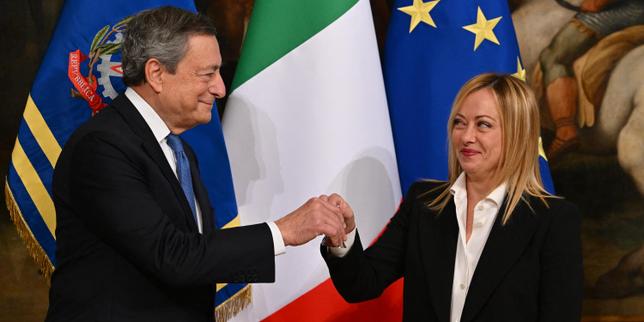
Giorgia Meloni entered Palazzo Chigi in October 2022 as a political outsider dismissed by half of Brussels as an ideological flash in the pan. By September 2026, her cabinet became Italy's longest-serving post-war government, and she had repositioned Rome from a chronic fiscal problem child into a central broker of European security, migration policy, and industrial bargaining.
Conventional coverage treats that arc like a fairy tale of sudden moderation. It is not. Meloni did not abandon her nationalist instincts to fit into European corridors; she weaponized institutional patience, coalition discipline, and geopolitical shockwaves to force Brussels to bend toward her priorities while quietly shelving her sharpest rhetorical bombs.
How an Outsider Survived Italy's Political Meat Grinder
Italian prime ministers usually burn out in months, chewed up by party barons, shifting coalitions, or market panic. Meloni survived because she built a vertical power machine inside Brothers of Italy long before she ever smelled the prime minister's office.
She watched Silvio Berlusconi's empire fray from within. She saw Matteo Salvini squander a surging poll lead in 2019 with a reckless summer bluff that handed power to his rivals. Meloni learned the opposite lesson: hold your ground, keep your cadre loyal, and never jump before the board is set.
Her inner circle reinforced that discipline. Placing her sister Arianna at the head of the party's political secretariat and anchoring key ministries with loyalists created a tight command loop that insulated Palazzo Chigi from backbench mutinies. When coalition partners like Salvini's League pushed for noisy stunts or friction with European institutions, Meloni let them vent at rallies while she held the steering wheel steady in Rome and Brussels.
Longevity in Italian politics is rarely accidental. It is an engineering feat. By outlasting every post-1945 predecessor in cabinet durability, Meloni turned time itself into leverage—a rare commodity in a union where leaders constantly look over their shoulders at fragile domestic parliaments.
The Myth of Overnight Moderation in Brussels
Before October 2022, diplomats in Berlin, Paris, and Brussels braced for a collision. They expected an adversarial firebrand who would pick fights over rule-of-law audits, budget rules, and Eurozone integration.
Instead, Meloni walked into European summits sounding like a hard-nosed accountant and a pragmatic strategist. That shift fooled plenty of observers into thinking she had undergone a doctrinal conversion. A closer look shows tactical sequencing rather than ideological surrender.
She understood a basic rule of European power: you cannot rewrite the rules from the penalty box. Picking an immediate, existential fight over sovereign debt or treaty mechanics on day one would have isolated Italy just when it needed EU funds, energy solidarity, and diplomatic cover.
Pragmatism in Brussels is often just nationalism wearing a tailored suit.
So Meloni picked her battles with surgical restraint. On Ukraine, she backed Kyiv consistently even when parts of her domestic coalition winced, recognizing that Atlantic credibility was the price of admission to the serious rooms. On controversial allies like Viktor Orbán, she calibrated her posture over time, widening her distance from optics that complicated her centrality inside mainstream European bargaining.
Consider a hypothetical scenario to see how coalition leverage works in practice: imagine a mid-level minister in a junior coalition party demands a public confrontation with European fiscal officials over a national subsidy. A weak prime minister caves to domestic noise and tanks credibility abroad. A disciplined prime minister grants symbolic cover at home while instructing Treasury negotiators in Brussels to trade rhetorical heat for technical concessions. Meloni operated that playbook repeatedly.
Turning Migration and Borders Into a European Mandate
For years, southern EU states complained that northern capitals treated irregular arrivals as a local Italian or Greek headache rather than a shared union problem. Meloni reframed migration from a humanitarian talking point into a hybrid security challenge and a test of external border control.
That framing changed the conversation. Instead of pleading for endless burden-sharing quotas that northern governments refused to accept, Rome pushed deterrence, third-country processing agreements, and tougher return mechanisms. By late 2026, Meloni was pointing to Frontex figures showing irregular crossings along external routes had more than halved over two years as proof that her model was moving from heresy to orthodoxy.
Yet the reality on the ground remains messy and contested. Offshore processing arrangements and external return hubs face legal scrutiny, diplomatic friction, and logistical bottlenecks. Declaring victory over irregular migration is premature when smuggling networks constantly adapt and demographic pressures across the Mediterranean remain structural.
Still, the ideological shift is unmistakable. Concepts that once drew sharp pushback in Brussels now sit comfortably inside mainstream council conclusions. Meloni did not win every legal battle, but she shifted the Overton window on borders across the entire bloc.
Defense, Energy, and the New Industrial Bargain
As geopolitical flashpoints multiplied—from Eastern Europe and the Middle East to supply-chain rivalries stretching toward the Indo-Pacific—Meloni treated defense and energy not as siloed portfolios, but as twin pillars of national survival.
Rome steadily expanded defense outlays and procurement across air defense, anti-drone systems, naval capabilities, and cybersecurity while projecting force into the enlarged Mediterranean and beyond. Crucially, Meloni framed military spending as industrial resilience and domestic job security, linking Italian defense manufacturers to broader European shield initiatives.
On industrial policy and energy, her message was blunt: European industry cannot compete globally if energy costs crush manufacturers and rules penalize production. She pressed for regulatory relief, faster permitting, and a reassessment of carbon and industrial rules that she argued were drafted for a calmer economic era.
| Policy Arena | Meloni's Stated Pitch | The Underlying Reality |
|---|---|---|
| European Union Role | An ambitious EU on major strategic threats, restrained where national action fits better | Selective sovereignty that demands solidarity without surrendering domestic leverage |
| Migration & Borders | External deterrence, return enforcement, and indivisible border security | Measurable drops in certain crossing metrics alongside persistent legal and operational friction |
| Defense & Security | Military shields, hybrid resilience, and transatlantic reliability | Rising defense budgets and wider deployments balanced against domestic coalition sensitivities |
| Public Finances & Growth | Fairness in EU budget allocations and support for national competitiveness | Heavy debt constraints and sluggish growth that limit Rome's fiscal room for maneuver |
The Debt Trap Beneath the European Triumph
For all the applause over diplomatic poise and cabinet longevity, Meloni's mandate carries a glaring vulnerability: Italy's balance sheet.
European Commission autumn forecasts in November 2026 underscored how narrow Rome's margin for error remains, with public debt relative to GDP poised to overtake Greece earlier than previously projected amid rising spending, sluggish real-wage and employment momentum, and uneven investment. You can project strength in summit corridors, but bond markets and fiscal rules do not grade speeches.
When Rome argues against EU budget allocation formulas that penalize net contributors or pushes for fiscal breathing room to cushion energy costs, it is fighting a two-front war. Brussels officials and northern capitals remain wary of granting extra flexibility to a high-debt economy whose structural reforms often move slower than promised.
Domestic politics adds another constraint. Balancing tax relief, pension pressures, demographic decline, and rising defense commitments forces painful trade-offs. Even a popular leader with a historic streak in office cannot repeal arithmetic.
What Meloni's Rise Actually Means for Europe
The deeper story of the Meloni mandate is not that Italy became "European" in the old federalist sense. It is that Europe became more national-interest driven, more security-conscious, and more comfortable with hard-edged conservatives sitting at the center of power.
Meloni proved that a leader rooted in the post-fascist and sovereigntist right could govern stably, work with centrist and Christian democratic partners when convenient, and shape EU debates on borders, industrial competitiveness, and strategic autonomy. Other European movements watched closely and took notes on discipline over theatrics.
Yet durability is not invulnerability. Cracks in political momentum, economic headwinds, and shifting transatlantic dynamics constantly test how much weight Rome can carry without overextending itself.
Watch how Rome handles its next budget and industrial clashes in Brussels over the coming quarters—because that is where Meloni's European clout will either lock in a lasting legacy or collide with Italy's oldest economic limits.