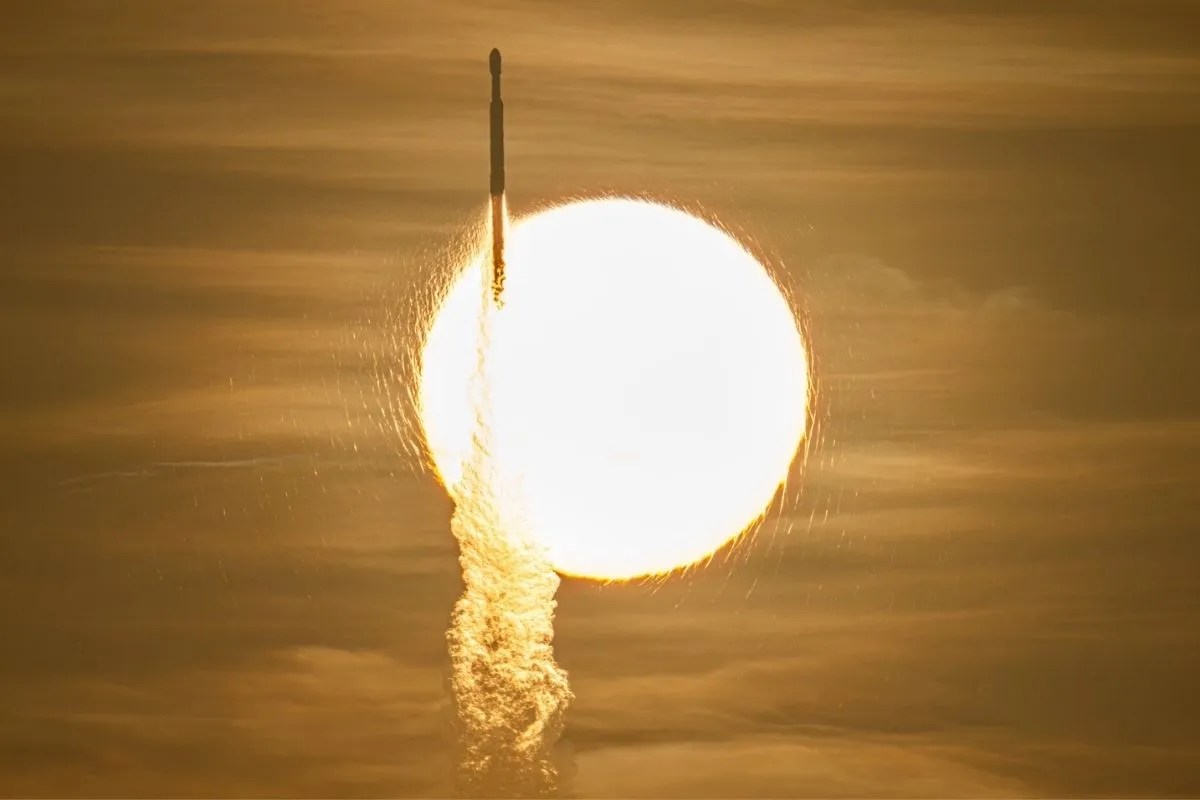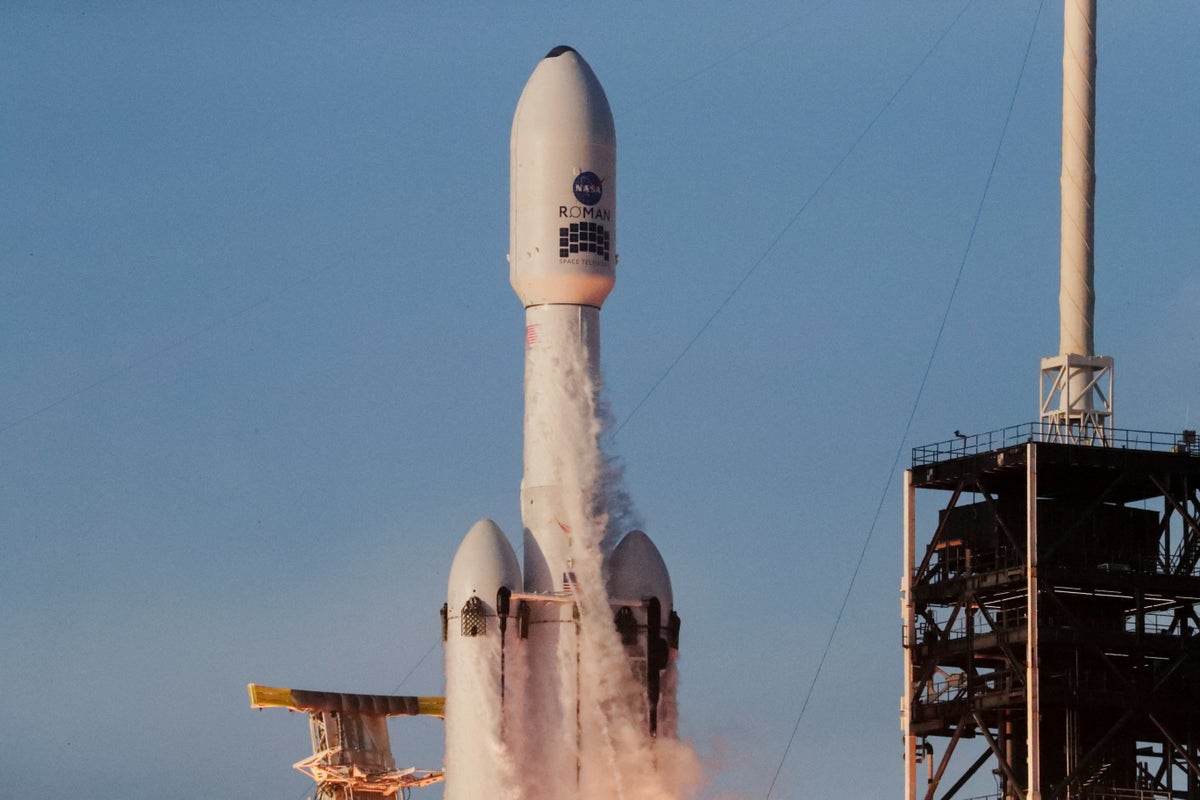
NASA launched the Nancy Grace Roman Space Telescope aboard a SpaceX Falcon Heavy rocket from Launch Complex 39A, sending a 288-megapixel infrared observatory toward the second Lagrange point one million miles from Earth. This observatory arrived at the launch pad nearly nine months ahead of its official baseline schedule. For an aerospace industry accustomed to chronic budget overruns and multi-year delays, this anomaly demands a hard look at how the mission actually survived long enough to fly.
Flagship space telescopes rarely cheat death once, let alone four times.
The Budget Battles That Nearly Grounded the Observatory
Politics almost killed Roman before a single mirror was polished. Across multiple administration budget proposals, the observatory faced outright cancellation or crippling financial starvation. Lawmakers on Capitol Hill repeatedly resurrected the funding, recognizing that abandoning a telescope with a primary mirror already donated by the National Reconnaissance Office would waste sunk capital.
The hardware itself came from an unexpected surplus. Originally built for military reconnaissance, the 2.4-meter primary mirror matched the dimensions of Hubble's mirror but offered a field of view one hundred times larger. Engineers inherited a pre-existing asset that dictated the optical architecture. That inheritance forced a radical design pivot. Instead of staring narrowly at deep-space curiosities like a surgical instrument, Roman was engineered to sweep across vast expanses of the cosmos with panoramic efficiency.
Yet, surviving congressional appropriations did not protect the project from technical friction. Building a 288-megapixel Wide Field Instrument required pushing infrared detector arrays to manufacturing thresholds that contractors routinely missed. Yield rates on the specialized mercury-cadmium-telluride detector chips were low. Testing regimes grew adversarial as independent oversight boards flagged potential thermal-vacuum failures. Every subsystem review carried the existential weight of a potential cancellation memo.
The Mechanics of the Million-Mile Survey Machine
To understand what makes Roman different from its predecessors, look past the hardware specifications and examine its data output rate. Over its five-year primary mission, the observatory will generate roughly 20 petabytes of information.
Traditional telescopes operate like high-end sniper rifles. Hubble and the James Webb Space Telescope concentrate immense optical power onto tiny pockets of the sky, gathering exquisite detail at the expense of areal coverage. Roman functions like a wide-angle net. Each frame captured by its primary camera covers an area of the sky larger than a full moon.
This panoramic capacity targets two invisible drivers shaping the universe: dark energy and dark matter.
Dark energy accelerates the expansion of the cosmos, while dark matter provides the invisible gravitational scaffolding holding galaxies together. Because both phenomena refuse to emit or absorb light, astronomers must observe their indirect effects across immense cosmic distances. By mapping the shapes and positions of over a billion galaxies across three core surveys, Roman will track how cosmic structures warped over billions of years.
Consider a hypothetical example to illustrate the scale. If Hubble attempts to map a sprawling metropolitan area by photographing individual windows on a single skyscraper, Roman captures the entire skyline, every moving vehicle, and the surrounding highway grid in a single exposure.
The Exoplanet Census and the Coronagraph Testbed
Beyond cosmology, the observatory carries a secondary payload designed to fundamentally alter our planetary inventory: a technology-demonstrating coronagraph.
Directly imaging planets orbiting distant stars remains exceptionally difficult because the host star outshines its planets by a factor of billions. Roman's coronagraph utilizes advanced masks, prisms, and deformable mirrors to actively cancel out starlight in real time.
If successful, this technology will bypass the indirect methods—such as measuring the dimming of a star as a planet crosses its face—that have dominated exoplanet discovery for decades. Instead of inferring a planet's existence through mathematical shadows, researchers will isolate the pale, reflected light of older, colder gas giants orbiting nearby stars.
The engineering team built this capability not as a guaranteed operational instrument, but as a high-risk technology testbed. If the coronagraph performs to specifications, future missions will inherit a validated blueprint for directly imaging Earth-like worlds. If it stumbles, the primary wide-field survey mission remains entirely secure.
The Acceleration Anomaly
The timeline compression that delivered Roman to the launch pad months ahead of schedule caught NASA's internal bureaucracy flat-footed. Major aerospace projects typically expand to consume every available day of their schedule. Contractors drag out testing phases to mitigate liability, and launch providers adjust integration windows.
For Roman, component teams delivered hardware early. Vibration, acoustic, and thermal-vacuum tests cleared without catastrophic anomalies. SpaceX accommodated an accelerated Falcon Heavy integration schedule, utilizing the historic Launch Complex 39A pad to push the observatory toward its destination at the Sun-Earth Lagrange point 2.
The observatory now begins its operational commissioning phase millions of kilometers from human intervention. No servicing mission can repair a structural failure at this distance. The margin for error has evaporated, leaving the success of a multi-billion-dollar investment entirely to automated deployment sequences executed in the cold vacuum of deep space.