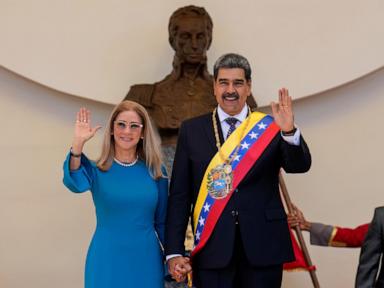
The federal courthouse in lower Manhattan has seen its share of narco-traffickers, international arms dealers, and fallen despots, but few figures have arrived with the geopolitical baggage carried by Nicolás Maduro. Standing before a U.S. federal judge, the former Venezuelan president entered a plea of not guilty to an expanded superseding indictment that now includes direct charges of overseeing a systematic machinery of torture. For a man who spent over a decade projecting absolute impunity from the Miraflores Palace in Caracas, the surreal reality of answering to American prosecutors for crimes allegedly committed thousands of miles away marks a profound structural shift in how international state-sponsored repression is handled in domestic courts.
The legal arguments presented by Maduro’s defense counsel rely heavily on traditional notions of head-of-state immunity and the assertion that the allegations are politically motivated fabrications. Yet the prosecution’s case, built across years of federal investigation and bolstered by cooperation from regional insiders, cuts deeper than standard narcotics trafficking. The updated charges outline a chilling operational chain of command where dissent was met not merely with political exclusion, but with calculated physical and psychological brutality executed by intelligence apparatuses like the DGCIM.
The Architecture of State Repression
To understand why these specific torture charges matter beyond the courtroom, one must examine the mechanics of how the regime survived its steepest economic and political freefalls. When Maduro assumed power following the death of Hugo Chávez in 2013, he lacked the charismatic military pedigree of his predecessor. As oil revenues collapsed and public discontent boiled over into mass street protests, the administration faced intense pressure from within both civilian opposition ranks and the armed forces.
Federal prosecutors in New York allege that rather than risking a fracturing military loyalty, the inner circle—including Maduro and his wife, Cilia Flores—institutionalized a network of coercion. Testimony and evidence detailed in court documents point to interrogation rooms where high-profile detainees, including military dissidents and foreign nationals, were subjected to electric shocks, prolonged isolation, waterboarding, and severe beatings. By tying these human rights violations directly to the executive office, the prosecution is attempting to prove that the abuse was not rogue actors executing unauthorized violence, but a centrally managed strategy designed to preserve political survival.
Closing the Impunity Gap
The decision to prosecute foreign state leaders for torture under U.S. federal statutes represents a fascinating and aggressive expansion of extraterritorial jurisdiction. Historically, accountability for atrocity crimes of this scale fell almost exclusively to domestic tribunals within the affected nation or sluggish international bodies like the International Criminal Court. When domestic judicial systems are entirely co-opted by the ruling party, victims are left with virtually no recourse.
Legal scholars note that utilizing federal statutes regarding torture and conspiracy creates an alternative pathway when traditional diplomatic channels fail. Several former detainees, including American citizens who survived harrowing imprisonments in Venezuelan black sites, have already pursued civil judgments, securing massive default verdicts against top regime officials. Bringing these elements into a criminal trial format elevates the gravity of the proceedings, transforming abstract geopolitical conflicts into concrete criminal accountability for specific human rights violations.
The Defense Strategy and the Road Ahead
Maduro’s legal team faces an uphill battle as the trial schedule moves forward. Challenging the legitimacy of the court based on international immunity principles is a standard play, but American courts have consistently demonstrated a willingness to hear cases where defendants have been brought into U.S. custody through extraordinary law enforcement operations.
At the same time, the inclusion of specific co-conspirators in the broader indictments opens the door for potential plea agreements and internal testimony. If former military intelligence insiders choose to cooperate in exchange for sentence reductions, the trial could expose the inner workings of authoritarian governance in Latin America with unprecedented transparency.
The proceedings in New York are far from a simple criminal docket. They serve as a high-stakes test of whether global networks of state-backed repression can be successfully dismantled inside a municipal courtroom, forcing autocrats to confront the tangible human cost of the power they wielded from afar.