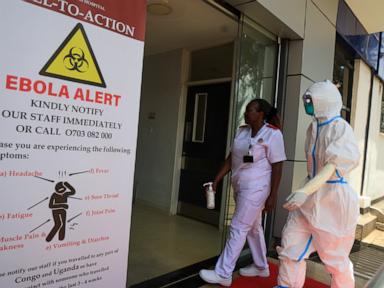
Two suspected Ebola cases in northeast Nigeria have put public health officials on high alert, exposing how fragile outbreak detection remains in a region already battered by insurgency, displacement, and underfunded clinics. Every suspected alert triggers an immediate race against time. Officials must isolate patients, trace contacts, and ship samples for laboratory confirmation before rumors outpace facts.
In public health reporting, a "suspected" case is a provisional classification, not a confirmed diagnosis. Early Ebola symptoms—sudden fever, severe headache, muscle aches, fatigue, vomiting, or diarrhea—look almost identical to malaria, typhoid, cholera, or Lassa fever. Without rapid molecular testing and strict chain-of-custody protocols, an early clinical suspicion can either catch a deadly chain of transmission in its infancy or trigger costly alarm over a far more common infection.
Why Northeast Nigeria Carries Unique Strain
Northeast Nigeria does not experience infectious disease threats in a vacuum. Over more than a decade of conflict involving non-state armed groups, large swathes of Borno, Adamawa, and Yobe states have faced damaged health facilities, stretched supply chains, and millions of internally displaced people living in crowded settlements or hard-to-reach communities. When a health system operates under chronic strain, even a single high-consequence alert tests every link in the chain.
Security constraints complicate routine surveillance. Health workers sometimes cannot reach remote wards without escort or delays, and displaced families may move between informal camps and host communities before contact tracers catch up. A suspected case in that environment is not merely a clinical event. It is a stress test of logistics, cold-chain transport, protective equipment stock, and community trust.
Epidemiologists know that the first 48 to 72 hours after a suspected alert often decide whether containment stays tidy or spirals. If a patient presents at a primary clinic without immediate triage or isolation capacity, exposure risks rise among staff, relatives, and fellow patients. Even when health teams respond quickly, limited diagnostic capacity in peripheral districts can force samples to travel long distances to reference laboratories, turning hours of waiting into days of anxiety.
How Real Outbreaks Are Caught or Missed
Understanding why suspected Ebola alerts require ruthless discipline means looking at how filoviruses behave in the field. Ebola spreads through direct contact with blood, secretions, organs, or other bodily fluids of infected people—alive or dead—as well as surfaces and materials contaminated with those fluids. It is not airborne like measles or seasonal influenza, which gives responders a clear mechanical target once they know who touched whom and when.
That clarity has an unforgiving catch. Symptoms typically appear anywhere from two to 21 days after exposure, with an average closer to eight to ten days, and patients generally become contagious only after symptoms begin. During the quiet incubation window, an exposed person can travel, attend funerals, or visit markets without raising suspicion. Once fever strikes, speed becomes everything.
Consider a hypothetical example to see how early bottlenecks happen in practice. Suppose a resident in a conflict-affected district develops high fever and gastrointestinal bleeding three days after returning from a neighboring area, visits a small health post with minimal isolation space, and is later transferred to a larger facility. Responders have to reconstruct every movement, identify every caregiver or health worker who had unprotected contact, and monitor all of them daily for 21 days. If even a handful of contacts go untracked because records are handwritten on paper or mobile coverage drops out, containment becomes harder.
Nigeria has a notable track record from 2014, when rapid coordination, aggressive contact tracing, and strict infection control halted an imported Ebola cluster before it became entrenched. Decades of watching outbreak responses teach a sobering lesson, however. Past success never guarantees future readiness. Systems decay quietly between emergencies when funding shifts, staff turn over, or routine primary care crowds out epidemic drills.
The Diagnostic and Rumor Trap
Every suspected Ebola report in West or Central Africa fights a two-front war. One front is biological and logistical, requiring accurate polymerase chain reaction (PCR) testing, safe sample packaging, and trained clinicians. The other front is informational, shaped by fear, misinformation, and deep-seated skepticism toward official announcements.
In regions where communities already feel neglected or over-policed, sudden arrival of hazmat gear, sirens, or cordoned-off wards can spark panic rather than cooperation. If people fear that going to a clinic means being locked away or never seeing relatives again, sick individuals may hide symptoms or seek care from informal healers. That behavior is not irrational. It is a predictable human reaction when communication lags behind visible emergency action.
Rumors travel faster than lab results. Social media messages, voice notes, and neighborhood gossip often label any febrile illness with bleeding as "Ebola" long before a reference lab rules it out or confirms it. When authorities stay quiet while waiting for test results, speculation fills the vacuum. When authorities speak too loosely before verification, false alarms erode credibility for the next real threat.
There is also a gray area that headline summaries rarely capture. A negative test on a single early swab does not always end vigilance if clinical suspicion remains high and symptom onset was very recent, because viral levels can take time to climb to detectable thresholds. Conversely, ruling out Ebola quickly matters enormously so hospitals can treat the actual cause—whether severe malaria, Lassa fever, or another acute illness—without neglecting routine care.
What Separates Noise From Real Containment
When two suspected cases surface in northeast Nigeria, observers often fixate on a binary question: is it Ebola or not? Experienced outbreak investigators look at a broader set of indicators that reveal how well the system is functioning under pressure.
- Triage and isolation speed: Whether the first healthcare facility separated symptomatic patients immediately and protected staff with appropriate personal protective equipment.
- Laboratory turnaround time: How fast specimens moved under safe cold-chain rules from the point of care to a validated national reference laboratory.
- Contact tracing completeness: What share of identified high-risk and low-risk contacts received daily symptom checks across the full 21-day window without gaps.
- Cross-border and displacement tracking: How effectively local teams coordinated across porous borders, transit hubs, and displacement sites so mobile contacts did not vanish from follow-up lists.
- Risk communication clarity: Whether local leaders and health officials gave plain, consistent updates in local languages without stoking stigma or panic.
Each of these factors exposes real vulnerabilities. In under-resourced settings, personal protective equipment can run thin, ambulances can face fuel or road constraints, and health workers who are already overworked may face heightened exposure risks if protocols slip during night shifts or sudden surges. Even after an alert is cleared, the strain on already stretched clinics lingers.
Why Conflict Zones Rewrite the Playbook
Standard outbreak playbooks assume a baseline of institutional stability that northeast Nigeria cannot take for granted. Road checkpoints, insecurity, displacement camps, and fragmented local governance turn textbook public health steps into high-wire negotiations. A contact tracer who can walk freely through a peaceful town may face acute physical risk or community distrust in an active conflict corridor.
International donors and national agencies often pour attention into acute flare-ups while chronic gaps in district surveillance and primary care persist year-round. Yet strong routine surveillance is the bedrock of rapid outbreak detection. If fever clusters, unexplained deaths, or unusual hemorrhagic signs are spotted early at the community and clinic level, responders get a head start rather than playing catch-up after multiple chains of transmission have formed.
Skepticism toward rosy readiness claims is warranted whenever a crisis hits a fragile region. Having an emergency response plan on paper is very different from executing it smoothly across dusty roads, heat, power cuts, and displaced populations. Real preparedness shows up in unglamorous details: stocked isolation tents, trained staff who do not freeze under pressure, reliable sample transport, and neighbors willing to report illness early.
For health authorities, humanitarian agencies, and local communities alike, the immediate priority is simple and unforgiving: verify fast, trace thoroughly, protect frontline workers, and speak plainly before fear takes root.