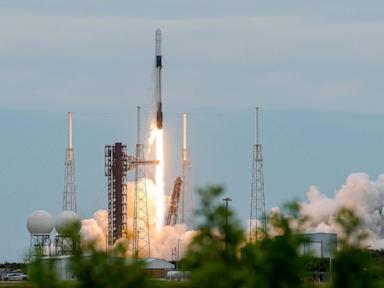
Four astronauts strapped into a carbon-composite capsule atop a Falcon 9 rocket and reached the International Space Station in a matter of hours, completing an orbital choreography that once required days of painstaking maneuvers. This rapid transit profile has quietly shifted from a high-stakes experimental maneuver into the standard operational rhythm of modern commercial spaceflight. The implications extend far beyond the convenience of a shorter commute for crews trading Earth for microgravity. By shrinking the journey to the orbiting laboratory, space agencies and private operators have fundamentally altered the physiological toll on the human body, the economics of launch operations, and the reliability metrics of orbital rendezvous.
SpaceX launched the crew on a fast track to the International Space Station, achieving orbital insertion and docking within hours of liftoff rather than the traditional two-day phasing period. This compressed timeline is not merely a triumph of scheduling. It is a calculated engineering pivot enabled by precise orbital mechanics, advanced autonomous navigation systems, and reusable booster reliability that leaves little room for margin. To understand why this matters, you have to look at what happens to the human body during the first forty-eight hours in space. Don't forget to check out our earlier post on this related article.
The Physiological Cost of the Old Way
For decades, spaceflight was defined by the prolonged agony of the slow transit. During the Apollo era and the early days of the Shuttle, crews spent days in cramped quarters executing incremental orbital burns to catch up with their destination. The hidden tax of this approach was space motion sickness.
About half of all astronauts experience space adaptation syndrome during their first days in orbit. Fluid shifts toward the head, vestibular systems scramble without gravity to anchor them, and nausea follows. In a multi-day rendezvous profile, astronauts spent the initial phase of their mission—when peak mental sharpness was required for docking procedures—battling disorientation and illness while strapped into heavy launch and entry suits. If you want more about the context here, Wired provides an informative breakdown.
Shortening the flight to a few hours cuts that vulnerable window drastically. Crews board the spacecraft, launch, and dock while still operating on Earth-normal circadian rhythms, minimizing the severity of motion sickness before they ever float into the station's larger habitable volume. The engineering challenge shifted from keeping astronauts comfortable for days in a confined cabin to executing an aggressive, automated interception profile that demands absolute perfection from flight computers on the first attempt.
The Mechanics of the Express Route
Achieving a rapid rendezvous requires ruthless precision in launch timing. Unlike the historical approach, where a rocket could lift off within a relatively wide daily window and spend days correcting its orbit through incremental burns, the fast-track profile demands instantaneous launch windows. If the rocket does not clear the pad at the exact second dictated by the station's orbital plane, the mission must scrub.
This reliance on instantaneous launch windows requires unprecedented maturity from the ground infrastructure. Falcon 9 hardware, automated range assets, and autonomous flight termination systems must operate without hesitation. Once aloft, the spacecraft relies on onboard GPS and star trackers to calculate its intercept trajectory dynamically, closing the distance to the International Space Station through a series of automated burns that optimize fuel consumption while maximizing speed.
Critics of early commercial crew timelines argued that compressing the flight profile introduced unnecessary risk, trading proven conservative maneuvers for speed. Yet flight data tells a different story. Every hour a spacecraft spends in orbit before docking is an hour exposed to orbital debris hazards, thermal extremes, and potential system degradation. By minimizing transit time, operators reduce overall mission risk, even if the ascent phase demands higher peak performance from the propulsion and guidance architecture.
Shifting Economics and Station Logistics
The normalization of rapid transit transforms how cargo and crew rotate through low Earth orbit. When a mission takes two days, the spacecraft consumes valuable consumables—power, water, and life support margins—just getting to the destination. Compressing the timeline maximizes the efficiency of the vehicle's resources, leaving higher margins for reserve power or extended orbital loiter capabilities if docking gets waved off.
Furthermore, this capability underpins the commercial viability of destination management. As private entities look toward the post-International Space Station era, launching paying customers, researchers, and private astronauts to commercial outposts cannot involve days of grueling orbital acrobatics. Passengers will demand a transit experience that resembles terrestrial long-haul travel rather than a multi-day survival test. The rapid ascent protocols perfected on current station flights serve as the proving ground for future commercial station logistics.
The shift also redefines crew fatigue management. Flight surgeons and mission planners now factor the shortened commute into pre-launch quarantine and crew scheduling. Astronauts step off the spacecraft and into the station environment with their biological clocks largely intact, ready to dive into scientific experiments within hours of hatch opening rather than spending a full day recovering from the journey.
The Edge of Routine
We have reached a peculiar juncture in aerospace history where missions that once commanded global front-page attention now pass with the mundane regularity of commercial airline flights. That normalization is the ultimate victory of the commercial crew paradigm, yet it masks the relentless engineering rigor required to keep it safe.
Every rapid ascent is a reminder that orbital mechanics does not forgive small errors, no matter how routine the launch stream begins to look from the ground. As launch cadence increases and the destination landscape expands toward commercial platforms, the mastery of the express route will remain the bedrock of human presence in low Earth orbit. The speed is no longer the story; the reliability with which that speed is delivered defines the modern frontier.