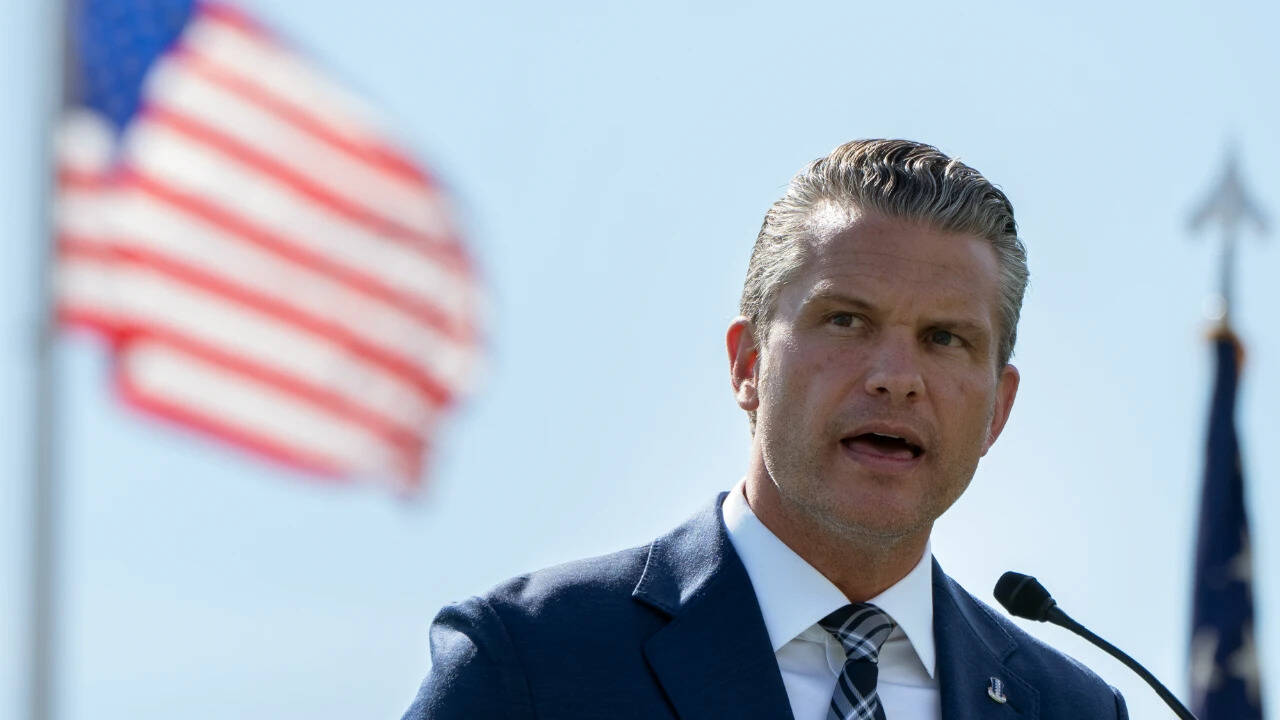
Defense Secretary Pete Hegseth's creation of the Pentagon Office of Religious Affairs marks a structural earthquake for the United States military, establishing a direct reporting line from faith-based bureau directors straight to the secretary's desk. Unveiled during a State of the Force address at Marine Corps Base Quantico, the initiative promises to place spiritual health on equal footing with physical readiness. Beneath the rhetorical veneer of putting on the full armor of God lies a fundamental reorganization of military command culture that bypasses traditional bureaucratic checks and triggers deep anxiety within the chaplain corps.
For decades, the Military Chaplaincy operated through established service-branch hierarchies, balancing pluralism across Protestant, Catholic, Jewish, Islamic, and other traditions, alongside provisions for secular service members. Hegseth's new office disrupts that architecture. By centralizing oversight and requiring military departments to submit baseline budgets and unfunded requirements directly to a newly appointed director, the Department of Defense is constructing a direct ideological pipeline from political leadership down to the lowest echelons of the force. Critics from both the left and various faith coalitions argue that this centralization administrative mechanism threatens the delicate constitutional balance governing church-state separation in armed service.
The structural mechanics of the rollout reveal an intentional bypass of routine military staffing channels. Within ninety days of the foundational memo, the director of Administration and Management must incorporate the office into the defense framework, carving out Senior Executive Service billets and military positions specifically dedicated to religious affairs. This creates a parallel authority structure that can influence personnel retention, promotion evaluations, and resource distribution under the banner of spiritual fitness. When executive appointees control the definition of spiritual readiness, the institutional incentives for chaplains shift rapidly toward aligning with the ideological preferences of the current administration.
Veteran military observers note that ideological shifts at the top always trickle down to the squad level. Field chaplains face an impossible mandate. They must care for secular troops, minority faith adherents, and mainstream believers while navigating an administrative environment that explicitly privileges a specific sectarian vocabulary. The removal of certain non-traditional or secular categories from administrative overviews compounds these fears, signaling to marginalized personnel that their worldview is no longer recognized within the official definition of force
The Pentagon Office of Religious Affairs And The Militarization of Faith
news
Pete Hegseth announced the establishment of the Pentagon Office of Religious Affairs, framing national defense through a deeply theological lens. The move signals a major administrative shift within the Department of Defense, institutionalizing spiritual alignment as a core metric of military readiness.
For decades, the armed forces operated under a secular framework where military chaplains served as spiritual support for personnel of all backgrounds. This new initiative moves away from pluralism. It establishes an official ideological center designed to shape the moral architecture of the United States military from the top down.
The Structural Anatomy of the New Office
Bureaucracy expands through jurisdiction. By carving out a dedicated office for religious affairs, leadership creates a permanent bureaucratic machinery tasked with evaluating doctrine, values, and institutional culture through a specific spiritual paradigm.
The rationale presented centers on morale and spiritual preparedness. Yet, administrative changes of this magnitude rarely happen without transforming operational priorities. When faith becomes an institutional key performance indicator, promotion tracks, assignment boards, and career trajectories inevitably bend toward ideological conformity.
Commanders at every echelon now face a new administrative pressure point. They must manage readiness not just through logistics, physical training, and tactical proficiency, but through an undefined standard of spiritual alignment dictated by political appointees.
Historical Precedents and Institutional Friction
Mixing theological orthodoxy with the world's most lethal standing military creates profound structural friction. The United States military is built on a constitutional mandate separating church and state, designed specifically to prevent ideological fracture within the ranks.
Throughout American history, military leadership repeatedly recognized that unity requires secular neutrality. During the Cold War, the armed forces emphasized shared democratic values over sectarian creeds to maintain cohesion among diverse service members. When the military strays from this neutrality, readiness suffers.
Troops come from every imaginable background, including non-believers, minority religious traditions, and secular humanists. An office explicitly focused on a specific religious framework risks alienating the very individuals required to execute complex missions under fire. Cohesion relies on mutual trust, and trust erodes when soldiers suspect their career advancement depends on passing ideological tests administered by central authorities.
The Geopolitical Cost of Theological Reorientation
Foreign adversaries watch American institutional adjustments with clinical precision. While peer competitors invest heavily in cyber warfare, hypersonic propulsion, and artificial intelligence, shifting domestic attention toward ideological purification at the Pentagon introduces strategic blind spots.
Wars are won through technological superiority, logistical endurance, and tactical competence. Introducing a spiritual litmus test into military administration distracts from the core mission of warfighting. When resources, personnel hours, and political capital divert toward managing religious orthodoxy, basic capabilities atrophy.
History offers clear warnings. Militaries that politicize their internal culture often find themselves brittle and unresponsive when forced to confront hard realities on the battlefield. An army divided by ideological gatekeeping cannot project sustained power abroad.
The Internal Dissension Inside the Ranks
Beneath the polished press releases, quiet anxiety spreads through the mid-grade officer corps and senior enlisted ranks. Professionals who spent decades navigating deployments, complex joint operations, and institutional changes view the new office with suspicion.
These career professionals understand that unit cohesion is fragile. They know that forcing a singular worldview onto a diverse force breaks trust between commanders and subordinates. When soldiers believe their leaders serve a political or sectarian agenda rather than the Constitution, discipline transforms into compliance out of fear.
The consequences of this shift will unfold slowly through retention rates, recruitment shortfalls, and internal friction. The architecture of American defense is changing, and the cost of that transformation will be paid by the service members caught between political mandates and the unyielding demands of combat readiness.