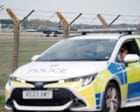
The arrest of a dual UK-Iranian national over a suspected bomb plot at RAF Fairford wasn't just a routine counter-terrorism sweep. It ripped open a window into how modern state-backed proxy networks operate on British soil. When counter-terrorism police moved in, they weren't dealing with a lone wolf. They intercepted a tightly coordinated operation targeting one of the most strategically sensitive military installations in the United Kingdom.
If you've been following how international flashpoints bleed into domestic security, this incident changes the playbook entirely. Let's look at what actually happened, why RAF Fairford became a target, and what the subsequent bail releases and international indictments reveal about the state of modern intelligence operations.
The Anatomy of the RAF Fairford Threat
RAF Fairford in Gloucestershire isn't just an ordinary airfield. It serves as a critical strategic hub, frequently hosting United States Air Force long-range bombers like the B-1B Lancer. When tensions flare globally, the base instantly turns into a high-value geopolitical asset.
Investigators found that the plot involved more than raw intent. Operatives had acquired vans, loaded them with fuel drums, and tracked perimeter layouts. The logistical footprint pointed directly to foreign direction. According to unsealed federal indictments in the United States, the network was tied to broader campaigns orchestrated by groups linked to Iran's Islamic Revolutionary Guard Corps and regional proxies like Kata'ib Hezbollah.
The plot relied on local surveillance, disguised commercial vehicles, and remote handlers communicating across borders. It showed a disturbing willingness by foreign actors to weaponize local residents and dual nationals to carry out reconnaissance and logistics inside Western nations.
Why Bail and Extended Investigations Define These Cases
Several individuals, including a 25-year-old dual UK-Iranian national, were detained under the Terrorism Act 2006 and subsequently released on bail. That detail frustrates a lot of observers. People see "released on bail" and assume the authorities dropped the ball.
That is rarely how modern counter-terrorism investigations work.
In complex national security cases involving international handlers, digital forensics take months. Arrests are often executed early to disrupt active threats—such as intercepting vans heading toward a perimeter gate—long before every piece of digital evidence is fully decrypted. Releasing a suspect on strict bail conditions allows intelligence agencies to monitor remaining contacts, map wider financial trails, and build an airtight prosecution file rather than rushing a premature charge that collapses in court.
The international dimension became even clearer when U.S. federal prosecutors in the Southern District of New York unsealed indictments against key figures connected to the wider network. Remarkably, one of the primary coordinators was already locked up in a Brooklyn detention center on separate charges, yet managed to pass coded messages through phone calls to family members to keep operations funded and moving forward.
The Broader Security Reality for the UK
Britain has increasingly become an operational arena for state-sponsored intimidation and sabotage. Beyond the military base plot, intelligence officials have tracked a string of connected incidents across Europe and the UK, ranging from suspicious fires to targeted violence against community sites.
For security agencies, the challenge is two-fold. They have to stop high-profile attacks on sensitive defense infrastructure like RAF Fairford while simultaneously protecting open public spaces from low-level proxy sabotage. The traditional borders separating domestic policing from international geopolitics have effectively vanished.
Keep a close eye on how British courts handle the ongoing prosecutions and how intelligence sharing between London and Washington evolves. As foreign actors increasingly rely on remote digital direction and local proxies, stopping the next plot requires tracking money trails and encrypted communications long before a van ever gets near a runway fence.